What Are Tokenized Stocks? A Plain English Guide
A tokenized stock is a digital token on a blockchain that represents a 1:1 claim on a real share. Learn how they work, their advantages, and the risks involved.
What Are Tokenized Stocks? A Plain English Guide
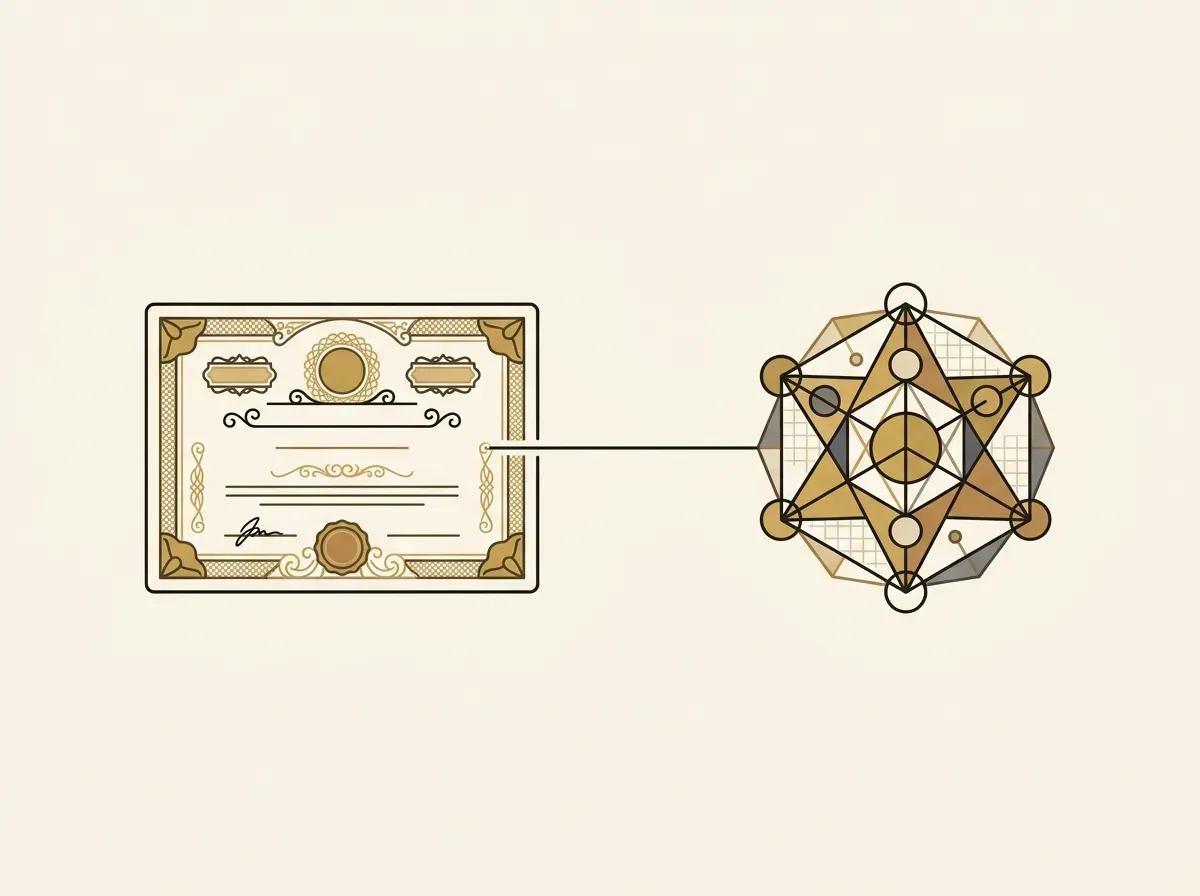
A tokenized stock is a digital token issued on a blockchain that represents a one-to-one claim on a share of a publicly traded company. In simple terms, for every token representing one share of TSLA on a blockchain, we hold one actual share of TSLA stock in a segregated account at a regulated brokerage. This model provides you with direct economic exposure to the underlying stock, including its price movements and dividends, while combining it with the technical advantages of a crypto asset.
This is not a theoretical concept. The market for tokenized real-world assets is growing significantly, with firms like Boston Consulting Group projecting it could become a multi-trillion dollar industry by 2030. These instruments act as a practical bridge connecting the global equity market with the on-chain economy.
Unlike a traditionally held stock, which exists as a book-entry record in a brokerage account, a tokenized stock lives in your own self-custodied digital wallet. And unlike a native crypto asset like Bitcoin, its value is directly tied to an off-chain asset. On our platform, we issue these tokens to give you the price exposure of traditional shares with the self-custody and programmability of crypto.
How Tokenization Works on GM Markets
The process of creating and managing a tokenized stock is precise and transparent. When you place a buy order on our platform, our smart contracts mint a new token on-chain. Simultaneously, our regulated market-making partners purchase the corresponding real share in the public market. This ensures a constant one-to-one backing for every token in circulation.
Custody and Proof of Reserves
The underlying shares are not held by us. They are held in segregated customer accounts at regulated U.S. broker-dealers, including Interactive Brokers and Alpaca Markets. These firms are qualified custodians under SEC rules. This structure is critical for asset protection. According to the SEC's Customer Protection Rule, these brokers must keep client assets separate from their own, safeguarding them in case of the broker's financial failure. Additionally, these assets are typically protected by the Securities Investor Protection Corporation (SIPC) up to specified limits.
To ensure transparency, we provide a public Proof of Reserves. A third-party attestor, Accountable, programmatically audits the holdings at our brokers in real time and publishes this data on-chain. You can verify for yourself that the number of tokens in circulation matches the number of shares held in custody, ensuring the one-to-one backing is always maintained.
The Total-Return Model for Dividends
Tokenized stocks on our platform use a total-return model. When a company like Apple pays a dividend, you do not receive a separate cash payment. Instead, the dividend proceeds are automatically used to purchase more of the underlying AAPL shares. This increases the total number of shares backing the pool of tokenized AAPL, which in turn increases the Net Asset Value (NAV), or price, of each token. Your return is reflected in the token's appreciation, which is a more efficient model for on-chain assets.
The Core Advantages of Tokenized Stocks
Combining traditional equity exposure with blockchain technology creates several distinct advantages for investors and traders.
Global Accessibility
One of the primary benefits is providing access to U.S.-listed equities for a global audience. Many investors face high fees or outright restrictions when trying to access U.S. markets through local brokers. Tokenization opens up this access in a direct and efficient way. Please note that our services are not offered to users in the United States or other restricted jurisdictions.
Self-Custody and Control
In traditional finance, your broker holds your shares on your behalf. With tokenized stocks, you hold the asset directly in your own wallet. We use embedded wallets from Privy that are secured with multi-party computation (MPC), meaning no single party, including GM Markets, has access to your full private key. This gives you direct control and reduces custodial risk.
On-Chain Composability
Because our tokens are standard ERC-20 assets, they are composable, meaning they can interact with the wider decentralized finance (DeFi) ecosystem. This transforms a static holding into a productive asset. As noted by industry analysis, protocols like Aave and Morpho are integrating tokenized assets, allowing you to use your holdings as collateral for loans, provide liquidity on decentralized exchanges, or engage in other yield-generating strategies. This is a level of capital efficiency that is not possible with shares held in a traditional brokerage account.
Fractionalization and Low Minimums
High-priced stocks can be prohibitive for many investors. Tokenization allows for deep fractionalization. You can buy a small fraction of a share, enabling you to invest in companies like NVDA or GOOGL with as little as one dollar. You can view our low, transparent trading fees on our pricing page.
Understanding the Risks and Limitations
While powerful, tokenized stocks come with a unique set of risks and trade-offs that are important to understand. We believe in being transparent about these limitations.

Economic Exposure vs. Voting Rights
A tokenized stock provides you with the full economic benefit of owning a share: price appreciation and dividends (via NAV increases). However, it typically does not grant you the shareholder voting rights that come with direct ownership. For most investors focused on price exposure, this is a minor trade-off, but it is a key difference.
Technical and Smart Contract Risk
All on-chain activities carry inherent technical risks, including potential vulnerabilities in smart contracts. We mitigate this by subjecting our smart contracts to rigorous, independent audits from leading security firms. However, the risk can never be fully eliminated. You can learn more about our comprehensive security model on our website.
Counterparty and Custody Risk
Our model relies on regulated third parties, including broker-dealers who custody the underlying shares and market makers who provide liquidity. While the use of segregated accounts and SIPC protection significantly mitigates risk, there is still a degree of counterparty risk. Our continuity plan, detailed in our legal disclosures, is designed to ensure you can redeem your tokens for the underlying value even if GM Markets were to cease operations.
Regulatory Landscape
The regulatory framework for tokenized assets is still developing globally. International bodies like the Financial Stability Board (FSB) are actively working to establish clear guidelines. As this landscape evolves, the rules governing these assets may change. We are committed to adapting to regulatory developments to ensure compliance and protect our users. For more information, please review our risk and legal disclosures.
Frequently Asked Questions
What happens to my assets if GM Markets shuts down?
Your assets remain protected. The underlying shares are held in segregated accounts at regulated brokers, not on our balance sheet. A designated security agent has the authority to work with the custodian to redeem all outstanding tokens for the underlying shares, a process enforced by our on-chain contracts.
Do I really own the underlying stock?
You own a digital token that represents a one-to-one, legally enforceable claim on the underlying stock. This provides you with the economic rights of ownership. You do not, however, typically receive shareholder voting rights or physical share certificates.
How are dividends handled?
Dividends are automatically reinvested into the underlying asset. This increases the Net Asset Value (NAV) of your token, so the value of the dividend is reflected in the token's price. You do not receive a separate cash payment.
Are tokenized stocks safe to trade?
Safety is a function of the underlying structure. Our tokenized stocks are fully backed one-to-one by real shares held at regulated U.S. custodians. This model, combined with third-party on-chain attestations and smart contract audits, is designed to be highly secure. However, all investments carry risk, including market risk, smart contract risk, and counterparty risk.
Trading the Future of Equities
Tokenized stocks represent a significant evolution in financial markets. They merge the established value of the global equity market with the efficiency, accessibility, and openness of blockchain technology. By providing a direct, on-chain representation of a real-world share, they unlock new possibilities for investors worldwide.
The core benefits are clear: expanded global access to major markets, the control of self-custody, and the ability to integrate your holdings with the dynamic world of decentralized finance. As this technology matures, it stands to make markets more efficient and inclusive. To see the transparency of this model in action, you can explore the real-time data on our Proof of Reserves page.