What Are Tokenized Stocks? A Guide to On-Chain Equities
Tokenized stocks are blockchain-based digital tokens backed 1:1 by real-world shares. Learn how they solve issues of access, cost, and efficiency for global investors.
What Are Tokenized Stocks? A Guide to On-Chain Equities
Tokenized stocks are digital tokens on a blockchain that represent ownership of real-world shares. This technology is a live solution to critical barriers in traditional investing related to access, cost, and capital efficiency. For many investors, particularly outside the United States, the traditional financial system involves regional restrictions, high minimums, and slow settlement times. On-chain finance offers a direct alternative.
By representing real shares as tokens, we move beyond legacy infrastructure to enable global market access and instant settlement. This creates a more open and efficient financial system. Projections from Boston Consulting Group estimate the market for tokenized assets could reach $16.1 trillion by 2030, which highlights the scale of this transformation. On our platform, we provide direct access to these assets, backed 1:1 by real-world shares.
What Are Tokenized Stocks? A Practical Explanation
At its core, a tokenized stock is a digital receipt of ownership for a share held in custody. On GM Markets, every token is fully backed 1:1 by a real share of a company like Apple (AAPL) or NVIDIA (NVDA). These underlying shares are held in a segregated customer account at a regulated, third-party broker-dealer, such as Interactive Brokers or Alpaca Markets. This structure is fundamentally different from a contract for difference (CFD) or other synthetic products where you do not have a claim on the underlying asset.
With a tokenized stock from GM Markets, you have a direct, verifiable claim on the underlying asset. This claim is continuously verified by a third-party attestation service that publishes proof of reserves on-chain. This allows anyone to confirm that the number of tokens in circulation matches the number of shares held in custody. When you hold a tokenized stock, you have direct economic exposure to the underlying asset. This means the token’s value tracks the stock's market price, and you receive the economic benefit of any dividends. Dividends are automatically reinvested into the underlying asset, which increases the net asset value (NAV) of your token. It is important to note that this model provides economic rights, not the shareholder voting rights that come with holding shares directly at a traditional broker.

Four Core Problems Solved by Tokenization
Tokenization directly addresses long-standing points of friction for global investors. By moving assets onto modern, programmable infrastructure, we can solve for access, cost, and efficiency in ways that are not possible within the traditional system.
1. Global Market Access
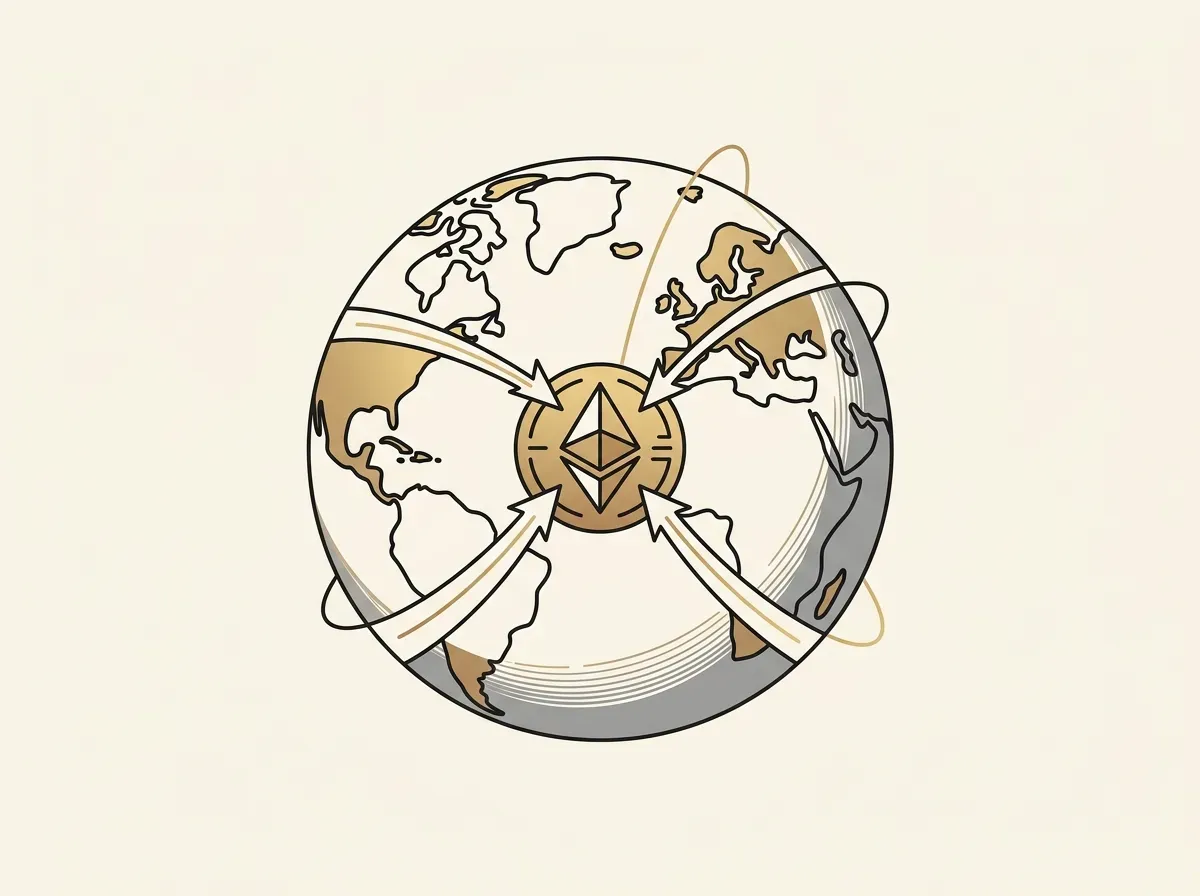
For investors in markets across Southeast Asia, Latin America, and Africa, interest in U.S. equities is growing. A 2024 survey found that nearly half of investors in Singapore and Malaysia want to increase their international market exposure. Yet they face significant barriers. Traditional international brokerages often have complex account opening processes that can take weeks. Furthermore, many brokers do not serve clients from certain countries. Tokenized stocks remove these hurdles by enabling permissionless access. You can connect a wallet and begin trading in minutes.
2. True Fractionalization
Many of the world's most sought-after stocks trade at hundreds or even thousands of dollars per share, placing them out of reach for many retail investors. While some traditional brokers offer fractional shares, tokenization takes this concept further. On our platform, assets are fractionalized to six decimal places, allowing you to invest with as little as $1. This makes it possible to build a diversified portfolio of high-value stocks without needing significant upfront capital.
3. 24/7 Trading and Instant Settlement
Traditional stock markets operate on a fixed schedule, and trades take at least one business day to settle (T+1). This settlement lag, recently shortened from T+2 by the SEC to reduce systemic risk, still exposes the market to potential instability. Blockchain technology enables near 24/7 trading and atomic settlement. Trades are finalized almost instantly on-chain, which eliminates counterparty risk and frees up your capital immediately.
4. Capital Efficiency Through Composability
A stock held in a traditional brokerage account is a static asset. A tokenized stock is a programmable, on-chain asset (an ERC-20 token) that can be integrated with the broader decentralized finance (DeFi) ecosystem. This creates the potential for your holdings to become productive capital. While direct integrations are still emerging, the architecture allows for tokenized stocks to be used as collateral to borrow stablecoins, to provide liquidity to decentralized exchanges, or to engage in other strategies. The acceptance of tokenized real-world assets as collateral is a growing trend in DeFi, transforming passive holdings into active components of a financial portfolio.
A Concrete Look at Costs: Tokenization vs. Traditional Brokers
One of the most significant advantages of tokenization is the reduction in costs for international investors. Traditional cross-border investing involves multiple layers of fees that erode returns.
Research shows that international brokerage commissions can be substantial. While average fees for U.S. stocks can be around $10 per trade at non-zero-commission brokers, some full-service firms charge 1% to 2% of the transaction value. More impactful are currency conversion fees. These often hidden costs can range from 0.15% to as high as 1.5% for each transaction. An investor making a round trip trade could lose up to 3% of their capital on currency exchange alone. In regions like Nigeria or Mexico, a combination of local exchange fees, broker commissions, and wide bid-ask spreads can add several percentage points of cost to a transaction.
Our platform replaces this complex fee structure with a single trading fee. On GM Markets, the trading fee is between 10 and 20 basis points (0.10% to 0.20%), which is included directly in the price you are quoted. There are no separate fees for currency conversion, custody, or deposits and withdrawals. You can see our full fee schedule on our pricing page.
| Fee Type | Traditional International Broker | GM Markets |
|---|---|---|
| Trading Commission | $10 to 2% of trade value | 0.10% - 0.20% (inclusive) |
| Currency Conversion | 0.15% to 1.5% (per leg) | None |
| Custody / Inactivity | Can be recurring | None |
| Deposit / Withdrawal | Varies, can be high for wires | Free |

How Tokenized Stocks Work on GM Markets
We designed our platform for security and simplicity. You can onboard permissionlessly by connecting an existing crypto wallet or creating a new, embedded wallet. These embedded wallets are secured by Privy's multi-party computation (MPC) technology. This means your private key is never stored in one place; it is split into shares, making it extremely resistant to theft. This provides a secure, self-custodial experience without the complexity of managing private keys directly. You can find more details on our security page.
When you place a trade, you receive a price quote through a Request-For-Quote (RFQ) system from regulated market makers. This is different from a public order book. An RFQ provides a guaranteed price for a short period, protecting you from the price slippage that can occur in volatile markets. We have also abstracted gas fees, so you never need to hold a native chain token like ETH to transact. The network fee is simply deducted from your stablecoin balance.
All investing carries risk. The value of tokenized stocks can go down as well as up, and you may lose the money you invest. These assets carry market risk, smart contract risk from the underlying blockchain technology, and counterparty risk related to the custodians and market makers. For a full description of the risks, please review our legal and risk disclosures. Please note that GM Markets is in public beta and our services are not offered to users in the United States or other restricted jurisdictions.
The Evolving Regulatory Landscape for Digital Assets
The regulatory landscape for tokenized securities is developing globally, with several jurisdictions creating clear frameworks. Switzerland's DLT Act, fully in force since August 2021, provides a comprehensive legal basis for issuing and trading digital securities. It introduced the concept of "ledger-based securities," which allows for the creation of native digital shares on a blockchain under the supervision of the Swiss Financial Market Supervisory Authority (FINMA).
The European Union has established a DLT Pilot Regime, effective since March 2023. This regulatory sandbox allows market participants to experiment with the trading and settlement of tokenized financial instruments under temporary exemptions from existing rules like MiFID II. The goal is to foster innovation while maintaining investor protection, with proposals underway to expand the regime's scope. These frameworks, alongside principles from bodies like IOSCO, demonstrate a clear path toward regulated, on-chain capital markets.
Frequently Asked Questions
What happens to dividends with tokenized stocks?
Our tokenized stocks operate on a total-return model. When a company pays a dividend, the funds are used to purchase more of the underlying shares. This increases the net asset value of the token, so the value of the dividend is reflected directly in the token's price rather than being paid out as a separate cash distribution.
Are my tokenized stocks safe if the platform goes out of business?
Yes. The underlying shares are held in segregated customer accounts at regulated broker-dealers, not on GM Markets' balance sheet. A designated security agent has the authority to work with the custodian to redeem all outstanding tokens for the underlying shares, a process enforced by the on-chain smart contract, ensuring your assets are protected.
Do I have the same rights as a traditional shareholder?
You receive the full economic exposure of the stock, including price movements and dividends. However, you do not receive shareholder rights such as the ability to vote on corporate matters. The tokens are designed to replicate the financial performance of the stock.
Conclusion: The Future of Global Investing
Tokenized stocks represent a fundamental upgrade to the infrastructure of capital markets. By combining the legal certainty of regulated securities with the efficiency of blockchain technology, we are creating a more accessible, affordable, and global financial system. This model solves real problems for investors today, from high cross-border fees to restrictive market access and illiquid holdings. As this technology matures, it will unlock new possibilities for how we own and transfer value. To get started, you can explore the tokenized stocks and ETFs available for trading on GM Markets.