What Are Tokenized Stocks? A Complete Beginner's Guide
Discover what tokenized stocks are and how they work. This guide explains the 1-to-1 backing, custody, and on-chain settlement that make global equity markets accessible.
What Are Tokenized Stocks? A Complete Beginner's Guide
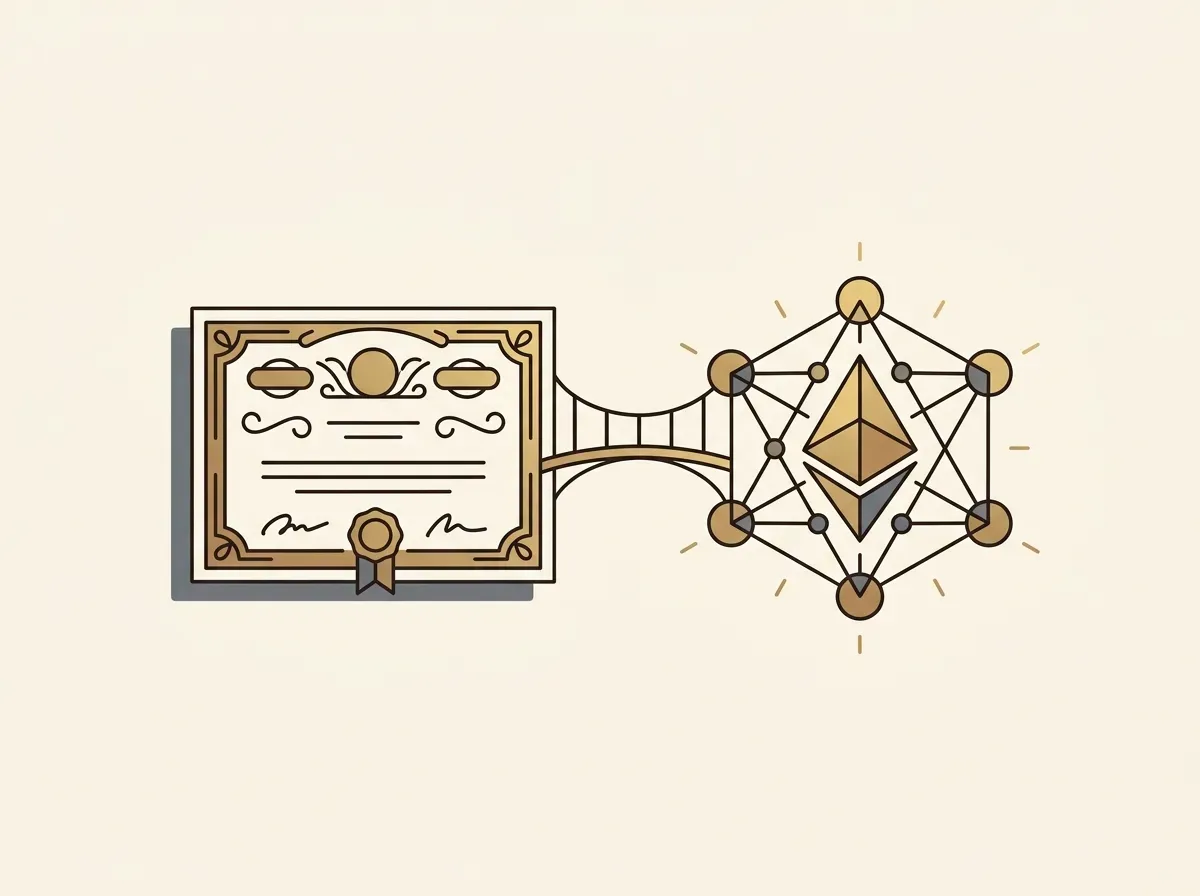
Tokenized stocks are digital tokens on a blockchain that represent a direct, 1-to-1 claim on a real share of a publicly traded company. When you buy one tokenized share of Apple on our platform, a corresponding, real share of AAPL is purchased and held in a segregated custody account at a regulated broker. This model combines the price exposure and economic benefits of traditional stock ownership with the efficiency, global accessibility, and programmability of on-chain assets.
This guide explains the mechanics behind tokenized stocks, from how they are backed and secured to the benefits and risks they present. We draw on our first-hand experience building and operating a platform for fully-backed tokenized securities to provide a clear, functional overview. Unlike native crypto assets whose value is self-contained, a tokenized stock derives its value directly from a real-world asset. This structure bridges the gap between traditional financial markets and the emerging on-chain economy.
What Is a Tokenized Stock?
A tokenized stock is a digital representation of an equity share. It functions as a blockchain-based token, typically on networks like Ethereum, Base, or Arbitrum, that proves your ownership of one share of a company like NVIDIA (NVDA) or Microsoft (MSFT). The core principle is 1-to-1 backing: for every token that exists on the blockchain, one physical share is held in custody on your behalf.
This backing is the critical distinction. It means the token is not a synthetic derivative or a contract for difference. It is a digital title to a real asset. This gives token holders full economic exposure to the underlying stock. As the stock's market price moves, the token's value moves with it. When the company pays a dividend, the value is captured and reflected in the token's price. The primary difference from direct ownership is that token holders typically receive this economic exposure without direct shareholder rights, such as voting on corporate matters.
This model presents a functional upgrade to traditional stock ownership, which often involves slow settlement times (typically two business days, known as T+2) and significant barriers for international investors. Tokenized stocks settle almost instantly on the blockchain, and can be accessed by anyone with a crypto wallet, anywhere in the world.
How Tokenized Stocks Work: From Custody to On-Chain Settlement
Understanding the lifecycle of a tokenized stock reveals the layers of security and transparency involved. The process integrates regulated financial institutions with public blockchain technology.
Custody and 1-to-1 Backing
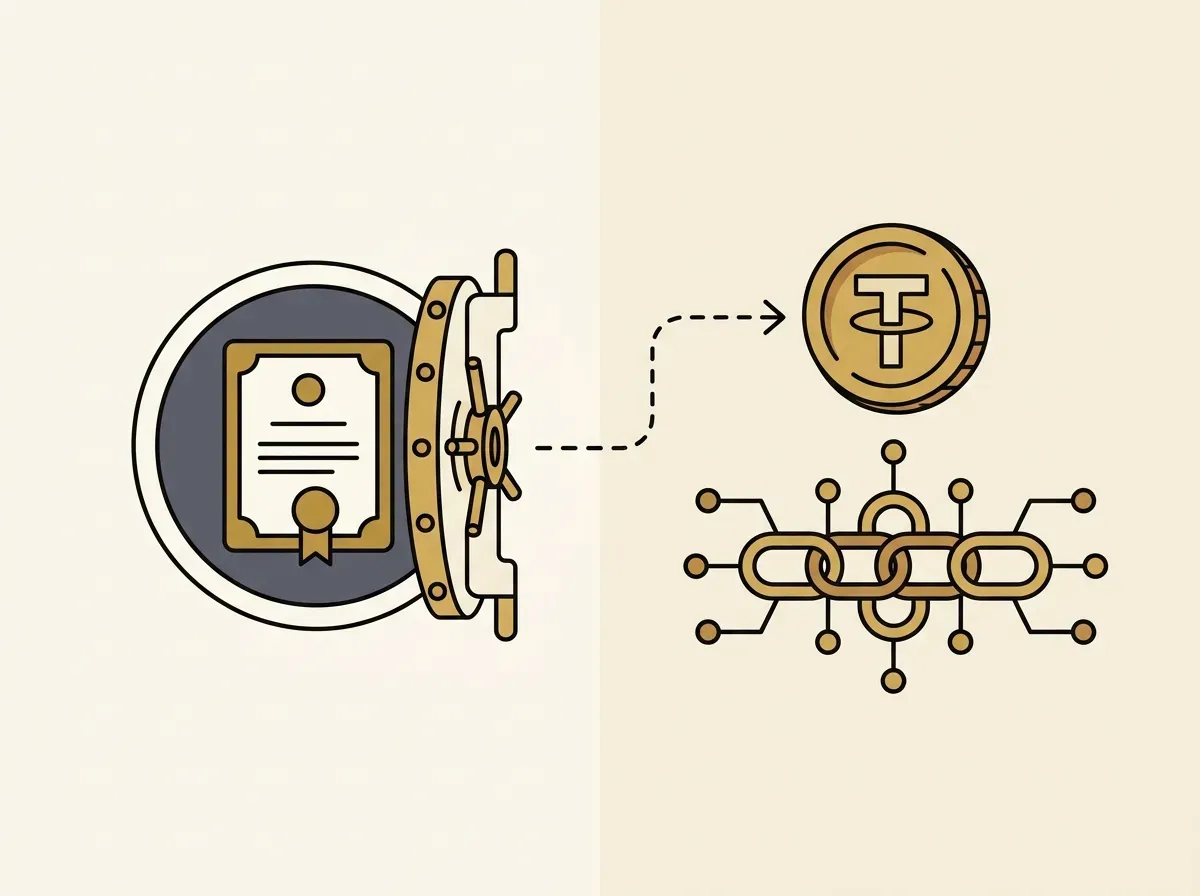
When you place an order for a tokenized stock on GM Markets, our market-making partners purchase the equivalent real share on the open market. That share is then deposited into a segregated customer account at a regulated, third-party broker-dealer, such as Interactive Brokers or Alpaca Markets. These accounts are protected by regulations like the U.S. Securities and Exchange Commission (SEC) Rule 15c3-3, which mandates that customer assets be kept separate from the brokerage firm’s own assets. This segregation ensures that the underlying shares remain secure and available to token holders, even in the event of financial distress at the platform or broker level.
Proof of Reserves
To provide verifiable trust, we use a real-time Proof of Reserves system. An independent third-party attestation service, Accountable, reads the balances directly from our brokerage accounts and publishes the data on-chain. This allows anyone to verify that the number of tokens in circulation for a given stock exactly matches the number of real shares held in custody. It is a transparent, auditable mechanism that confirms the 1-to-1 backing at all times.
On-Chain Trading and Settlement
Once the real share is in custody, a corresponding token is minted on the blockchain and delivered to your wallet. From that point, it can be traded, transferred, or used in other applications 24/7. Transactions settle in seconds, a significant improvement over the multi-day settlement cycle in traditional finance. This speed and continuous availability create a more efficient and liquid market.
The Total-Return Model for Dividends
Tokenized stocks on our platform use a total-return model to handle dividends. When a company pays a dividend, the cash is automatically used to purchase more of the underlying shares held in custody. This increases the total number of shares backing the pool of tokens, which in turn increases the net asset value (NAV) of each individual token. You see the value of the dividend reflected as an increase in your token's price, rather than receiving a separate cash payment. This process ensures you capture the full economic return of the stock seamlessly.
Key Benefits of Trading Tokenized Stocks
The fusion of traditional equities with blockchain infrastructure unlocks several powerful advantages for investors, particularly for those outside of the United States.
- Global Accessibility: For many investors, accessing U.S. equity markets is a complex and expensive process. Tokenized stocks remove these barriers. Anyone can connect a crypto wallet and gain exposure to U.S. stocks and ETFs, bypassing the need for a traditional international brokerage account.
- Fractional Ownership: Many high-growth stocks trade for hundreds or even thousands of dollars per share, making it difficult for some investors to build a diversified portfolio. Tokenization allows a single share to be divided into millions of fractional units. This enables you to invest with as little as $1, providing greater flexibility and accessibility.
- DeFi Composability: Because they are standard tokens on a public blockchain, tokenized stocks can be integrated into the broader Decentralized Finance (DeFi) ecosystem. You can use your tokenized NVIDIA shares as collateral to borrow stablecoins on a lending protocol like Aave, or provide liquidity to a trading pool on Uniswap. This transforms a static holding into a productive asset.
- Lower Transaction Costs: Traditional cross-border investing often involves high fees, including trading commissions, custody fees, and wide spreads on foreign exchange conversion. By using stablecoins for settlement and blockchain for transfers, our platform significantly reduces this overhead. We offer a simple trading fee from 0.10% to 0.20%, with no separate fees for deposits, withdrawals, or custody.
The potential of this market is vast. A 2022 report from Boston Consulting Group (BCG) projected the asset tokenization market could reach $16.1 trillion by 2030. Even more conservative estimates from McKinsey & Company suggest a market size of up to $4 trillion. This growth is driven by major institutions like BlackRock and JPMorgan launching their own tokenized funds, signaling a broad industry shift toward on-chain finance.
Understanding the Risks and Limitations
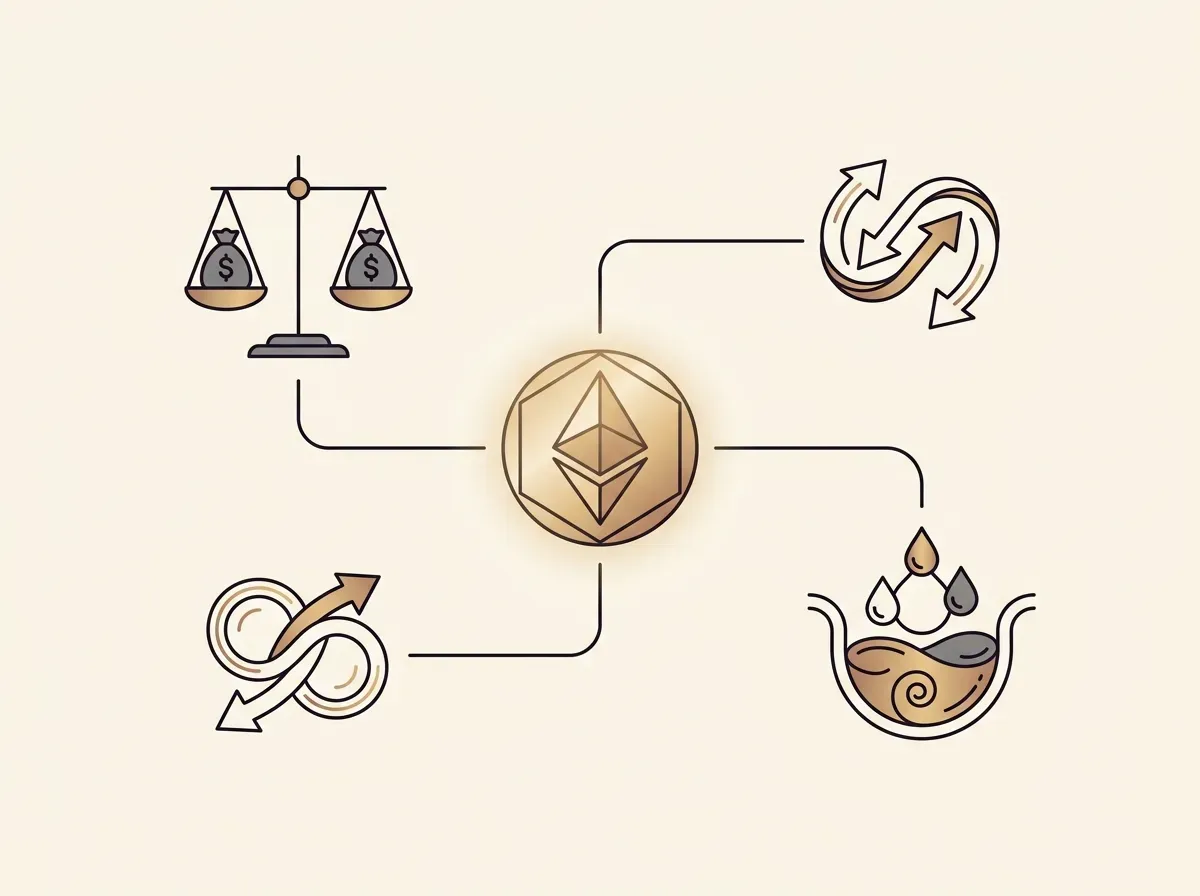
While tokenized stocks offer compelling benefits, it is important to understand the associated risks and limitations. As with any financial product, you should conduct your own research before investing.
- Smart Contract Risk: The tokens and trading platforms operate on smart contracts, which are programs that run on the blockchain. While these contracts are extensively audited by third-party security firms, the risk of a bug or vulnerability can never be completely eliminated.
- Counterparty and Custodian Risk: The security of the underlying assets depends on the operational and financial stability of the custodians and brokers holding them. Although assets are held in segregated accounts, a failure at a key counterparty could still pose a risk.
- Regulatory Uncertainty: The legal and regulatory landscape for tokenized securities is still evolving globally. International bodies like the International Organization of Securities Commissions (IOSCO) are developing frameworks, but changes in regulations could impact the availability or function of these products.
- Market and Liquidity Risk: While tokenized stocks can be traded 24/7, liquidity may be lower outside of traditional U.S. market hours. This could result in wider price spreads or difficulty executing large trades.
It is important to note that GM Markets does not provide financial, investment, or tax advice. All trading involves risk, and you may lose the capital you invest. Our services are not offered to persons in the United States or other restricted jurisdictions.
How to Buy Your First Tokenized Stock
Getting started with tokenized stocks on a modern platform is a straightforward process designed to be as simple as possible.
- Create or Connect a Wallet: You can connect an existing crypto wallet or create a new one instantly using just your email or a social login. These embedded wallets use Multi-Party Computation (MPC) technology, which enhances security by ensuring no single party ever has full control of your private key.
- Deposit Funds: You can fund your account by transferring stablecoins like USDC or USDT from another wallet or exchange. On GM Markets, these are automatically converted into a unified balance, USDF.
- Trade Your First Stock: Navigate to the markets, select the stock or ETF you wish to buy, and enter the amount. You will see a real-time quote, and with one click, you can execute the trade. Gas fees are abstracted away, meaning you never need to hold a network's native token; the cost is handled seamlessly in the background.
Conclusion: The Future of Investing is On-Chain
Tokenized stocks represent a significant evolution in financial market structure. They preserve the fundamental value of real-world equity ownership while enhancing it with the core benefits of blockchain technology: global access, fractionalization, efficiency, and programmability. By creating a direct, transparent, and highly functional bridge between traditional finance and DeFi, tokenization is making the world's most productive assets available to a truly global audience.
This innovation is not just a theoretical concept; it is a live, functioning market that is already providing tangible benefits to investors around the world. As the technology matures and regulatory frameworks solidify, on-chain assets are poised to become a foundational component of the modern investment portfolio.