Tokenized Stocks vs. Real Stocks: 7 Essential Differences for Global Investors
Explore 7 essential differences between tokenized stocks and traditional equities, covering custody, global access, fractional ownership, settlement, DeFi composability, dividends, and transparency for global investors.
Tokenized Stocks vs. Real Stocks: 7 Essential Differences for Global Investors
Traditional stock ownership has long been the standard for accessing global equity markets. However, the emergence of tokenized stocks introduces a paradigm shift in how investors, particularly those outside restricted jurisdictions, can participate. Understanding the fundamental distinctions between these two forms of asset ownership is crucial for navigating the evolving financial landscape.
We explore seven key differences between tokenized stocks and their traditional counterparts. This comparison highlights the unique benefits offered by platforms like ours, GM Markets, in terms of accessibility, fractional ownership, rapid settlement, and DeFi composability. For global investors seeking efficient and flexible access to US-listed equities, grasping these distinctions is essential for making informed investment decisions.
Difference 1: Custody and Direct Ownership
When you invest in traditional stocks, your shares are typically held by a broker in 'street name' or directly registered with a transfer agent. This means you do not usually hold the physical share certificate yourself. Your ownership is recorded in a centralized ledger managed by the broker or transfer agent, and access to these assets is mediated by that third party.
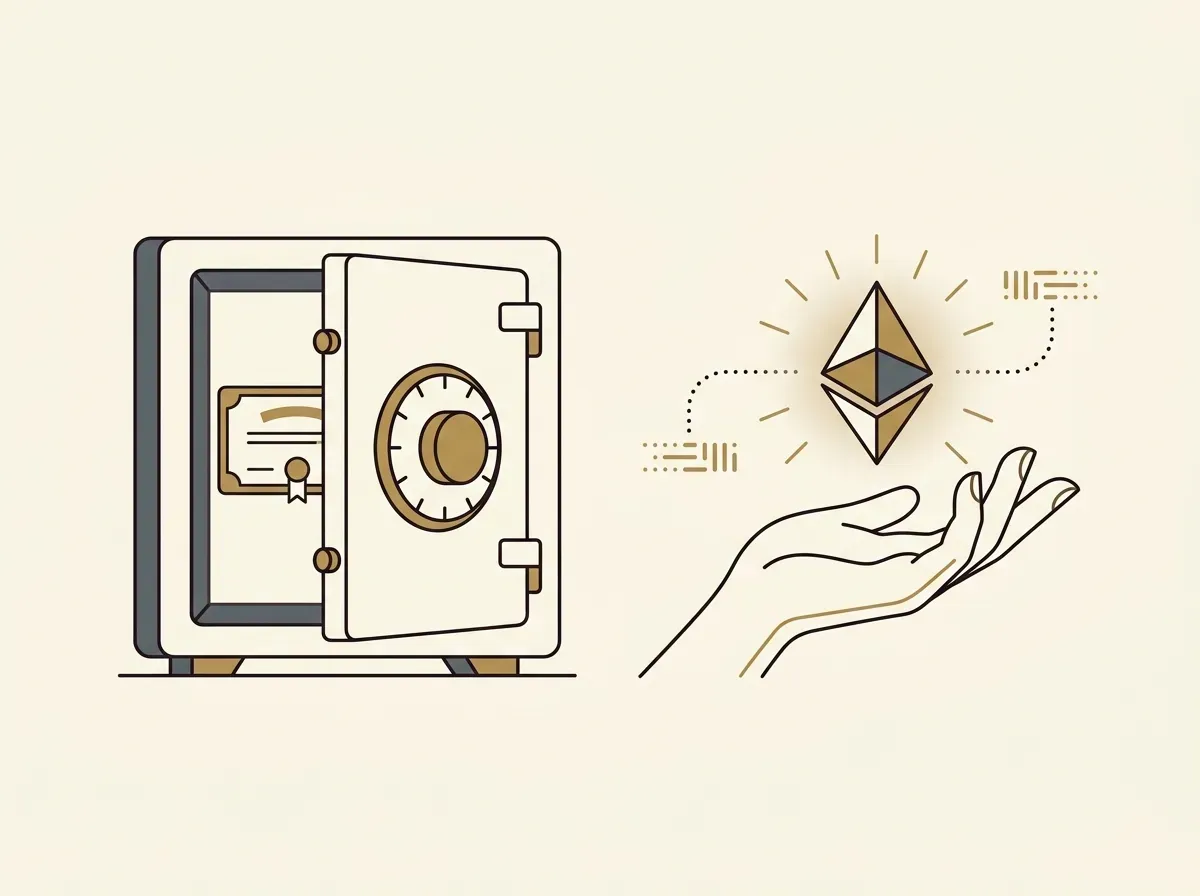
In contrast, tokenized stocks represent a 1:1 backed claim on an underlying share held in segregated customer accounts at regulated broker-dealers, specifically Interactive Brokers and Alpaca Markets. The crucial difference is that the token itself is self-custodied by you in your own crypto wallet. This gives you direct control over your assets on-chain, removing the need for a traditional intermediary to access or transfer them. On GM Markets, we utilize Privy's Multi-Party Computation (MPC) embedded wallets. This technology allows you to retain control over your private key shares without the complexities of managing traditional seed phrases, enhancing both security and user experience. You can learn more about our security model and how we protect your assets.
Difference 2: Global Accessibility and Geographic Restrictions
Access to traditional stock markets is often limited by an investor's country of residence. Many traditional brokerage accounts require specific residency or citizenship, which can create significant barriers for individuals in various regions. International investors frequently face complexities related to taxation, such as the Non-Resident Alien (NRA) tax implications, estate tax, and stringent Know Your Customer (KYC) and Anti-Money Laundering (AML) regulations, as well as regulatory filings for substantial holdings. For example, IRS Publication 519, "U.S. Tax Guide for Aliens," details that non-resident aliens are typically subject to a 30% withholding tax on US dividend income, which may only be reduced by tax treaties if a Form W-8BEN is properly filed. Additionally, US-situs assets held by non-US residents are subject to federal estate tax with a low exemption threshold, adding another layer of complexity for global investors.
Tokenized stocks are designed for permissionless, global access through a crypto wallet. This enables individuals worldwide, outside restricted jurisdictions like the United States, to trade US-listed equities without the common geographic and onboarding barriers of traditional finance. Our platform ensures a wallet-native onboarding experience, removing many of the traditional hurdles. We do not serve users in the United States or other restricted jurisdictions. This focus allows us to provide broad and streamlined access to global investors.
Difference 3: Fractional Ownership and Minimum Investment
While some traditional brokers, such as Fidelity, Charles Schwab, and Interactive Brokers, now offer fractional shares, it is not universally available across all assets or platforms. The availability can vary significantly by broker and the specific stock or ETF, and some platforms like Vanguard primarily offer fractional shares for their own ETFs and mutual funds rather than individual stocks. This means investors might still face limitations on which high-value shares they can access with smaller capital.
Tokenized stocks inherently support fractional ownership to many decimal places, allowing investments from as little as $1. This makes high-value shares accessible to a broader audience who might otherwise be priced out of owning full shares of expensive stocks. On GM Markets, users can trade tokenized stocks fractional to six decimal places. This feature empowers you to build a diversified portfolio even with smaller capital amounts, making investment more inclusive and flexible for all users, regardless of their starting capital.

Difference 4: Settlement Speed and Trading Hours
Traditional stock trades in the US, as of May 28, 2024, settle on a T+1 basis. This means trades settle one business day after the transaction date, a significant shift from the previous T+2 standard, as outlined in the SEC's investor bulletin on the new T+1 settlement cycle. FINRA also adopted amendments to its rules to conform with these changes. Trading is also restricted to exchange operating hours, typically 9:30 AM to 4:00 PM Eastern Time, with limited pre-market and after-hours sessions, which can delay reacting to global news or market events.
Tokenized stocks, by contrast, settle on-chain with near-instant finality, often within minutes or seconds, depending on the blockchain network congestion. This provides greater liquidity and flexibility, as assets can be moved and re-deployed much faster. On GM Markets, we offer 24/7 order placement. While the underlying markets for US stocks still operate on traditional hours, out-of-hours orders are queued on-chain and fill when the market opens or when liquidity becomes available. This allows you to react to global market movements at any time, providing continuous access to the market.
Difference 5: Composability and Decentralized Finance (DeFi) Integration
Traditional stocks remain within the traditional finance ecosystem, with limited interoperability with blockchain-based applications. Their utility is generally confined to buying, selling, and holding within a brokerage account, or being used as collateral within the same centralized system. This limits their potential for broader financial innovation and integration.
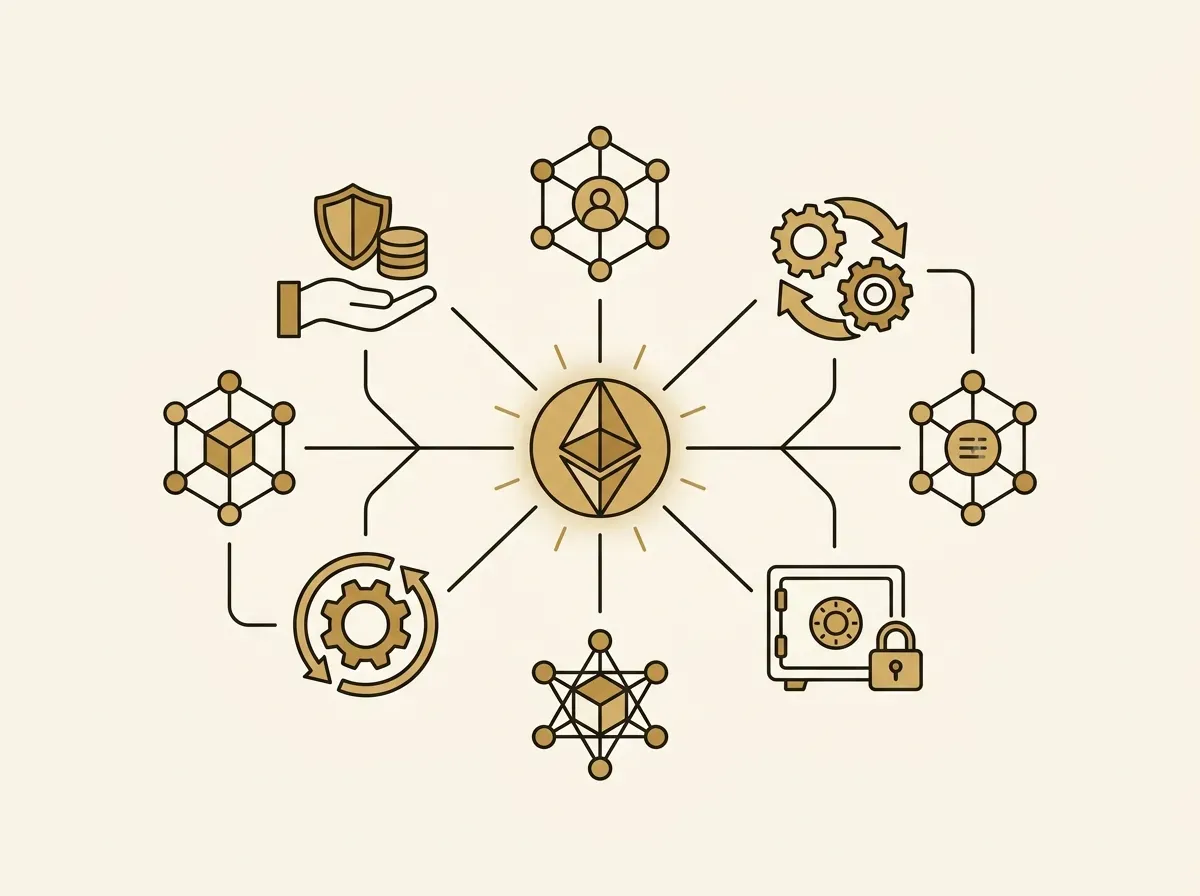
Tokenized stocks are standard ERC-20 assets that can be seamlessly integrated into DeFi protocols. This means your equity exposure can be used for lending, borrowing, supplying liquidity, or as collateral across various decentralized applications. For instance, Aave is strategically expanding into the securities lending market by integrating tokenized stocks, allowing users to supply them directly on-chain. Similarly, Morpho has integrated tokenized versions of ETFs like SPY and QQQ as collateral, making these assets productively usable in DeFi. Other protocols like Kamino, Uniswap, and CoW Swap also facilitate the trading and utility of these assets. This composability allows users to potentially earn additional yield on their equity exposure, a key advantage of holding tokenized assets on GM Markets, transforming passive holdings into productive capital within the broader digital economy.
Difference 6: Dividends and Corporate Actions
With real stocks, companies typically pay out dividends as cash to shareholders, which is then distributed by the broker. Corporate actions such as stock splits, mergers, or spin-offs are processed directly by the broker or transfer agent, often resulting in changes to your share count or new securities appearing in your account. These events can sometimes lead to administrative delays or complexities depending on the broker.
Tokenized stocks on our platform operate on a total-return model. This means dividends are reinvested into the underlying asset, causing the token's on-chain Net Asset Value (NAV) to rise. You see the dividend value reflected in the token's price rather than as a separate cash distribution, simplifying the accounting and reinvestment process. Similarly, corporate actions like splits, special distributions, spin-offs, mergers, or name changes are absorbed into the token's NAV. This ensures that your economic exposure precisely tracks the underlying share without requiring separate payouts or manual adjustments to your token holdings. Our FAQ page provides more details on how we handle corporate actions and the total-return model.
Difference 7: Underlying Technology and Transparency
Traditional stock markets rely on centralized databases and traditional record-keeping systems. While these systems are robust, they may offer less real-time transparency into the underlying asset backing or market movements, particularly for individual investors. Verification of reserves or asset backing typically involves periodic audits and reports that are not always real-time or easily accessible to the public, requiring trust in intermediaries.
Tokenized stocks are built on blockchain technology, offering enhanced transparency and auditability through immutable on-chain records. This distributed ledger technology provides a verifiable history of transactions and asset backing that is publicly accessible. On GM Markets, we employ Accountable for real-time, on-chain proof of reserves. This allows independent verification of the 1:1 backing of every tokenized share by a real share held in custody, ensuring a high degree of trust and transparency. Our smart contracts are also regularly audited by leading firms such as Sherlock, Halborn, Cantina, and Cyfrin, and are re-audited on material upgrades, reinforcing the security and integrity of our platform and its underlying technology.

Frequently Asked Questions
Are tokenized stocks safer than real stocks?
Both tokenized stocks and real stocks carry inherent risks. Tokenized stocks offer enhanced transparency through blockchain technology and self-custody options, but they also introduce smart-contract and blockchain-specific risks. Real stocks are subject to market volatility and brokerage-specific risks, including the solvency of the brokerage itself. Investing in any market carries risk, and you may lose money. Tokenized stocks, like all financial instruments, involve risks including settlement, counterparty, smart-contract, and custody risks. We encourage you to review our risk and legal page for a full understanding.
Do tokenized stocks give me voting rights?
No, tokenized stocks typically provide economic exposure to the underlying asset, meaning you benefit from price movements and dividends (via NAV appreciation), but they do not confer shareholder voting rights. These tokens are a representation of the underlying share, designed for trading and composability within DeFi, not for corporate governance participation. If shareholder voting rights are a primary concern, direct ownership of traditional shares may be more suitable.
How do I manage my tokenized stocks on GM Markets?
You manage your tokenized stocks through your embedded wallet on GM Markets. This wallet is secured by Privy's Multi-Party Computation (MPC) technology, which gives you control over your private key shares using biometrics or passkeys. You can connect via an external wallet, Google, or an email magic-link, providing a user-friendly and secure way to control your assets. This self-custodial approach ensures that you always have direct access to your tokens.
What are the fees for trading tokenized stocks?
On GM Markets, we charge a single trading fee ranging from 10 to 20 basis points (0.10% to 0.20%). The default fee is 20 bps, which decreases to 10 bps for higher trading volumes within a 14-day period through our VIP ladder. This fee is always included in the quoted price, so the 'You will receive' amount is final. Deposits and withdrawals are free across all supported methods, with no hidden custody, inactivity, or FX markup fees. You can find a detailed breakdown of our fee structure on our pricing page.
Conclusion: The Future of Global Equity Trading with GM Markets
Tokenized stocks offer a compelling alternative to traditional equity ownership, particularly for global investors seeking greater access, flexibility, and integration with the digital economy. While traditional stocks remain foundational to financial markets, the advantages of tokenized assets in terms of self-custody, fractionalization, rapid settlement, and DeFi utility are significant and represent an evolution in how assets can be held and traded.
We provide a secure and efficient platform for trading tokenized US stocks and ETFs, empowering you with new possibilities for your investment portfolio. Explore the markets available on GM Markets today and discover a new way to access global equities. We do not serve users in the United States or other restricted jurisdictions. Investing in financial instruments carries risk, and you may lose money.