Tokenized Stocks vs CFDs: Which Is Better for Global Investors?
We compare tokenized stocks and Contracts for Difference (CFDs), examining their core mechanisms, risks, and benefits for global investors seeking exposure to US equities.
Tokenized Stocks vs CFDs: Which Is Better for Global Investors?
Global investors seeking exposure to US equities often consider various financial instruments. Among the modern options, tokenized stocks and Contracts for Difference (CFDs) stand out, each offering distinct characteristics. At GM Markets, we believe in providing transparent and verifiable access to the global equity market. This comparison will examine the core mechanisms, risks, and benefits of tokenized stocks and CFDs to help you understand which instrument might better suit your investment goals, particularly for those outside the United States.
Our platform offers tokenized US-listed stocks and ETFs, providing genuine economic exposure backed by real shares. We aim to offer a clear, verifiable alternative to derivative instruments like CFDs, which often involve hidden complexities and significant counterparty risks.
Understanding Tokenized Stocks: A Modern Approach to Equities
Tokenized stocks represent a modern approach to accessing equity markets. These are on-chain representations of real-world US-listed stocks and ETFs. Each token is 1:1 backed by an actual share held in a segregated customer account at a regulated broker-dealer. This direct backing ensures that your tokenized position mirrors the economic value of the underlying asset.
Key features of tokenized stocks include fractional ownership, allowing you to invest from as little as $1. You maintain self-custody over your assets through embedded multi-party computation (MPC) wallets. Transparency is a cornerstone: our platform provides on-chain proof of reserves, independently attested in real time by Accountable, a third-party provider. This allows you to verify the 1:1 backing of every token with its underlying share. Furthermore, tokenized stocks are standard ERC-20 assets, enabling composability across decentralized finance (DeFi) protocols, meaning you can use your equity exposure as collateral, for lending, or to provide liquidity.
At GM Markets, we offer a straightforward approach to these assets. We charge a single trading fee ranging from 10 to 20 basis points (0.10% to 0.20%), with no hidden custody, inactivity, dividend, or FX markup fees. Our total-return NAV model means dividends and corporate actions are absorbed into the token's on-chain net asset value, rather than being paid out separately, ensuring your position continuously tracks the underlying's economic performance. We are committed to global accessibility for investors outside the United States and other restricted jurisdictions.

Understanding Contracts for Difference (CFDs): A Derivative Instrument
Contracts for Difference (CFDs) are derivative instruments that allow traders to speculate on the price movements of underlying assets without actually owning them. A CFD is an agreement between a trader and a broker to exchange the difference in the price of an asset from the time the contract is opened until it is closed. This means you do not take possession of the actual stock, commodity, or currency pair.
The core mechanism of CFDs involves speculating on price movements. They often incorporate significant leverage, which can magnify both potential gains and losses. CFDs are typically over-the-counter (OTC) agreements, meaning they are bilateral contracts between you and your broker, rather than traded on a centralized exchange. This structure introduces significant counterparty risk, as your exposure is directly to the solvency and integrity of your CFD provider. Trading CFDs can also involve margin calls, where you may be required to deposit additional funds to maintain your leveraged positions if the market moves against you.
Regulatory oversight for CFDs varies significantly across global jurisdictions. For instance, the European Securities and Markets Authority (ESMA), the UK's Financial Conduct Authority (FCA), and the Australian Securities and Investments Commission (ASIC) have implemented strict leverage limits for retail investors, ranging from 30:1 for major currency pairs down to 2:1 for cryptocurrencies. They also mandate negative balance protection, ensuring you cannot lose more than the funds in your CFD account. However, offshore brokers may offer much higher leverage, sometimes up to 500:1 or 1000:1, often with fewer investor protections.
Common uses for CFDs include short-term trading, hedging existing portfolios, and accessing diverse markets with leverage. Fees for CFD trading typically include spreads (the difference between bid and ask prices), commissions (especially for share CFDs), and significant overnight financing (swap) fees for positions held open beyond a single day. Inactivity fees and currency conversion fees may also apply, making the overall cost structure potentially complex and less transparent than direct asset ownership.

Key Differences: Tokenized Stocks vs. CFDs for Global Investors
Understanding the fundamental distinctions between tokenized stocks and CFDs is crucial for making informed investment decisions, especially for global investors.
Asset Ownership and Backing
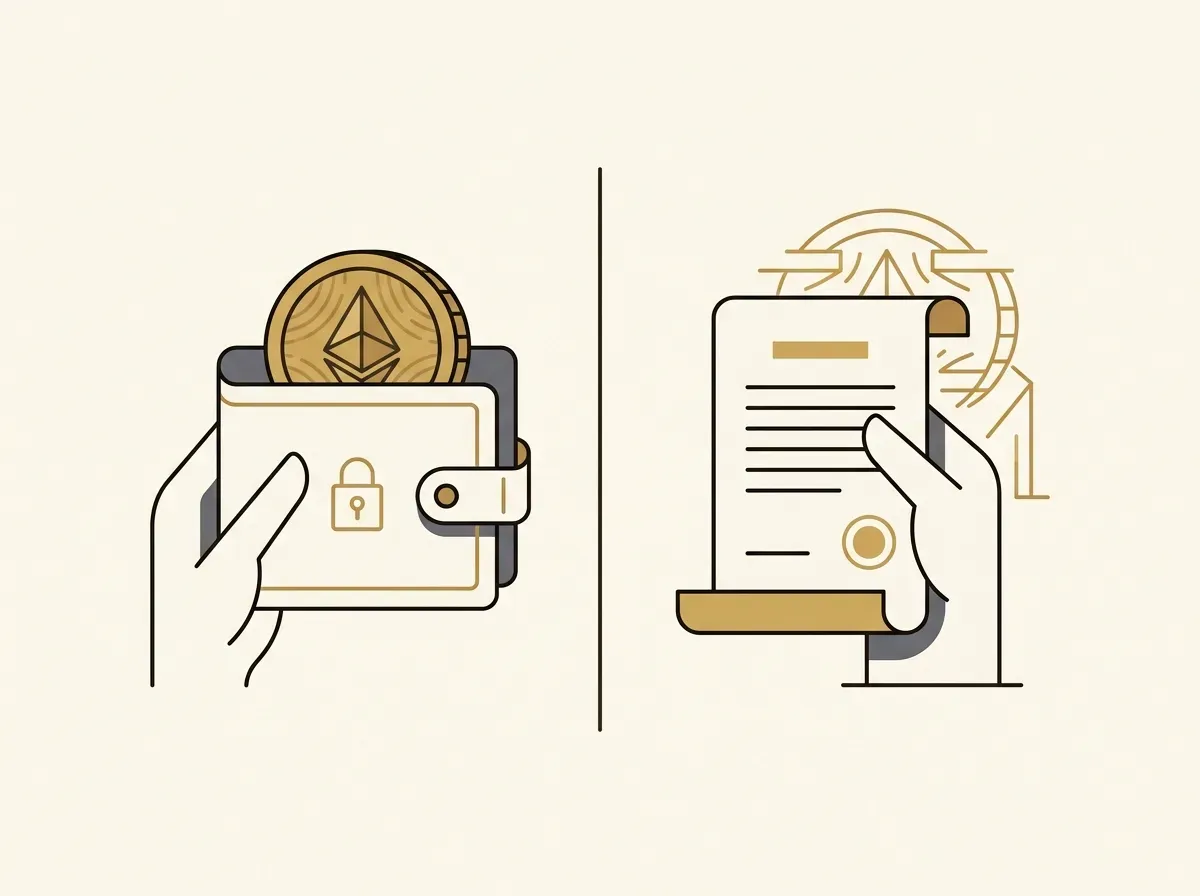
With tokenized stocks, you gain economic exposure to an underlying share that is physically held in a segregated customer account. Each token is 1:1 backed by a real share, and this backing is verifiable on-chain through independent proof of reserves. This means you have a direct, transparent claim on a real-world asset. In contrast, CFDs involve no ownership of the underlying asset. You are merely speculating on its price movement through a contract with your broker. This distinction is critical for understanding your rights and exposure.
Custody and Control
Tokenized stocks offer self-custody. Your assets reside in your embedded wallet, secured by multi-party computation (MPC), giving you direct control. You can move, trade, or utilize your tokens as you see fit. CFDs, however, are held on the broker's books. You do not have direct control over the underlying asset or even the contractual position in the same way you control a token in your wallet.
Transparency and Verifiability
The on-chain nature of tokenized stocks provides inherent transparency. The 1:1 backing and proof of reserves are publicly auditable and verifiable in real time, reducing reliance on a single counterparty. For CFDs, transparency relies solely on the broker's internal records and solvency. While regulated brokers are required to segregate client funds, the direct contractual relationship means you are exposed to the broker's operational and financial health.
Composability and Utility
Tokenized stocks are standard ERC-20 assets that can be seamlessly integrated into the broader DeFi ecosystem. This composability allows for innovative strategies like using your stock exposure as collateral for loans, providing liquidity, or earning yield on various decentralized protocols. CFDs are typically restricted to the issuing broker's platform, limiting their utility and interoperability within the wider financial landscape.
Leverage and Risk
CFDs are often associated with leverage, which can significantly amplify both gains and losses. This inherent leverage, coupled with the potential for margin calls, makes CFDs a high-risk instrument, where you could lose more than your initial investment if negative balance protection is not in place or you opt out of retail protections. Tokenized stocks on GM Markets do not offer inherent leverage, providing direct economic exposure to the underlying asset without the amplified risk of leveraged trading. While market volatility means you can still lose money, the risk profile is different from leveraged derivatives.
Regulatory Landscape
The regulatory landscape for tokenized stocks is evolving, often operating under emerging blockchain-native frameworks that prioritize transparency and on-chain verifiability. CFDs have a more established, yet diverse, regulatory environment. As highlighted by ESMA, FCA, ASIC, and others, regulations vary significantly by jurisdiction, with some offering stringent retail investor protections (e.g., leverage limits, negative balance protection) while others, particularly offshore jurisdictions, may have less stringent oversight. Regulators continually issue warnings about the risks of CFDs, especially regarding firms encouraging retail clients to waive protections by reclassifying as professional clients.
Corporate Actions and Investor Rights
A crucial implication of not owning the underlying asset in CFDs is the absence of investor rights. CFD traders do not have voting rights, nor do they have direct claims on the underlying asset. While CFD providers typically adjust positions to reflect the economic impact of corporate actions like dividends (crediting long positions, debiting short positions) or stock splits, these are contractual adjustments rather than direct entitlements. For tokenized stocks on GM Markets, dividends and corporate actions are absorbed into the token's on-chain NAV, maintaining economic equivalence without conferring voting rights, as the tokens represent economic exposure, not direct shareholder voting power.
Why Global Investors Might Choose Tokenized Stocks
For global investors, tokenized stocks offer several compelling advantages, particularly when compared to CFDs.
- Enhanced Transparency: The verifiable 1:1 backing and on-chain proof of reserves for tokenized stocks build trust and significantly reduce reliance on a single counterparty. This level of transparency is generally not available with CFDs, where you largely depend on your broker's internal reporting and solvency.
- Self-Custody: With tokenized stocks, you maintain direct control over your assets in your own embedded wallet. This self-custodial model mitigates broker-specific risks, such as insolvency, which is a significant concern with CFDs where your funds and positions are held on the broker's books.
- Global Access to US Equities: Our platform provides permissionless onboarding, allowing investors outside the United States and other restricted jurisdictions to access a wide range of US-listed stocks and ETFs. This democratizes access to global markets that might otherwise be difficult to reach through traditional brokerage channels or highly restrictive CFD offerings.
- DeFi Composability: Tokenized stocks unlock new strategies by enabling you to use your stock exposure as collateral, for lending, or for providing liquidity across decentralized finance protocols. This interoperability transforms passive equity exposure into productive capital within the Web3 ecosystem, a capability not available with conventional CFDs.
- Clear Cost Structure: GM Markets offers transparent trading fees (10-20 basis points) with no hidden custody, inactivity, or FX markup fees. This straightforward pricing contrasts with the often complex and layered fee structures of CFDs, which can include spreads, commissions, and significant overnight financing charges.

Frequently Asked Questions
Can I lose more than I invest with tokenized stocks?
When trading tokenized stocks on GM Markets, you can lose the value of your investment due to market movements against your position, similar to holding traditional stocks. However, our platform does not offer inherent leverage, meaning you cannot lose more than the capital you deploy, unlike leveraged CFDs where losses can exceed your initial deposit if negative balance protection is not active.
How is counterparty risk managed for tokenized stocks compared to CFDs?
For tokenized stocks, counterparty risk is significantly mitigated through 1:1 backing by real shares held in segregated accounts at regulated broker-dealers, combined with real-time on-chain proof of reserves. This structure provides a verifiable claim on the underlying assets, independent of GM Markets' operational status. In CFD trading, your primary counterparty is the broker itself, meaning their solvency and integrity are central to your investment's security. While regulated CFD brokers segregate client funds, the direct contractual relationship still exposes you to the broker's financial health.
Do tokenized stocks give me voting rights?
No, tokenized stocks on GM Markets provide economic exposure to the underlying shares, including price appreciation and dividends (which increase the token's NAV), but they do not confer shareholder voting rights. This is similar to how many CFDs handle corporate actions, where economic benefits are passed on without actual ownership rights.
Are tokenized stocks and CFDs regulated in the same way?
No, the regulatory frameworks differ. CFDs are typically regulated under established, though varying, derivatives regulations across jurisdictions (e.g., ESMA, FCA, ASIC rules). Tokenized stocks operate within emerging blockchain-native frameworks, focusing on transparency, self-custody, and on-chain verification. While both are subject to evolving oversight, the underlying legal and technical structures lead to distinct regulatory approaches.
Accessing Global Equities with Confidence on GM Markets
For global investors, the choice between tokenized stocks and CFDs comes down to a preference for transparency, control, and utility. Tokenized stocks offer a verifiable, self-custodial, and composable pathway to gain economic exposure to US equities, directly addressing many of the counterparty and structural complexities inherent in CFDs.
We believe GM Markets provides a clear and secure path for global investors to participate in the US equity market. Our platform offers a transparent fee structure and the peace of mind that comes from 1:1 asset backing and on-chain proof of reserves.
Please remember that all trading involves risk, and you may lose money. Tokenized stocks carry settlement, counterparty, smart-contract, and custody risks. GM Markets does not provide financial, investment, tax, or legal advice. Our services are not offered to users in the United States or other restricted jurisdictions. We encourage you to review our risk and legal disclosures and conduct your own due diligence before making any investment decisions.
Explore the GM Markets platform today to learn more about specific tokenized assets and how we are making global equities more accessible and transparent.