Tokenized Stocks vs. ADRs: A Comprehensive Comparison for Global Investors
Compare tokenized stocks and American Depository Receipts (ADRs) for global investors. Understand their structures, fees, settlement, and regulatory frameworks to make informed trading decisions outside the United States.
Tokenized Stocks vs. ADRs: A Comprehensive Comparison for Global Investors
Global investors seeking exposure to US-listed equities often encounter two distinct mechanisms: tokenized stocks and American Depository Receipts (ADRs). While both aim to bridge the gap between international investors and the US market, they leverage fundamentally different infrastructures. Tokenized stocks utilize blockchain technology for on-chain settlement and self-custody, offering a modern, permissionless approach. ADRs, conversely, rely on traditional banking intermediaries and established exchange infrastructure. This comparison provides a detailed overview of each option, highlighting their features, benefits, and considerations to help global investors make informed decisions. We believe in empowering you with clear, precise information. Please note that markets can move against you, and you may lose money. Tokenized stocks carry inherent risks, including settlement, counterparty, smart-contract, and custody risks. We do not provide financial, investment, tax, or legal advice, nor do we make price predictions. For a comprehensive understanding of these risks, please refer to our risk and legal page.
What Are Tokenized Stocks?
Tokenized stocks are blockchain-based digital assets that represent economic exposure to underlying shares of traditional securities. On our platform, GM Markets, every token is fully backed 1:1 by a real share held in a segregated customer account at regulated broker-dealers, specifically Interactive Brokers or Alpaca Markets. This ensures that the tokens we issue are always collateralized by actual assets.
We employ on-chain attestation by Accountable, a third-party proof-of-reserves provider, which verifies our reserves in real time. This allows for transparency and independent verification of the backing ratio, which you can review on our Proof of Reserves page. Our tokens offer fractional ownership, allowing investors to trade from as little as $1 and own a position down to six decimal places. Access is permissionless, utilizing self-custodial MPC (Multi-Party Computation) wallets provided by Privy, which enhance security by distributing key management.
We offer permissionless, wallet-native onboarding, allowing users to connect via an external wallet, Google, or an email magic-link. This approach removes many traditional barriers to entry. For security, trades and withdrawals above $10,000 trigger a second-factor confirmation. We do not serve users in the United States or other restricted jurisdictions.
A core advantage of tokenized stocks is their composability. As standard ERC-20 assets, these tokens can be integrated across various decentralized finance (DeFi) protocols. This means a tokenized stock position can be lent, borrowed against, supplied as liquidity, or used as collateral within ecosystems like Aave, Morpho, Uniswap, Curve, and CoW Swap. This utility unlocks new yield opportunities that are not available with traditional stock holdings. You can learn more about how tokenized stocks function on our tokenized stocks explanation page.
What Are American Depository Receipts (ADRs)?
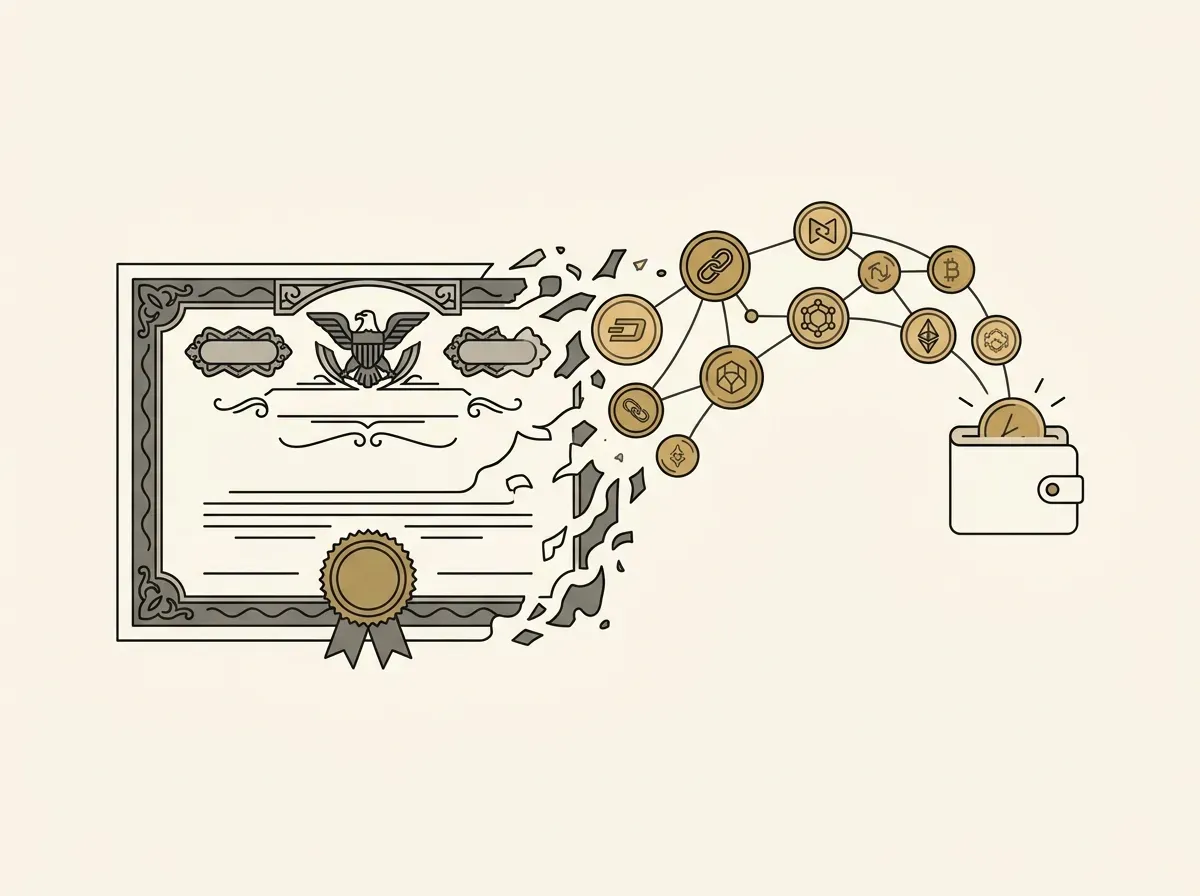
American Depository Receipts (ADRs) are certificates issued by a US depository bank, representing shares of a foreign company. These certificates trade on US exchanges, simplifying the process for US investors to invest in non-US companies by allowing them to trade in US dollars through a US broker. The underlying foreign shares are held by a custodian bank in the issuer's home country, and the ADRs are issued against these shares.
ADRs are categorized into different levels (Level I, II, and III), which determine their access to US markets and the regulatory requirements they must meet. Level I ADRs are typically traded over-the-counter (OTC) and have the fewest reporting requirements. Level II and III ADRs are listed on major US exchanges like the NYSE or Nasdaq and require more stringent SEC filings, with Level III ADRs allowing foreign companies to raise capital directly in the US market.

Key Differences: A Side-by-Side Comparison
Understanding the distinctions between tokenized stocks and ADRs is crucial for global investors. We compare them across several key dimensions:
| Feature | Tokenized Stocks (e.g., GM Markets) | American Depository Receipts (ADRs) |
|---|---|---|
| Underlying Structure & Custody | Direct economic claim on 1:1 backed shares held in segregated accounts. Self-custody via embedded MPC wallet. | Indirect claim via a US depository bank, representing shares held by a custodian in the foreign company's home country. Held by traditional brokerage. |
| Accessibility & Onboarding | Permissionless, wallet-native onboarding (external wallet, Google, or email magic-link). No traditional bank account required. Not available in the US or restricted jurisdictions. | Requires traditional brokerage account, often with Know Your Customer (KYC) verification and bank links. Primarily for US investors. |
| Settlement & Transferability | Real-time, 24/7 on-chain settlement (e.g., on Base, Arbitrum, Ethereum, Optimism). Tokens are freely transferable ERC-20 assets. | Traditional market settlement cycles (T+1 as of May 28, 2024, for most US securities). Requires traditional brokerage transfers. |
| Fractional Ownership | Available from a $1 minimum, fractional to six decimal places. | Less common or more restricted; typically requires purchasing whole shares or specific fractional programs. |
| Fees & Costs | Transparent, single trading fee (10-20 basis points on GM Markets). Free deposits and withdrawals. Gas abstracted and paid in stablecoin. No custody, inactivity, dividend, or FX markup fees. See our pricing page. | Various fees: depository service/custody fees (typically $0.01-$0.05 per ADR per dividend or periodically, averaging under 0.20% annually), conversion fees, cancellation fees, potential FX markups. |
| Composability & Utility | High utility in DeFi: can be lent, borrowed, supplied as liquidity, or used as collateral across various protocols. | Limited utility beyond traditional trading and holding; not natively integrated with DeFi. |
| Corporate Actions & Dividends | Total-return NAV model: dividends reinvested into the underlying, raising the token's on-chain NAV. No separate cash payout. Corporate actions absorbed into NAV. | Direct cash dividend payouts, subject to foreign withholding taxes (often 15-35%, reduced by treaties) and potential bank fees for currency conversion and processing. |
| Regulatory Framework | Evolving framework for blockchain-based assets, with regulators often applying existing securities laws to tokenized forms. GM Markets adheres to compliance best practices. | Well-established regulatory oversight by the SEC and FINRA in the US, with specific rules for ADR registration and reporting. |
Underlying Structure and Custody
With tokenized stocks on GM Markets, you hold an economic claim on shares that are held in segregated accounts at regulated broker-dealers. Your tokens reside in your self-custodial MPC wallet, giving you direct control over your assets. In contrast, ADRs represent an indirect claim via a US depository bank, and the underlying foreign shares are held by a custodian bank in the issuer's home country. ADRs are typically held within a traditional brokerage account, meaning the investor does not have self-custody.
Accessibility and Onboarding
Our platform offers permissionless, wallet-native onboarding, allowing users to connect via an external wallet, Google, or an email magic-link. This approach removes many traditional barriers to entry, as it does not require a traditional bank account. For security, trades and withdrawals above $10,000 trigger a second-factor confirmation. We do not serve users in the United States or other restricted jurisdictions.
ADRs, however, necessitate opening a traditional brokerage account, which involves stringent Know Your Customer (KYC) procedures and linking to conventional banking systems. This process is primarily designed for US investors seeking exposure to foreign companies.
Settlement and Transferability
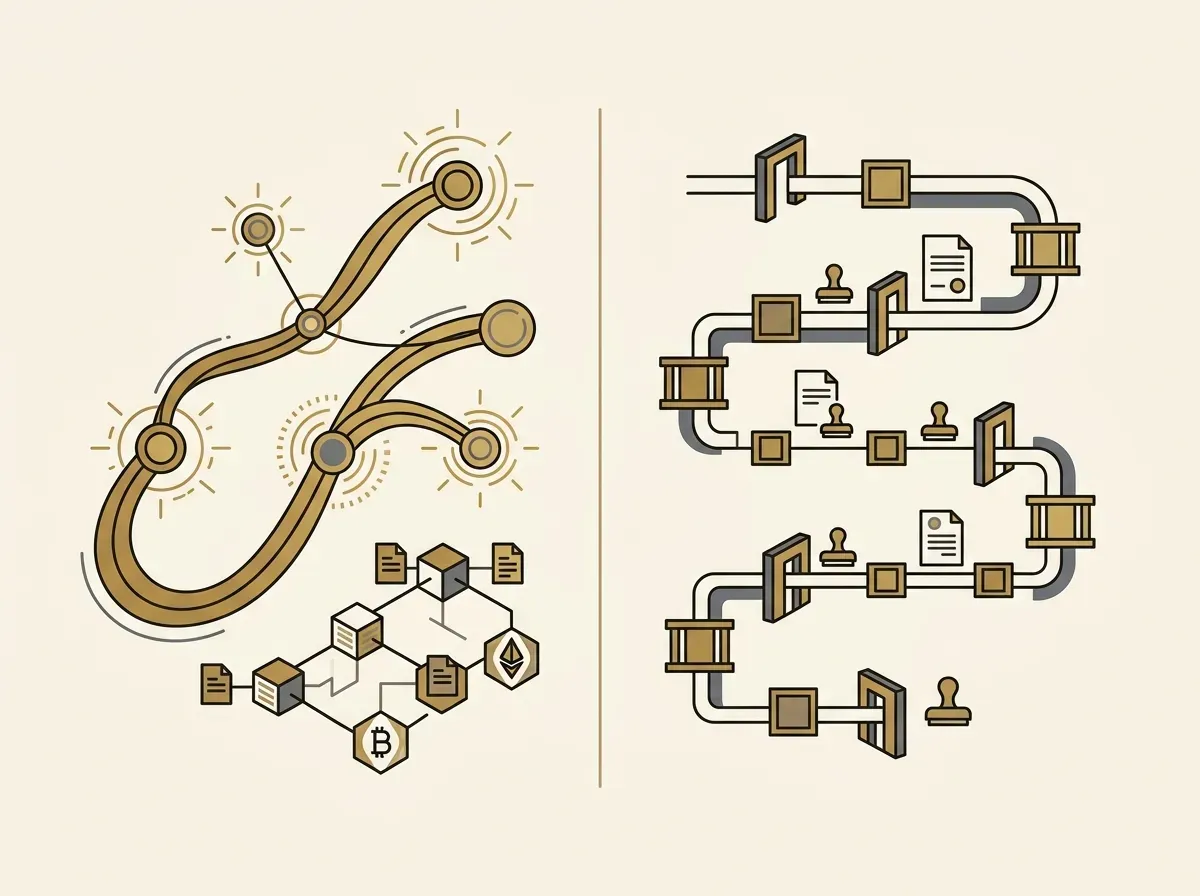
Tokenized stocks benefit from real-time, 24/7 on-chain settlement across various networks like Base, Arbitrum, Ethereum, and Optimism. As ERC-20 tokens, they are highly liquid and transferable across the blockchain ecosystem. ADRs, being traditional securities, adhere to standard market settlement cycles. As of May 28, 2024, the standard settlement cycle for most US securities, including ADRs, is T+1, meaning transactions settle one business day after the trade date. This change aligns the US with other markets like Canada and Mexico. Source: SEC.gov.
Fractional Ownership
GM Markets allows for fractional ownership of tokenized stocks from a $1 minimum, down to six decimal places. This makes high-priced stocks accessible to a broader range of investors. While some traditional brokerages offer fractional share trading, it is less common for ADRs and often comes with more restrictions.
Fees and Costs
Our platform features a transparent, single trading fee ranging from 10 to 20 basis points (0.10% to 0.20%), with deposits and withdrawals being free. Gas fees are abstracted, meaning they are paid by the smart account and billed in USDF from your balance, so you never need to hold a native chain token. There are no custody, inactivity, dividend, or FX markup fees. You can review our full fee structure on our pricing page.
ADRs, conversely, involve multiple layers of fees. Investors typically face depository service or custody fees, which generally range from $0.01 to $0.05 per ADR, often deducted from dividend payments. For an international portfolio, these custodial fees may average just under 0.20% of the beginning balance annually. Source: SEC Investor Alert. Other potential costs include conversion fees if converting ADRs to underlying shares, which can incur handling fees and per-lot charges. Source: Investopedia. Cancellation fees, typically ranging from $0.02 to $0.05 per share, may also apply in certain circumstances. Source: FINRA. Furthermore, while ADRs trade in US dollars, they carry the currency risk of the underlying foreign shares, meaning movements in the exchange rate between the home country currency and the US dollar are reflected in the ADR's price. Source: Nasdaq.
Composability and Utility
The composability of tokenized stocks is a significant differentiator. As standard ERC-20 tokens, they can be seamlessly integrated into decentralized finance protocols for lending, borrowing, or providing liquidity. This opens up new avenues for generating yield on your equity exposure. ADRs, as traditional financial instruments, lack this inherent composability and are confined to the traditional brokerage environment.
Corporate Actions and Dividends
On GM Markets, tokenized stocks operate on a total-return NAV model. Dividends are not paid out as separate cash distributions; instead, they are reinvested into the underlying shares, which increases the token's on-chain Net Asset Value (NAV). This means the dividend value is reflected directly in the token's price. Similarly, other corporate actions like splits or mergers are absorbed into the NAV.
For ADRs, dividends are typically paid out in cash, but these are subject to foreign withholding taxes, which can range from 15% to 35% depending on the country of origin and applicable tax treaties. For instance, countries like Chile and Switzerland may have higher rates. Source: IRS. While tax treaties can reduce these rates, administrative hurdles may prevent automatic application, requiring investors to file additional paperwork. It is also important to note that holding ADRs in tax-deferred accounts like IRAs or RRSPs does not exempt them from foreign withholding taxes, potentially leading to a loss of foreign tax credits. Source: Investopedia.
Regulatory Framework
The regulatory landscape for tokenized stocks is evolving, with regulators globally, including the US Securities and Exchange Commission (SEC), clarifying that existing securities laws generally apply to these digital assets. The SEC maintains that federal securities laws apply to tokenized securities regardless of their format. Many tokenized stock products available to retail investors offer economic exposure without full ownership rights or voting rights, which raises questions about shareholder protections and disclosures. Some tokenized securities might be classified as security-based swaps, which are prohibited for retail investors. GM Markets adheres to compliance best practices, with smart contracts audited by Sherlock, Halborn, Cantina, and Cyfrin, and SOC 2 Type II in progress. Source: GM Markets Security.
ADRs, conversely, operate within a well-established regulatory framework. They are regulated by the U.S. Securities and Exchange Commission (SEC) and, when listed on an exchange, must comply with stringent U.S. accounting rules and reporting standards. The SEC permits banks to create unsponsored ADRs without requiring issuer consent, though these generally trade over-the-counter and have fewer reporting requirements. This robust oversight provides a high degree of transparency and investor protection within the traditional financial system. Source: SEC Final Rule.
Frequently Asked Questions
1. What is the fundamental difference between tokenized stocks and ADRs?
ADRs are negotiable securities issued by a U.S. bank that represent shares in a non-U.S. company, allowing American investors to trade foreign stocks in U.S. dollars on U.S. markets. Tokenized stocks, conversely, are blockchain-based products linked to traditional shares, typically offering economic exposure to an underlying asset without conferring direct ownership of the actual share in many cases.
2. How do tokenized stocks offer greater accessibility compared to ADRs?
Tokenized stocks can facilitate 24/7 trading, near-instant settlement on-chain, and fractional ownership, making them globally accessible through self-custodial wallets. This is particularly beneficial for investors outside the U.S. who may not have access to traditional U.S. brokerage accounts. ADRs primarily simplify foreign investing for American investors by enabling them to trade foreign companies in U.S. dollars on U.S. exchanges.
3. What are the key advantages of ADRs for investors?
ADRs offer convenience by allowing investors to use existing brokerage accounts for foreign company investments without navigating complex foreign regulations. They provide portfolio diversification, offering exposure to global markets and trends. Sponsored ADRs adhere to U.S. regulatory and reporting standards, ensuring transparency through audited financial reports. Additionally, the issuing financial institution handles dividend collection and conversion into U.S. dollars. ADRs also trade during U.S. market hours.
4. How do dividends and corporate actions work for tokenized stocks versus ADRs?
For ADRs, the issuing financial institution collects dividend payments, converts them to U.S. dollars, and distributes them to ADR holders. Corporate actions generally mirror those of the underlying foreign shares. For tokenized stocks, dividends are often not paid out as separate cash distributions. Instead, they are typically reinvested automatically into the token's value, increasing its on-chain Net Asset Value (NAV). Corporate actions like stock splits or mergers are usually absorbed into the token's on-chain NAV or managed through multiplier adjustments, affecting the token balance or displayed price. Token holders generally do not possess proxy voting rights.
5. What are the regulatory considerations for tokenized stocks and ADRs?
ADRs are regulated by the U.S. Securities and Exchange Commission (SEC) and, when listed on an exchange, must comply with U.S. accounting rules. The SEC permits banks to create unsponsored ADRs without requiring issuer consent. The regulatory landscape for tokenized stocks is still developing. The SEC maintains that federal securities laws apply to tokenized securities regardless of their format. However, many tokenized stock products available to retail investors offer price exposure without full ownership rights, raising questions about shareholder protections and disclosures. Some tokenized securities might be classified as security-based swaps, which are prohibited for retail investors.
6. Are tokenized stocks available to investors in all jurisdictions, including the United States?
Currently, most tokenized stock products are not available to U.S. residents. Major platforms like GM Markets exclusively serve non-U.S. users. While the New York Stock Exchange (NYSE) and Nasdaq are developing platforms for tokenized securities, these initiatives are subject to regulatory approvals and aim to integrate with existing market structures. The U.S. framework for tokenized stocks faced delays in May 2026 due to industry pushback.
7. What are the primary risks associated with investing in tokenized stocks?
Key risks include issuer and counterparty risk, where investor rights depend on the issuer, custodian, and collateral structure, potentially leading to losses if a custodian fails. Legal and eligibility risk arises from restrictions based on residency or local laws, which can cause sudden trading halts or loss of access. Liquidity and price risk can result in tokens trading above or below their reference value, especially outside primary market hours, leading to wider spreads. Smart-contract and network risk involves vulnerabilities in the underlying blockchain technology. Corporate-action risk means that dividends, splits, and voting rights may be handled differently than with direct share ownership, with most token holders lacking voting rights or legal ownership. Additionally, tokenized stocks typically lack the investor protections found in traditional brokerage accounts, such as SIPC coverage.
8. What are the primary risks associated with investing in ADRs?
Investors in ADRs may incur ADR Pass-Through Fees, which are quarterly or annual custody fees and charges for processing dividends and corporate actions. Some ADRs can suffer from low liquidity, impacting bid/ask spreads. There is a risk of program termination by the issuing bank, which could necessitate liquidating the position or converting to underlying foreign shares. Exchange rate fluctuations can negatively affect the value of ADRs if the foreign currency weakens against the U.S. dollar. Political and economic risks in the issuing company's home country can also impact performance. Furthermore, ADR holders may have limited voting rights compared to direct shareholders.
Trading Tokenized Stocks on GM Markets
In summary, both tokenized stocks and American Depository Receipts offer avenues for global investors to gain exposure to US equities, but they cater to different needs and preferences. ADRs provide a familiar, regulated pathway through traditional brokerage channels, primarily for US investors seeking foreign exposure. Tokenized stocks, particularly those offered by GM Markets, leverage blockchain technology to deliver permissionless access, fractional ownership, 24/7 on-chain settlement, and unique DeFi composability for a global audience. We provide a transparent, efficient, and self-custodial way to access these markets. However, it is crucial to understand the evolving regulatory landscape and inherent risks associated with these innovative assets. We reiterate that we do not serve users in the United States or other restricted jurisdictions. To explore our offerings and begin trading tokenized stocks, visit our learn section or connect your wallet today.