Tokenized Stocks Explained: 15 Essential Terms to Understand
Understand the future of finance with our detailed guide to 15 essential tokenized stock terms. Learn about 1:1 backing, composability, on-chain settlement, and more.
Tokenized Stocks Explained: 15 Essential Terms to Understand
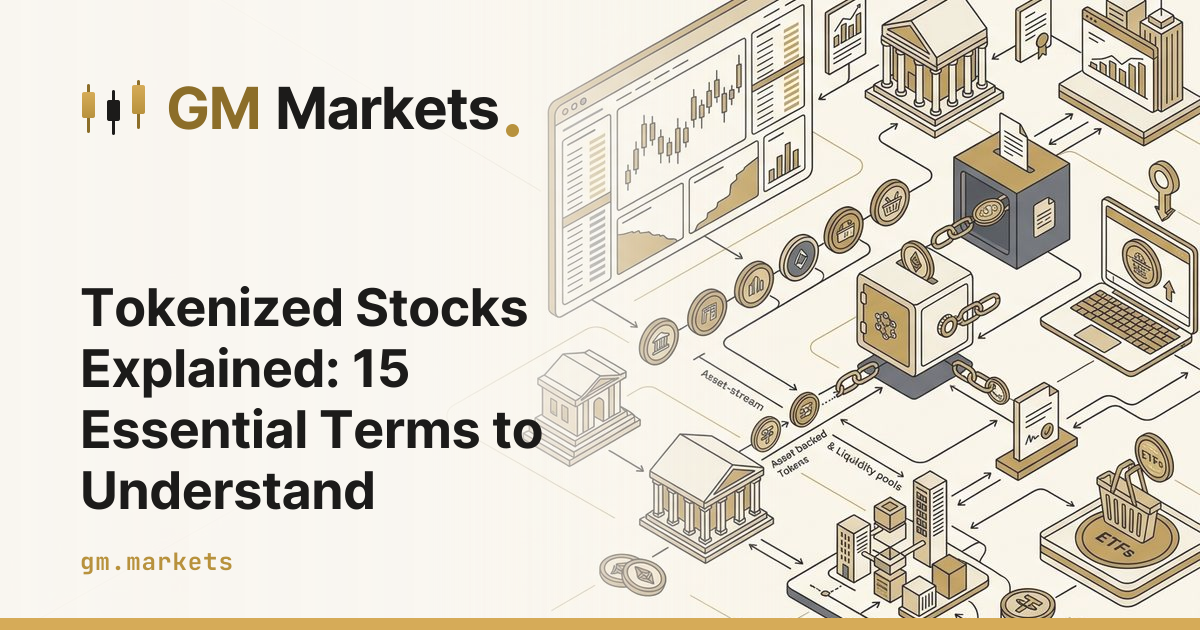
The financial landscape is experiencing a significant shift, led by the tokenization of real-world assets (RWAs). This is not a niche concept; major institutions are actively involved. For example, BlackRock's BUIDL fund, a tokenized money market fund, rapidly grew to hundreds of millions in assets after its launch, demonstrating strong market demand for on-chain financial products. Projections from analysts like Boston Consulting Group suggest the market for tokenized assets could reach $16 trillion by 2030. To participate in this evolving market, you must first understand its specific terminology. A tokenized stock is a digital token issued on a blockchain that represents ownership of one share of a public company. It is backed 1:1 by the actual underlying stock held in a protected custody account.
This guide explains the 15 essential terms you need to know. We cover the foundational concepts, security mechanisms, and trading features that define tokenized stocks, detailing how we implement them on the GM Markets platform to provide you with secure and efficient access to global equity markets.
Part 1: Foundational Concepts
These four terms are the core principles of tokenization technology and how it functions on-chain.
Smart Contract
A smart contract is a self-executing program where the terms of an agreement are written directly into code that resides on the blockchain. These programs enable and govern the tokenization process. They define the rules for a tokenized stock, such as its total supply, how it can be transferred, and the conditions for minting or redeeming it against the underlying share. Our smart contracts have been independently audited by security firms including Sherlock, Halborn, Cantina, and Cyfrin to ensure their integrity. During an audit, experts scrutinize the code for vulnerabilities and logic errors that could be exploited. This rigorous review is essential, as regulators like Europe's ESMA apply existing securities laws to these instruments based on their economic substance, a principle known as “technological neutrality.”
On-Chain
This term refers to any data, transaction, or process that is recorded and verified directly on the blockchain. On-chain settlement, for instance, means your trade is finalized on the public ledger in minutes. This is a significant contrast to the settlement cycle in traditional stock markets. The standard was formerly T+2 (two business days), but as of May 2024, U.S. markets have moved to a T+1 cycle, as mandated by the U.S. Securities and Exchange Commission, to reduce risk. On-chain settlement achieves this finality much faster, which unlocks capital efficiency and reduces the risk that the other party in a trade fails to deliver.
Blockchain
A blockchain is a distributed, immutable digital ledger that records all transactions in a secure and transparent manner. When you buy or sell a tokenized stock on our platform, the transaction is settled and permanently recorded on a public blockchain like Base, Arbitrum, Ethereum, or Optimism. This creates a tamper-proof public record of ownership, secured by a global network of computers instead of a single company's private database. This distributed nature means there is no central server to hack and no single entity that can alter the transaction history. The integrity of the ledger is maintained by a consensus among network participants, making it an exceptionally robust system for recording ownership.
Tokenization
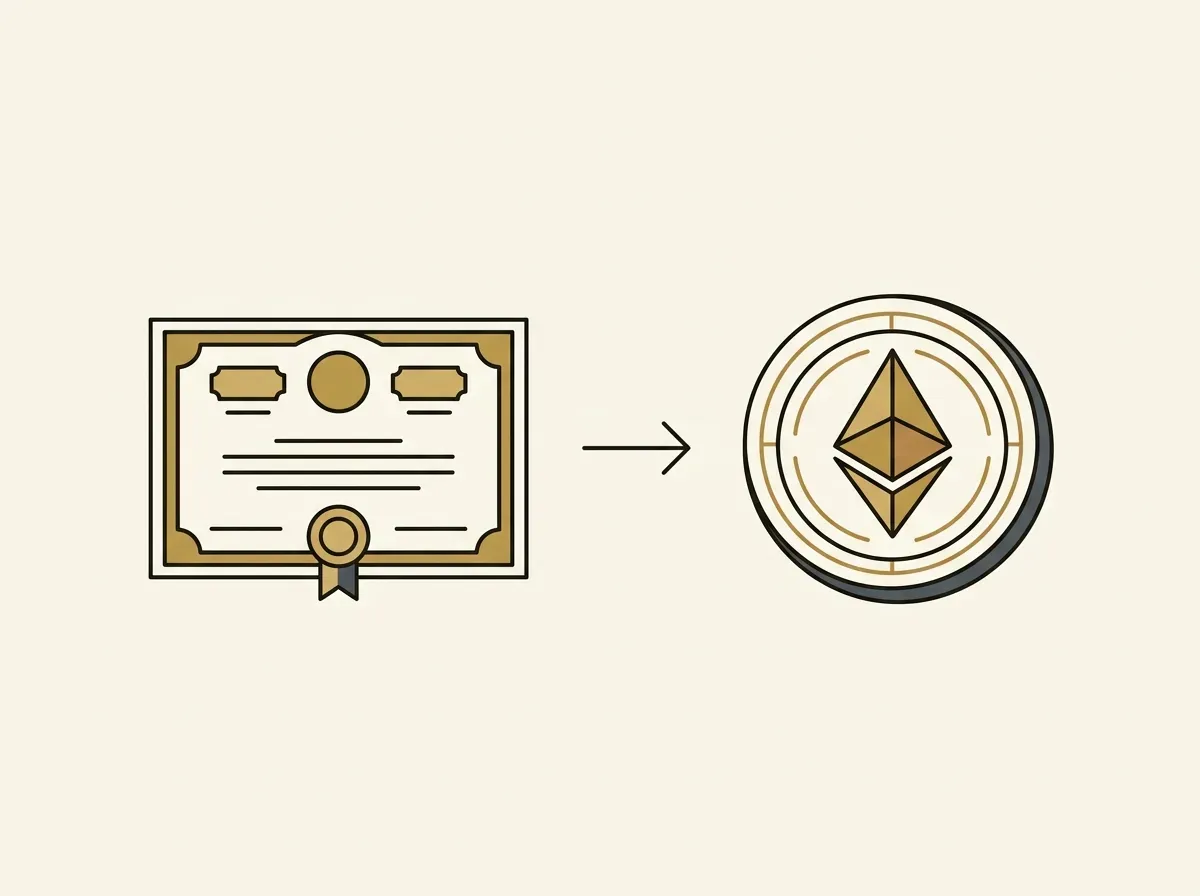
Tokenization is the process of converting the rights to an asset into a digital token on a blockchain. This token serves as a verifiable, on-chain representation of ownership. While specialized security token standards like ERC-1400 and ERC-3643 exist to embed compliance rules like transfer restrictions directly into the token, we deliberately issue our tokens using the ERC-20 standard. This decision prioritizes maximum compatibility and composability across the decentralized finance (DeFi) ecosystem. It ensures that our tokens work out-of-the-box with the vast majority of existing DeFi infrastructure, from wallets to decentralized exchanges. While embedded compliance can be powerful, it often limits where and how an asset can be used, creating friction that we chose to avoid by managing compliance at the platform level.
Part 2: Security and Backing Mechanisms
Trust in tokenized assets is built on verifiable security, transparent collateralization, and clear custody arrangements.
Net Asset Value (NAV)
NAV represents the total value of the underlying assets backing a token. On our platform, we use a total-return model for dividends and corporate actions. When a company like NVIDIA pays a dividend, the cash is used to purchase more NVDA shares for the reserve pool. This increases the total value held in custody, which in turn increases the NAV of each tokenized share. The dividend's value is therefore reflected in the token's price appreciation rather than being paid out as a separate cash distribution. This can have different tax implications, as value is realized as a capital gain when you sell, not as income when the dividend is paid. You should always consult a tax professional for advice specific to your situation.
Self-Custody
While the underlying shares are held by a custodian, you have direct control over the tokenized asset itself. Self-custody means you hold the private keys to your digital wallet. Our platform uses embedded wallets from Privy, which are secured with multi-party computation (MPC). This technology splits the private key into multiple shares, meaning no single party, including GM Markets or Privy, has access to your full key. The shares interact to sign a transaction without the full key ever being reconstructed in one place. This provides the convenience of a passwordless login with the security of a hardware wallet, solving a major user experience challenge of traditional self-custody.
Custody
Custody refers to the safeguarding of the underlying financial assets. The real shares that back our tokens are not held by GM Markets. They are held in segregated customer accounts at regulated, third-party broker-dealers, including Interactive Brokers and Alpaca Markets. This structure legally separates the assets from our corporate balance sheet, providing a critical layer of security. This is a concept known as bankruptcy remoteness. It ensures that if any involved party were to face financial distress, the assets held in custody would not be considered part of their estate and would remain available to token holders.
Proof of Reserves (PoR)
Proof of Reserves is the technical process of demonstrating that the assets held in custody match the total supply of tokens issued on-chain. We partner with Accountable, a third-party attestation service, which programmatically reads the balances in our brokerage accounts via secure APIs and publishes that data on-chain in real time. This allows anyone to visit our Proof of Reserves page and independently verify that the number of tokens in circulation is fully backed. Traditional financial audits are periodic, providing a snapshot in time. Real-time, on-chain PoR offers continuous transparency, replacing trust in a report with the ability to programmatically verify collateralization at any moment.
1:1 Backing
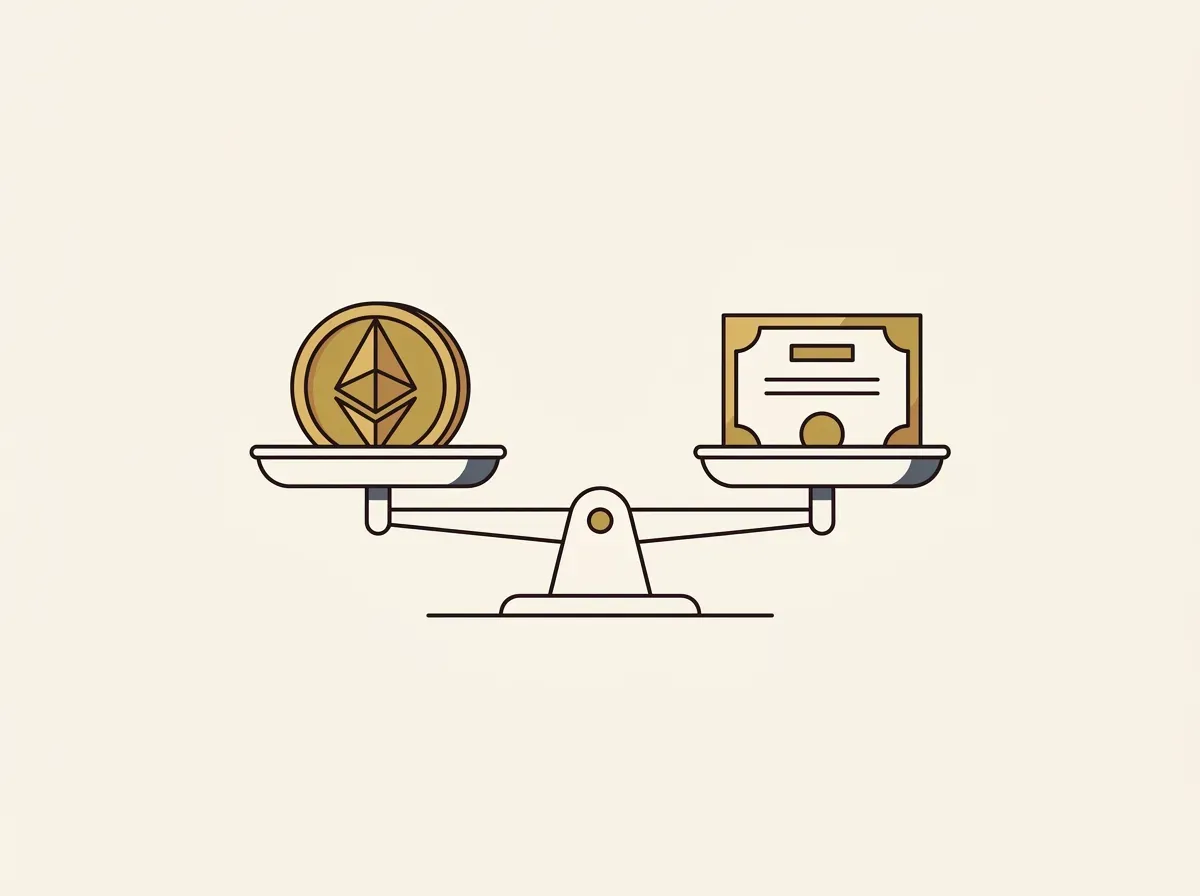
This is the core principle that ensures a tokenized stock's value is directly tied to the real-world asset. For every token we issue, one corresponding share of the actual company stock is purchased and held in a segregated custody account. If 1,000 tokenized AAPL tokens exist on-chain, it means exactly 1,000 real Apple Inc. shares are held in custody. This fully collateralized model avoids the counterparty and de-pegging risks associated with synthetic or algorithmically-pegged assets, as each token represents a direct claim on a tangible and verifiable underlying share.
Part 3: Trading and On-Chain Utility
These terms describe the unique features and advantages that come from trading stocks on a blockchain.
Permissionless
A permissionless system is one that is open for anyone to access and use without requiring approval from a central authority. Unlike traditional brokerages with extensive onboarding procedures, you can connect an existing digital wallet or create a new one with your email address and begin trading on GM Markets within minutes. This is particularly valuable for investors in countries where local brokerages offer limited access to international markets like the NYSE or NASDAQ. Note that our services are not offered to users in the United States or other restricted jurisdictions.
Gas Abstraction
Blockchains require a transaction fee, known as “gas,” which must be paid in the network's native token (such as ETH for Ethereum or its Layer 2s). Gas abstraction is a feature that removes this complexity for you. Our platform's smart account pays the native gas fees for your transactions on your behalf. We then deduct the equivalent cost from your stablecoin (USDF) balance. Without abstraction, you would need to separately purchase and hold a network's native token. This feature consolidates all costs into your primary balance, making the on-chain experience feel as seamless as a traditional trading app.
Slippage
Slippage is the difference between the expected price of a trade and the price at which it is actually executed. This is a common issue in volatile markets, especially on decentralized exchanges that use an automated market maker (AMM) model. For example, if you try to buy a token at $100 on an AMM, a large trade before yours could shift the price, and your order might execute at $100.50, resulting in $0.50 of slippage per token. Our RFQ system significantly reduces this risk because the price you are quoted is locked in for a short period, giving you time to accept the trade with confidence that the price will not change before execution.
Request-for-Quote (RFQ)
RFQ is the trade execution model we use to ensure price accuracy. When you initiate a trade, our system requests a price from multiple regulated market makers. They compete to provide a firm quote based on the live market price of the underlying stock. You are presented with a final, all-inclusive price. This differs from the Automated Market Maker (AMM) model on many decentralized exchanges, where prices are determined by a liquidity pool's ratio. RFQ connects you to institutional-grade liquidity, providing prices that reflect the true market rate. You can learn more about our fee structure on our pricing page.
Composability
Composability is a primary benefit of DeFi, referring to the ability of on-chain assets and protocols to interact seamlessly like building blocks. Because our tokens are standard ERC-20s, you can use your tokenized stocks as productive assets. For example, they can be supplied as collateral to borrow stablecoins on lending protocols like Morpho. On Morpho, assets can be used in isolated lending markets with governance-approved risk parameters. This includes, as seen in their documentation, a specific Liquidation Loan-to-Value (LLTV) ratio of 62.5%, meaning you could borrow up to $62.50 against every $100 of collateral before facing liquidation risk. This transforms your equity position from a static holding into active, productive capital.
Fractional Shares
Because tokens are digitally native, they are highly divisible, down to many decimal places. This allows you to buy and sell small fractions of a tokenized stock. On our platform, you can trade with as little as $1, enabling you to gain price exposure to high-value stocks like TSLA or NVDA without needing to purchase a full share. This is especially powerful for investors looking to build a position over time in stocks with high per-share prices, such as Microsoft (MSFT) or Alphabet (GOOGL). It makes building a diversified portfolio more accessible, as your capital can be allocated in precise amounts across different assets.

Frequently Asked Questions
Are tokenized stocks the same as owning shares directly?
Owning a tokenized stock gives you direct economic exposure to the underlying share, including its price movements and dividends (via NAV appreciation). However, it does not typically confer the same corporate governance rights, such as the ability to vote at shareholder meetings. It is an investment in the economic value, not the legal rights of a direct shareholder.
What are the specific risks of tokenized stocks?
Like any investment, tokenized stocks carry market risk, meaning the value can decrease. They also have specific risks, including smart contract risk (the potential for bugs in the code), counterparty risk (related to the custodian holding the underlying shares), and regulatory risk (as laws governing digital assets continue to evolve). We mitigate these through rigorous audits, using regulated custodians, and maintaining compliance with current regulations.
How are dividends handled with the total-return model?
Instead of receiving a cash payment, dividends from the underlying stock are automatically used to purchase more of that same stock for the reserve pool. This increases the amount of backing for each token, causing the token's Net Asset Value (NAV) and market price to rise accordingly. The value is delivered through capital appreciation rather than a direct payout.
Why use the ERC-20 standard instead of a security token standard?
We chose the ERC-20 standard to ensure our tokenized stocks have the widest possible compatibility with the existing DeFi ecosystem. This allows them to be easily integrated into wallets, exchanges, and lending protocols, maximizing their utility and liquidity. This approach prioritizes composability, with compliance managed at the platform level, rather than restricting the token's use via code-level rules.
A New Vocabulary for a New Market
These 15 terms provide the foundational language for understanding tokenized stocks. By combining traditional equity exposure with the efficiency, transparency, and composability of blockchain technology, these instruments represent a significant evolution in financial markets. They offer the economic benefits of owning stock in a brokerage account, enhanced with the powerful advantages of on-chain finance.
You can explore the live market for tokenized stocks and ETFs on GM Markets today. We are committed to building a secure and accessible on-chain trading experience.
Please be aware that all trading involves risk. The value of tokenized assets can go down as well as up, and you may lose the money you invest. GM Markets does not provide financial advice. Our platform is not available to users in the United States or other restricted jurisdictions. For more information, please review our legal and risk disclosures.