Tokenized Stocks: A Glossary of 16 Key Terms for Beginners
Understand the future of finance with our glossary of 16 essential tokenized stock terms. Learn about 1:1 backing, self-custody, gas abstraction, and more.
Tokenized Stocks: A Glossary of 16 Key Terms for Beginners
The world of finance is undergoing a significant transformation as traditional assets move onto blockchain infrastructure. Leading financial analysts project that the market for these tokenized assets could reach between $2 trillion and $4 trillion by 2030, according to a report from Boston Consulting Group. This shift represents a fundamental change in how we own, transfer, and manage value.
To navigate this evolution, you first need to understand the core vocabulary. This guide defines the 16 essential terms every beginner should know about tokenized stocks. We go beyond simple definitions to explain not just the 'what' but the 'how' based on our first-hand experience building and operating the GM Markets platform. Mastering these concepts is the first step to confidently participating in the next generation of finance.
Foundational Concepts
These terms cover the basic principles of what a tokenized stock is, how it represents value, and the technology that makes it possible.
1. Tokenization
Tokenization is the process of creating a digital certificate, or “token,” that represents ownership of a real-world asset on a blockchain. As explained by financial education resources like Investopedia, this process converts rights to an asset into a digital format. In our context, the asset is a share of a publicly traded company like Apple. This token can then be managed, transferred, or stored on a blockchain network, giving a traditional asset the properties of a digital one, such as 24/7 transferability and compatibility with other on-chain applications.
2. Tokenized Stock
A tokenized stock is a digital token that represents a direct economic interest in one share of a company's stock. It is not a synthetic product or a derivative that merely tracks the price. On our platform, it is a digital wrapper around a real, underlying security. Each token is designed to track the economic value of its corresponding share and make it compatible with blockchain technology. This means the token lives in your digital wallet, giving you direct custody over your asset.
3. Blockchain
A blockchain is a decentralized and immutable digital ledger that records transactions in a secure and transparent way. For tokenized stocks, the blockchain acts as the official ownership registry. When you buy or sell a token on GM Markets, the transaction is settled on public blockchains like Base, Arbitrum, Ethereum, or Optimism. This creates a permanent and publicly verifiable record of the ownership transfer, providing a level of transparency that is not always available in traditional financial systems.
4. Real World Asset (RWA)
Real World Asset is a broad term for any tangible or intangible asset from outside the crypto ecosystem that is brought on-chain through tokenization. Publicly traded stocks are a prime example of RWAs. The tokenization of RWAs is a growing sector that aims to bridge the gap between traditional financial markets and the efficiency of decentralized finance. Our platform is focused on this bridge, allowing you to access global equity markets using on-chain infrastructure.
How Tokenized Stocks Work
This section explains the core mechanics that ensure tokenized stocks are secure, transparent, and maintain their value.
5. 1:1 Backing
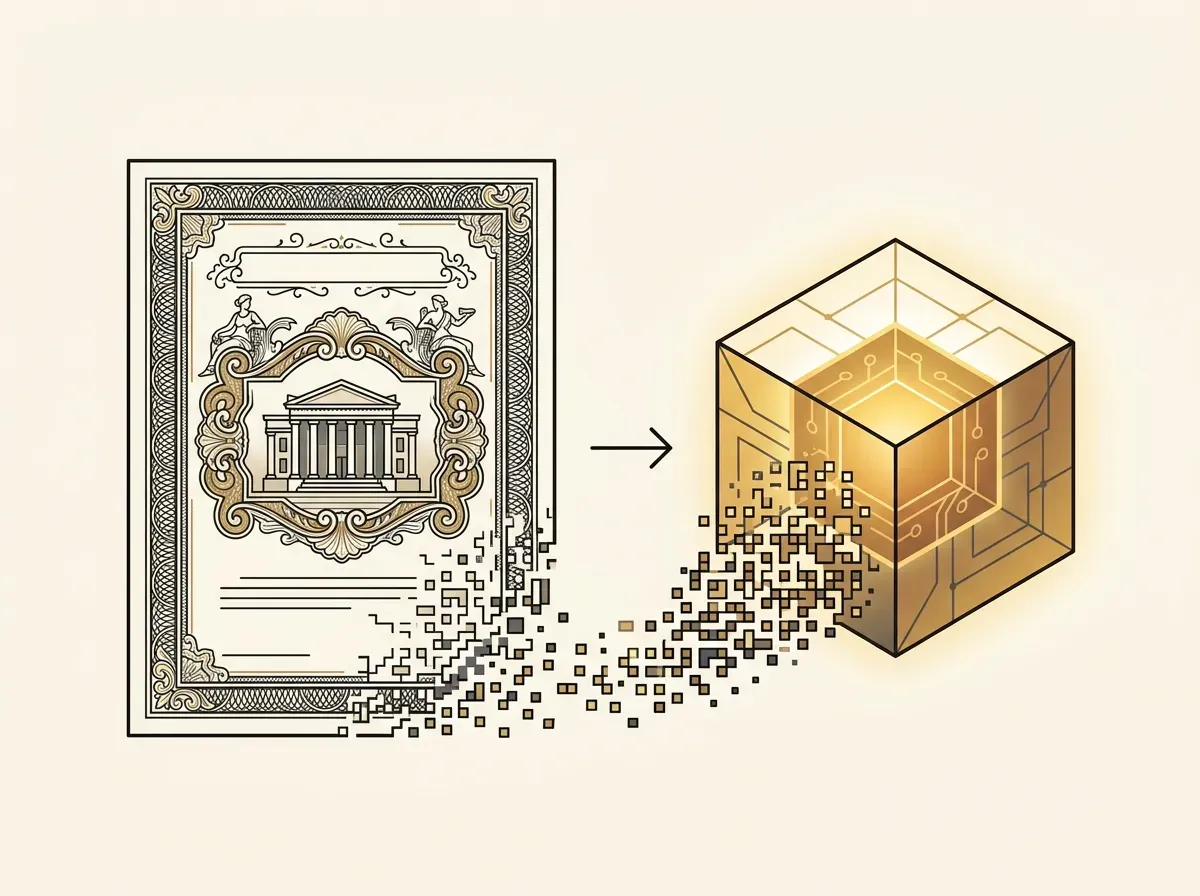
This is the fundamental principle that gives a token its value. 1:1 backing means that for every single token in circulation, there is one full, corresponding underlying share held in reserve. If there are 1,000 tokenized NVDA shares issued on our platform, there are exactly 1,000 real NVIDIA Corporation shares held with our custodian brokers. This is a full, verifiable backing system, not a fractional reserve system. The assets are not held on our balance sheet; they are held in segregated accounts for the benefit of token holders.
6. Proof of Reserves (PoR)
Proof of Reserves is the auditing framework that allows anyone to verify the 1:1 backing of our tokens. We provide a live, on-chain attestation system that works with a third-party service, Accountable, to read our custodian brokers' balances directly. This data is published on the blockchain, allowing you to independently confirm that we hold sufficient assets to back every token we issue. You can view our live Proof of Reserves at any time to see the backing ratio for each asset.
7. Smart Contract
A smart contract is a self-executing program stored on a blockchain that automatically enforces the rules of an agreement. As defined by sources like the Ethereum Foundation, these contracts handle the entire lifecycle of a token. On our platform, smart contracts govern how tokens are issued (minted), transferred between wallets, and redeemed for the underlying asset. They also automatically manage our total return model for dividends, ensuring the rules operate with transparency and predictability on a public blockchain.
8. Custodian
A custodian is a regulated financial institution that securely holds the underlying assets on behalf of token holders. We partner with established, regulated U.S. broker-dealers, including Interactive Brokers and Alpaca Markets. These firms are subject to strict regulatory oversight, such as from the U.S. Securities and Exchange Commission (SEC). They hold the actual shares in segregated customer accounts, providing a crucial layer of security and regulatory protection that is separate from our platform's operations.
Key Features and Benefits
These terms describe the unique advantages that tokenization brings to traditional stock ownership.
9. Fractional Ownership
Tokenization makes it simple to divide a high-value asset into smaller, more affordable pieces. On our platform, tokens can be divided to six decimal places. This means you can gain economic exposure to stocks that may trade for hundreds or thousands of dollars per share by purchasing a fraction of a token for as little as $1. This significantly lowers the barrier to entry for building a diversified portfolio of global equities.
10. Composability
Composability is a core feature of decentralized finance (DeFi), meaning our tokenized stocks can be used as building blocks in other financial applications. Because our tokens are standard ERC-20s, they are compatible with a wide range of DeFi protocols. For example, you can use your tokenized assets as collateral on lending platforms like Aave and Morpho, provide liquidity to decentralized exchanges like Uniswap and Curve, or use them in structured products. This allows a traditionally static asset to become productive capital.
11. Self-Custody
Self-custody means you hold your assets directly in your own wallet, not on a centralized exchange's balance sheet where they could be at risk. We provide embedded wallets secured by Multi-Party Computation (MPC), a cryptographic technology that splits a private key into multiple shares, or shards. These shares are stored in different locations, and no single party, including GM Markets, ever has access to the full key. The key is only reconstructed on your device when you approve a transaction, providing enhanced security for your assets.
12. Total Return Model
We use a total return model for handling dividends and other corporate actions. Instead of paying out dividends as cash, which can create a taxable event, the funds are automatically used to purchase more of the underlying stock held in custody. This increases the amount of backing for each token, which is then reflected in the token's on-chain price, known as its Net Asset Value (NAV). This method simplifies tax considerations and allows your returns to compound automatically without any manual action.
The Trading Experience
Finally, these terms explain the financial mechanics of the trading process on GM Markets.
13. Basis Points (Bps)
Basis points are a standard unit of measure in finance used to describe a percentage change in a precise way. One basis point is equal to 0.01%, or 1/100th of a percent. We use this unit to describe our trading fees for clarity. For example, a fee of 20 bps is equivalent to 0.20%. On a $1,000 trade, this would amount to a $2.00 fee. You can see our full fee structure, which scales down with volume, on our pricing page.
14. Request for Quote (RFQ)
Request for Quote is the trade execution model we use to ensure price certainty. When you initiate a trade, our system requests a firm price from multiple professional market makers. You are presented with a final, all-inclusive price that is held for a short period. If you accept it, the trade executes at that exact price. This model contrasts with automated market maker (AMM) systems and provides protection from unexpected price changes.
15. Slippage
Slippage is the difference between the expected price of a trade and the price at which the trade is actually executed. This often occurs in volatile markets on traditional order book or AMM exchanges. Our RFQ model is designed to eliminate slippage for the user. The price you are quoted is the price you get. This provides a more predictable and transparent trading experience, especially for larger order sizes.
16. Gas Abstraction
Gas is the fee required to conduct a transaction on a blockchain. On many platforms, this fee must be paid in the blockchain's native token (like ETH for Ethereum). Gas abstraction is a feature that removes this complexity for the user. On our platform, you do not need to hold various native tokens to trade. Our smart account system pays the gas fees on your behalf and deducts the equivalent value from your stablecoin (USDF) balance. This creates a seamless experience where you can focus on your trade, not on managing gas tokens.

Frequently Asked Questions
Are tokenized stocks real stocks?
A tokenized stock represents a direct economic interest in a real, underlying stock. While you gain full price exposure and receive the value of dividends through the total return model, you do not typically receive shareholder voting rights. The token is a digital certificate of ownership for the economic benefits of the stock, held in your own wallet.
What is the difference between a tokenized stock and a cryptocurrency like Bitcoin?
A tokenized stock is a Real World Asset backed 1:1 by a share held at a regulated custodian. Its value is directly tied to the performance of that underlying company. Cryptocurrencies like Bitcoin are native digital assets whose value is determined by market supply and demand, and they are not backed by any off-chain asset.
How do I know the tokens are really backed?
The backing is verifiable through our on-chain Proof of Reserves system. This allows anyone to compare the number of tokens in circulation with the balance of shares held at our custodian brokers in near real-time. This transparency is a core feature of our platform, designed to build trust through verification.
Your Next Step in On-Chain Investing
These 16 terms are the building blocks for understanding how traditional assets are being rebuilt for the on-chain world. They describe a system designed for transparency, security, and global accessibility, combining the integrity of regulated finance with the open innovation of blockchain technology. We built the GM Markets platform on these principles, from our verifiable 1:1 backing to our user-focused features like self-custody and gas abstraction.
Now that you understand the language, you are better equipped to explore this new landscape. You can see these concepts in action by exploring assets like tokenized Apple on our platform. Please note that all trading involves risk, and the value of assets can go down as well as up. We do not provide financial, investment, or tax advice. Our platform is not offered to users in the United States or other restricted jurisdictions. For more information, please see our legal and risk disclosures.