Synthetic vs. Fully-Backed Tokenized Stocks: A Guide to On-Chain Asset Models
Not all tokenized stocks are created equal. Learn the critical differences between high-risk synthetic assets and transparent, fully-backed models, with real-world examples from FTX, Synthetix, and Mirror Protocol.
The Promise and Peril of On-Chain Equities
Tokenized stocks are digital representations of publicly traded shares that exist on a blockchain. They are designed to track the economic value of an underlying security, like a share of Apple or an ETF like SPY, allowing for global, 24/7 access and integration with decentralized finance (DeFi). The concept promises to merge the value of traditional equity markets with the efficiency and openness of blockchain technology. Yet, not all tokenized stocks are created equal. The history of these assets shows a clear and necessary progression from high-risk synthetic derivatives to transparent, fully-backed instruments. This evolution was driven by catastrophic failures that exposed fundamental risks related to counterparties, transparency, and regulation. At GM Markets, we provide the modern, fully-backed model that represents the culmination of this journey, offering a trustworthy bridge between on-chain capital and global equity markets.
Phase 1: Early Experiments with Synthetic Assets
The first wave of on-chain equities consisted of synthetic assets. A synthetic token is a derivative that mimics the price of a stock without the issuer actually holding the underlying asset. Instead of direct ownership, the token's value is maintained through complex on-chain mechanisms, typically requiring users to lock up other, often volatile, crypto assets as collateral in a smart contract. The system then relies on price oracles, which are third-party data feeds, to report the real-world stock price and ensure the synthetic token's value stays in line.
Platforms like Synthetix and Mirror Protocol were pioneers in this field, demonstrating the initial demand for on-chain equity exposure. Synthetix, launched in 2017, introduced a "pooled debt model" where users staked the protocol's native token to mint synthetic assets, creating a shared debt pool that acted as the counterparty for all trades. Mirror Protocol, launched on the Terra blockchain, allowed users to create "mirrored assets" (mAssets) that tracked the prices of real-world stocks. These early innovations were significant. For the first time, they brought global equity price exposure to DeFi. But this access came with severe trade-offs that introduced new, and often poorly understood, forms of risk.

The Inherent Flaws of Synthetics: Counterparty and Systemic Risk
The synthetic model is fundamentally built on a promise from an issuer, not on direct ownership. This introduces multiple layers of risk that have led to significant investor losses and regulatory scrutiny.
Counterparty Risk: The FTX Case Study
The primary flaw in any synthetic model is counterparty risk. With a synthetic token, you are not buying a share; you are entering into a contract with an issuer who promises the token will track a certain price. If that issuer fails, the token can become worthless, regardless of the underlying stock's performance. The collapse of the crypto exchange FTX provides a stark example. FTX offered tokenized stocks that were marketed as backed by real shares held with a regulated German firm, CM-Equity AG.
In reality, when the exchange filed for bankruptcy, holders of these tokens discovered they did not have a direct claim on any shares. Instead, as detailed in court filings, they became unsecured creditors in a complex legal proceeding. The Digital Assets Conversion Table filed in the U.S. Bankruptcy Court for the District of Delaware valued their tokenized stock claims as of the bankruptcy date, lumping them in with other creditors awaiting a fractional recovery from the estate. The supposed 1:1 backing provided no special protection, and the tokens vanished from the platform, leaving investors with a claim against a fraudulent and insolvent entity.
Technical Risk: The Oracle Problem
Synthetic models depend entirely on oracles for price data, but these data feeds can be delayed, inaccurate, or manipulated, creating a critical point of failure. In June 2019, the Synthetix protocol experienced a significant exploit due to a faulty oracle. A commercial API feeding the price for the Korean Won (KRW) intermittently reported a value 1,000 times higher than the actual market rate. An automated arbitrage bot detected this discrepancy and used it to generate a notional profit of over $1 billion in under an hour by trading synthetic KRW for other assets at the inflated price. According to a post-mortem from the Synthetix team, the trades were eventually reversed through a negotiated agreement with the bot's operator, but the incident exposed the fragility of oracle-dependent systems.
Mirror Protocol suffered similar fates. In October 2021, a flaw in the protocol's code that failed to check for duplicate transaction IDs was exploited to drain approximately $90 million, an event that went undetected for seven months. In May 2022, a separate oracle error caused by the collapse of the Terra ecosystem allowed attackers to drain another $2 million by exploiting a massive price discrepancy between the new and old LUNA tokens.
Regulatory Risk: The Crackdown on Unregistered Swaps
Synthetic instruments often operate in a legal gray area. Regulators like the U.S. Securities and Exchange Commission (SEC) have taken decisive action against providers of unregistered synthetic assets. In a prominent case, the SEC charged Terraform Labs with fraud for, among other things, offering synthetic stock derivatives called mAssets. The SEC's complaint highlighted that these instruments were security-based swaps offered and sold to investors without the required registration and disclosures. This enforcement action, which ultimately led to a multi-billion dollar settlement, underscores the reality that synthetic exposure to securities is a regulated activity, and platforms that ignore these frameworks face existential legal risk.
Phase 2: The Evolution to Fully-Backed, Verifiable Models
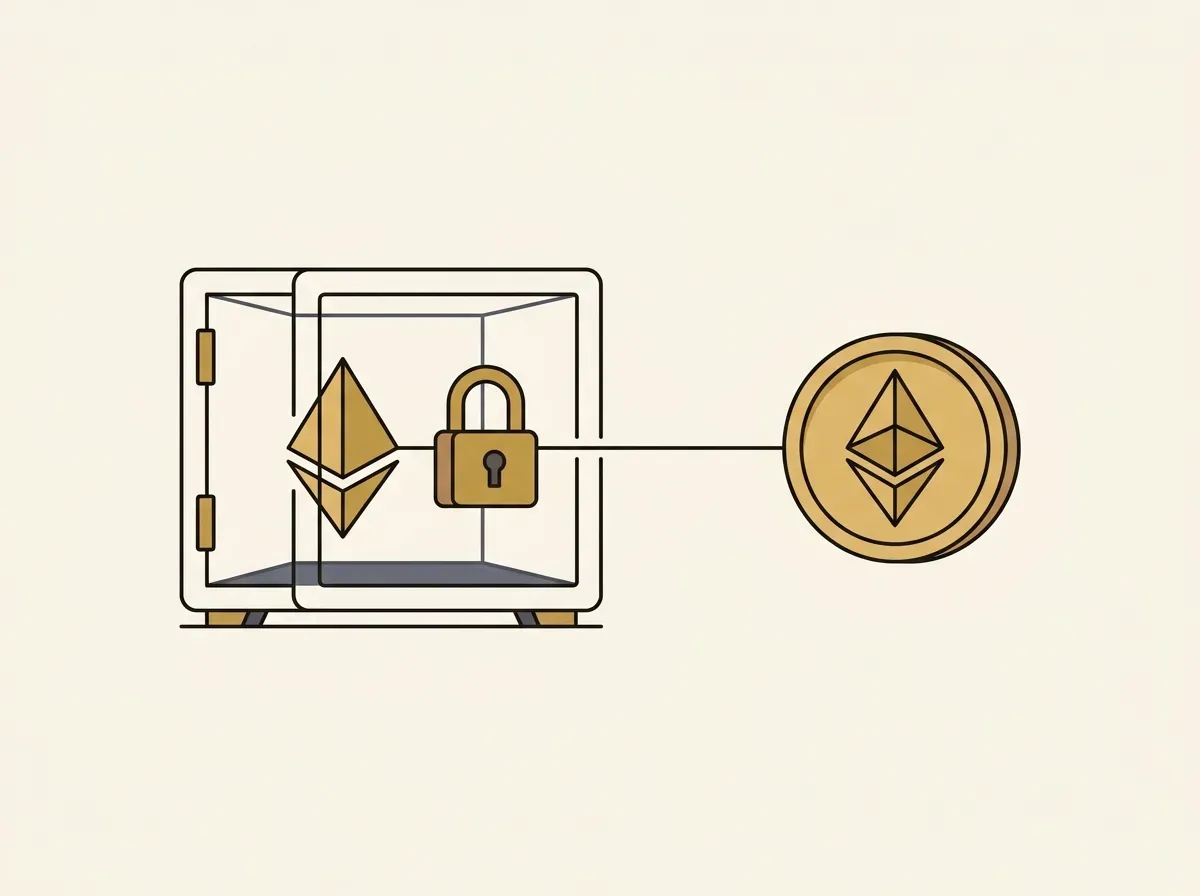
The solution to the problems of synthetics is the fully-backed model. This approach eliminates the issuer as a direct counterparty by ensuring every token is collateralized 1:1 with the real-world asset it represents. This is the model we use at GM Markets. For every tokenized share of a company we make available, we hold one corresponding physical share in a segregated customer account at a regulated, third-party broker-dealer, such as Interactive Brokers or Alpaca Markets.
This model is built on legal and technical components that create trust and transparency. We utilize bankruptcy-remote legal structures, known as Special Purpose Vehicles (SPVs), to issue the tokens. This ensures the underlying shares are legally separate from our own corporate funds and protected in the event of our insolvency. Should GM Markets cease to operate, a designated security agent can work with the custodian to redeem tokens for the underlying shares, a path enforced by the on-chain contract itself. Most importantly, our reserves are not just a claim in a legal document; they are verifiable in real time. Through our Proof of Reserves page, anyone can see the on-chain supply of each tokenized stock and compare it against the attested balance of real shares held at our custodians. This model replaces opaque collateral pools and issuer promises with verifiable, direct claims on the underlying asset.
Comparing the Models: Synthetic vs. Fully-Backed
The distinction between the two approaches is fundamental. Choosing a model has direct implications for an asset's risk profile, transparency, and long-term viability. The following table provides a direct comparison.
| Feature | Synthetic Model | Fully-Backed Model (GM Markets) |
|---|---|---|
| Asset Ownership | A derivative contract; no ownership of the underlying share. Holder has a claim against the issuer. | A verifiable claim on a real share held 1:1 in segregated custody at a regulated broker. |
| Counterparty Risk | High. The token's value depends on the solvency and performance of the issuer (e.g., FTX). | Minimized. Assets are held by a third-party custodian and legally separated, protecting them from issuer insolvency. |
| Transparency | Opaque. Relies on trusting the issuer's collateral management and the accuracy of price oracles. | High. Backing is verifiable through real-time, on-chain attestations from a third-party auditor. |
| Regulatory Standing | Ambiguous and high-risk. Often treated as unregistered swaps, attracting regulatory enforcement. | Designed for compliance. Operates by mapping existing securities frameworks onto new technology. |
The Future of On-Chain Equities is Built on Trust
The journey from high-risk synthetic experiments to reliable, fully-backed financial instruments marks a maturation of the digital asset space. While synthetics demonstrated the demand for on-chain equity exposure, their inherent flaws proved them unsuitable as a foundation for a new financial system. The future belongs to models that prioritize trust, transparency, and verifiable ownership. This is the only way to build a robust financial primitive that can be safely integrated across the DeFi ecosystem. A fully-backed tokenized stock can be used as reliable collateral in lending protocols, supplied to liquidity pools, or used to build more complex structured products with confidence in the underlying asset's integrity.
Major financial institutions agree, with a report from the Citi Institute forecasting that demand for tokenized public equities could reach $2.6 trillion by 2030. This growth will be built on the foundation of 1:1 backing. All trading involves risk, and the value of financial assets can fall as well as rise. Tokenized stocks carry settlement, counterparty, smart-contract, and custody risks. Our platform is not offered to users in the United States or other restricted jurisdictions. For more details, please see our risk and legal page. We invite you to explore our approach to security and custody and to see the modern, transparent model in practice by viewing our live Proof of Reserves.

Frequently Asked Questions
What is the main difference between a synthetic and a fully-backed tokenized stock?
A synthetic token is a derivative contract that mimics a stock's price, but you do not own the underlying asset. Its value depends on the issuer's solvency and complex on-chain mechanisms. A fully-backed token represents a direct, verifiable claim on a real share held 1:1 in a segregated account at a regulated custodian.
Why are price oracles a risk for synthetic assets?
Price oracles are third-party data feeds that report real-world prices to a smart contract. They are a single point of failure. If an oracle provides incorrect data, either due to a technical glitch or malicious manipulation, it can cause the synthetic asset's value to deviate wildly from the real asset, leading to exploits and significant losses.
What happens to my fully-backed tokens if GM Markets goes out of business?
The underlying shares that back your tokens are held in a legally separate, bankruptcy-remote structure at third-party regulated brokers. They are not on our balance sheet. If GM Markets were to cease operations, a designated security agent is empowered by the on-chain contract to work with the custodian to redeem all outstanding tokens for the underlying shares on behalf of the token holders.
Do I receive dividends with a fully-backed tokenized stock?
Yes, you receive the full economic benefit of dividends. On GM Markets, we use a total-return model. When a company pays a dividend, the funds are used to purchase more of the underlying shares. This increases the total number of shares backing the tokens, which in turn increases the on-chain net asset value (NAV) of each token. You see the dividend value reflected in the token's price rather than as a separate cash distribution.