Simplifying Gas Fees: Tokenized Stock Trading on GM Markets
GM Markets simplifies on-chain trading by abstracting gas fees, billing them transparently in USDF through smart accounts. Focus on managing your tokenized stock portfolio without worrying about native chain tokens or fluctuating costs.
Simplifying Gas Fees: Tokenized Stock Trading on GM Markets
Blockchain transactions often present a hidden complexity: gas fees. These variable costs can make on-chain trading unpredictable and challenging, especially for those accustomed to traditional financial markets. At GM Markets, we understand this friction. Our platform is engineered to abstract away the complexity and unpredictability of blockchain gas fees entirely when you trade tokenized US stocks and ETFs. We do this by handling gas payments through smart accounts and billing the equivalent cost transparently in USDF, ensuring a predictable and seamless trading experience.
We have built GM Markets to remove the need for you to acquire or manage native chain tokens for gas, allowing you to focus on managing your portfolio. Our approach makes the total cost of your transaction clear from the outset, simplifying access to global equities on-chain. This service is not offered to users in the United States or other restricted jurisdictions.
What Are Gas Fees and Why Do They Matter in Crypto?
Gas fees represent the cost of the computational effort required to process and validate transactions on a blockchain network. These fees compensate the network's validators or miners for the resources they expend to secure the network and include your transaction in a block. The amount of gas required for a transaction depends on its complexity; a simple token transfer consumes less gas than a complex smart contract interaction.
The price of gas, often measured in Gwei (a small denomination of the native cryptocurrency, such as Ether on Ethereum), fluctuates significantly based on network congestion. When many users are trying to transact simultaneously, demand for block space increases, driving up gas prices. This variability can lead to unpredictable costs for users, making it difficult to budget for transactions. Furthermore, to pay these fees, users typically need to hold the native cryptocurrency of the specific blockchain network, such as ETH for Ethereum, which adds an extra layer of management.
Different blockchain networks employ various mechanisms for gas fees. Ethereum, for instance, implemented EIP-1559, which introduced a base fee that is burned and a priority fee to incentivize validators, aiming to make fees more predictable. Layer 2 solutions like Arbitrum, Optimism, and Base process transactions off the main Ethereum chain, then bundle and settle them on Ethereum, which significantly reduces individual transaction costs.

The Challenge of Gas Fees for Traditional Traders
For individuals accustomed to traditional brokerage accounts, the concept of gas fees introduces an unfamiliar and often frustrating layer of complexity. In traditional finance, transaction costs are typically a fixed percentage of the trade value or a flat fee, clearly stated and without an explicit 'gas' component that fluctuates in real time. For example, a stock trade might incur a brokerage commission or a small regulatory fee, but never a charge that changes every few minutes based on network demand.
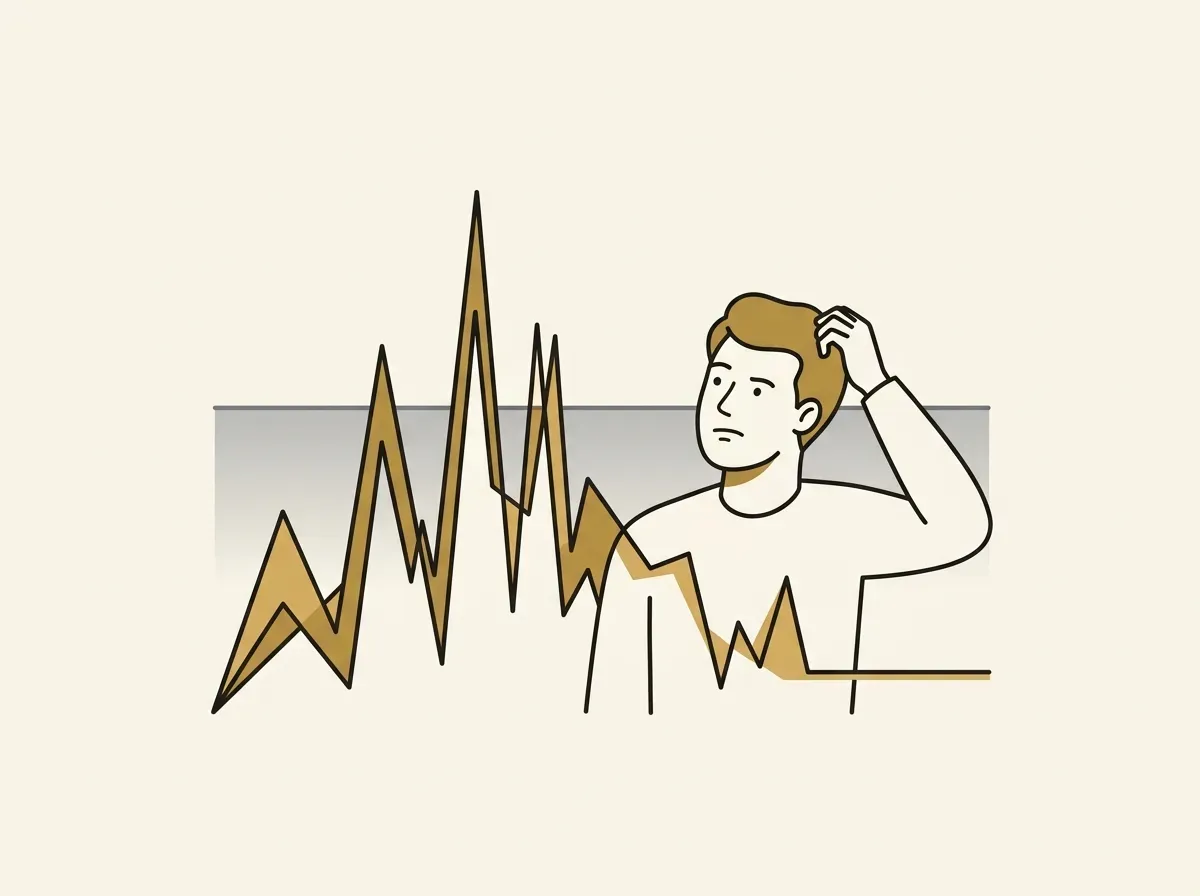
The unpredictability of gas fees and the requirement to manage native tokens present a significant barrier for users new to blockchain. During periods of high network activity, such as intense NFT or DeFi booms, gas prices on Ethereum have historically been volatile. For instance, in May 2021, the average transaction fee on the Ethereum network reached a peak of $71.72, with some specific transactions costing over $100. Another source identifies an extreme peak of $53.16 on May 10, 2021, due to heavy network congestion. These figures highlight the significant costs that can arise during periods of high demand, as documented by sources like CoinMarketCap and CoinLedger.
Beyond cost, the need to hold specific native tokens (like ETH, MATIC, ARB, or OP) for gas, even when you want to transact with a different asset, adds friction. This can result in small, untradeable balances, which can be inefficient for portfolio management.
How GM Markets Abstracts Gas Fees: A Technical Overview
At GM Markets, we eliminate the complexities of gas fees by abstracting them entirely from your trading experience. This means you do not need to acquire, hold, or manage native chain tokens like ETH or ARB to cover transaction costs when trading tokenized US stocks and ETFs on our platform. Our focus is on providing a streamlined and predictable trading environment through a sophisticated technical architecture.
Our gas abstraction is primarily enabled by the Ethereum Improvement Proposal (EIP) 4337 standard, which transforms traditional Externally Owned Accounts (EOAs) into programmable smart contracts. This programmability allows for custom logic in how an account operates, including flexible transaction fee management. Here is how our gas abstraction works in practice:
- UserOperations: When you initiate a trade on GM Markets, your action is represented by a 'UserOperation' object. Unlike a traditional blockchain transaction, this object includes your intended action and gas limits but does not directly specify gas payment in a native token.
- Bundlers: Network participants called 'Bundlers' collect these UserOperations. They simulate their execution, ensure their validity, and then bundle them into a single, standard Ethereum transaction. This bundled transaction is then submitted to a special 'EntryPoint' smart contract on the blockchain. The Bundler is responsible for paying the native gas fee for this aggregated transaction to the network.
- EntryPoint Contract: This central smart contract validates each UserOperation within the bundle, checking your smart account's signature and ensuring the operation is legitimate. Crucially, it routes gas payments through a 'Paymaster' if one is specified.
- Paymasters: These smart contracts enable flexible gas payment policies. On GM Markets, our Paymaster system allows the network gas to be paid in the chain's native token (e.g., ETH for Ethereum, ARB for Arbitrum) and then bills the equivalent amount in USDF directly from your unified stablecoin balance. This means you interact with a single, stable currency for all your trading activities and never see a separate gas line item in your transaction details. Our security practices ensure this process is robust and reliable.
- Transparent Pricing: Our sole revenue stream is a transparent trading fee, ranging from 10 to 20 basis points (0.10% to 0.20%), with free deposits and withdrawals. Gas fees are a pass-through cost, abstracted and billed in USDF from your balance, not a part of our revenue. Our pricing page clearly outlines this fee structure.
- Focus on Trading: By removing the gas fee burden, we enable you to focus purely on managing your tokenized stock portfolio. You can buy fractional shares of US-listed stocks and ETFs from as little as $1, all settled on-chain without worrying about fluctuating network costs. Learn more about how tokenized stocks work.
This intricate interplay between UserOperations, Bundlers, the EntryPoint contract, and Paymasters effectively decouples you from the direct complexities of gas fees. This approach simplifies access to global equities and makes on-chain trading more approachable, especially for those new to the decentralized finance ecosystem. We explain more about our operational model on our About Us page.

Why GM Markets Abstracts Gas Fees: User Experience, Accessibility, and Composability
GM Markets employs gas abstraction to significantly enhance your user experience, increase accessibility, and improve the composability of our tokenized stock trading platform. This strategic choice aims to remove common friction points associated with blockchain interactions, making the platform more intuitive for a broader audience.
- Enhanced User Experience: The primary driver for gas abstraction is to simplify your journey. By abstracting gas, GM Markets allows you to trade, transfer, or interact with decentralized finance (DeFi) applications from your embedded wallet without needing to understand or acquire various native chain tokens. This eliminates 'Gas Fee Stress' and the complexity of fluctuating gas prices, creating a smooth experience akin to traditional internet applications.
- Increased Accessibility: Gas abstraction significantly lowers the barrier to entry for both new and existing users in the Web3 space. The requirement to hold and manage different native tokens for each blockchain network is a critical bottleneck that creates friction and limits inclusivity. By removing this, GM Markets makes its platform more accessible to non-crypto natives and simplifies onboarding, allowing you to engage with tokenized assets without deep technical blockchain knowledge.
- Improved Composability: The necessity of holding native gas tokens across individual chains can limit the composability and interoperability of Web3 applications. GM Markets' approach to gas abstraction helps unlock a more interoperable future by allowing you to pay transaction costs directly from your stablecoin balances or other ERC-20 tokens. This preserves your native token holdings and streamlines portfolio management, enabling you to seamlessly access and utilize tokenized stocks across various DeFi protocols without complex cross-chain transactions.
- Institutional Adoption: For institutional players, such as banks, funds, and custodians, the complexity of managing gas tokens across multiple chains presents a significant barrier to adoption. Gas abstraction is considered an 'operational imperative' in regulated environments, as it streamlines user experiences, reduces risk, and simplifies compliance and operational overhead.
The tokenized real-world asset market, excluding stablecoins, experienced substantial growth, reaching over $24 billion by June 2025, an 85% year-over-year expansion. This growth indicates a transition from experimental pilots to scaled institutional adoption. Industry projections anticipate that between 10% and 30% of global assets could be tokenized by 2030-2034, positioning real-world assets (RWAs) to bridge traditional finance's vast market to blockchain technology, as reported by Boston Consulting Group and Binance Research.

Leveraging Layer 2 Solutions for Efficient Settlement
GM Markets settles trades on Base, Arbitrum, Ethereum, and Optimism. These Layer 2 (L2) scaling solutions are built on Ethereum and dramatically reduce gas costs and increase transaction throughput by processing transactions off-chain before settling them on the more secure Ethereum mainnet. The Dencun upgrade (EIP-4844, proto-danksharding) further reduced L2 operating costs by introducing 'blob transactions' for data availability, leading to considerably lower rollup fees. Ethereum itself serves as the foundational and most secure settlement layer for these L2 solutions, bolstered by approximately 1.2 million validators.
- Arbitrum: Arbitrum consistently offers some of the lowest fees among major L2s, typically ranging from $0.01–$0.15 per transaction. Post-Dencun upgrade, average fees dropped to approximately $0.005, with throughput exceeding 20 transactions per second (TPS). Its Nitro upgrade enhanced throughput and cost efficiency, making it a preferred choice for DeFi traders.
- Optimism: Optimism aims for 'EVM equivalence,' ensuring that smart contracts and developer tools compatible with Ethereum can run on Optimism with minimal or no modifications. Its OP Stack architecture underpins multiple chains, including Base, fostering a 'Superchain' vision for broad interoperability. Optimism processes transactions as 'calldata' on Ethereum, a cheaper storage method, and has reportedly saved users over $3.83 billion in gas fees by processing transactions this way.
- Base: Launched in 2023 by Coinbase and built on the OP Stack, Base offers very low fees, sometimes dropping below $0.005 per transaction after EIP-4844. Its direct integration with Coinbase provides simplicity for businesses and access to a large user base, boasting a fast confirmation speed, averaging 1-2 seconds.
These L2 solutions, in conjunction with gas abstraction, collectively offer a robust framework for efficient, cost-effective, and user-friendly settlement of tokenized stocks by leveraging Ethereum's security while mitigating its mainnet gas fee challenges.
Frequently Asked Questions
How does GM Markets handle gas fees?
GM Markets abstracts gas fees by paying them through a smart account on your behalf. The equivalent cost is then billed in USDF from your balance, so you never need to directly manage or hold native chain tokens for gas.
Do I need to hold native tokens for gas on GM Markets?
No, you do not. Our platform handles all native chain gas payments. You only need to maintain a USDF balance for trading and for the abstracted gas costs.
What are the benefits of gas abstraction?
Gas abstraction simplifies your trading experience by removing the need to manage native tokens or worry about fluctuating gas prices. It provides predictable costs, increased accessibility, and enhanced composability for on-chain trading of tokenized stocks.
Which blockchain networks does GM Markets use for settlement?
GM Markets settles trades on Base, Arbitrum, Ethereum, and Optimism. USDF serves as the unified stablecoin balance across these chains.
What are the total fees on GM Markets?
Our sole revenue stream is a trading fee ranging from 10 to 20 basis points (0.10% to 0.20%), which is included in the quoted price. Deposits and withdrawals are free. Gas fees are abstracted and billed in USDF as a pass-through cost.
Trading Tokenized Stocks on GM Markets
Understanding gas fees is crucial when engaging with blockchain-based assets. While these costs are essential for network security and transaction processing, their unpredictable nature and the requirement to manage native cryptocurrencies can be a significant barrier for many traders. GM Markets directly addresses this challenge by completely abstracting gas fees.
Our platform ensures that you are shielded from the complexities of fluctuating network costs and the need to hold various native tokens. By managing gas payments through smart accounts and billing the equivalent in USDF, we provide a transparent, predictable, and seamless trading experience for tokenized US stocks and ETFs. This approach allows you to focus solely on your investment decisions and portfolio management. Trading tokenized stocks involves financial risk, including the potential loss of principal. Market prices can move against you, and tokenized assets carry specific risks such as settlement risk, counterparty risk, smart-contract vulnerabilities, and custody risk. We do not provide financial advice or predict future returns. For full details on risks and legal terms, please refer to our legal and risk disclosures.
We invite you to explore our platform and experience the simplicity of on-chain trading without the added burden of gas fees. You can find more information on our FAQ page or review our pricing details.