Proof of Reserves for Tokenized Stocks: Building Trust in the Digital Age
Learn how Proof of Reserves ensures 1:1 backing for tokenized stocks, distinguishing transparent platforms from past failures. Discover GM Markets' real-time on-chain attestation and robust security measures.
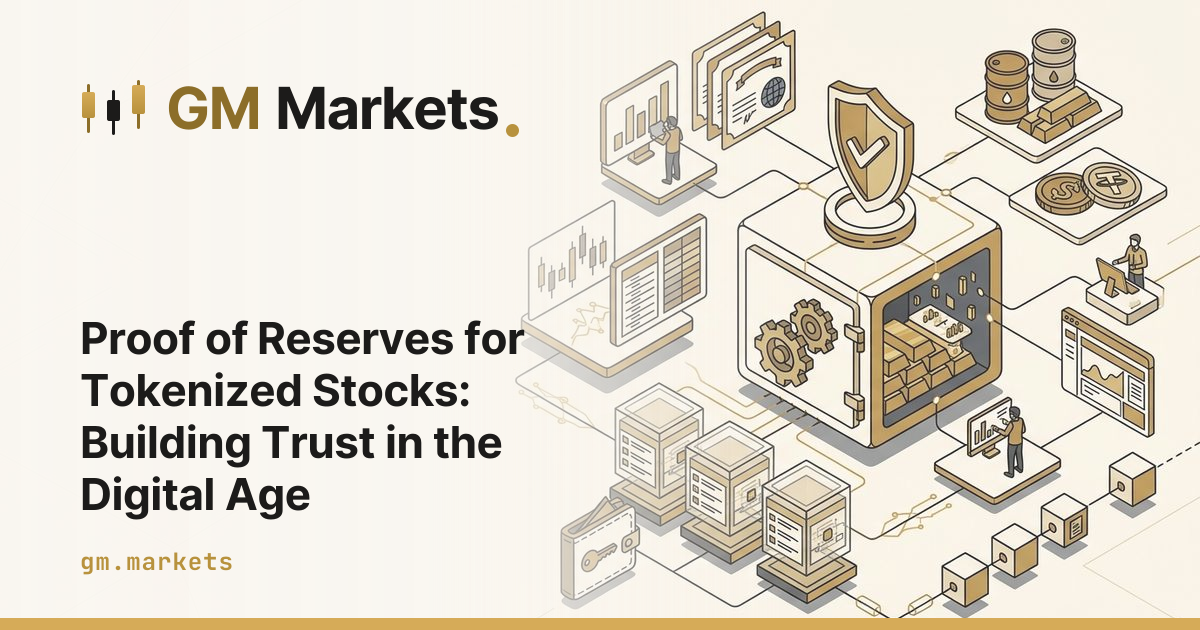
Tokenized stocks represent a significant advancement, bridging traditional financial markets with the efficiency and composability of decentralized finance. They offer global accessibility and fractional ownership, allowing investors worldwide to gain exposure to US-listed equities. As we embrace this innovation, trust and transparency become paramount, especially regarding the verifiable backing of digital representations of real-world assets.
Proof of Reserves (PoR) stands as a critical mechanism for verifiable backing, ensuring that tokenized assets are fully collateralized. This mechanism is not merely a feature; it is a fundamental requirement for building confidence in the tokenized economy. At GM Markets, we are committed to this principle, implementing a real-time, on-chain Proof of Reserves system via Accountable. This provides verifiable 1:1 backing for all tokenized US stocks and ETFs available on our platform.
What is Proof of Reserves and Why It Matters for Tokenized Stocks?
Proof of Reserves is an independent attestation or audit that verifies an entity holds the assets it claims to hold against its liabilities. This mechanism is designed to provide transparency and assurance, confirming that a platform's digital assets are genuinely backed by corresponding real-world assets or cryptocurrencies.
The importance of PoR is underscored by historical lessons from centralized digital asset platforms that lacked verifiable reserves. The crypto industry has witnessed significant failures due to a lack of transparency and fractional reserve practices, leading to substantial user losses. For example, FTX, once a major cryptocurrency exchange, filed for Chapter 11 bankruptcy on November 11, 2022, after a surge in customer withdrawals exposed an $8 billion deficit. Investigations revealed that FTX had secretly lent billions in client funds to its affiliated trading firm, Alameda Research, a clear fractional reserve practice that meant it could not cover user withdrawals, resulting in at least $1 billion of customer funds disappearing. Similarly, Celsius Network, a crypto lending platform, paused all withdrawals on June 12, 2022, and filed for bankruptcy a month later, reporting a $1.2 billion balance sheet deficit due to poor asset deployment decisions and risky investments. Voyager Digital, a cryptocurrency brokerage, also filed for Chapter 11 bankruptcy on July 5, 2022, following the default of a $650 million loan to the crypto hedge fund Three Arrows Capital, which triggered a liquidity crisis.
A consistent, independent audit using cryptographic Proof of Reserves could have exposed these fractional reserves and lack of actual backing much earlier, potentially preventing these collapses. For tokenized stocks, PoR is crucial because it ensures the 1:1 backing of each token with a real share, mitigating risks associated with fractional reserves. Without verifiable PoR, the promise of tokenization—secure, transparent, and immutable ownership—is undermined.
This contrasts sharply with traditional brokerage statements, which are typically periodic, off-chain, and lack the real-time, cryptographic verifiability of on-chain PoR. While traditional audits provide a point-in-time snapshot, on-chain PoR, especially when continuous, offers a dynamic and transparent view of asset backing.
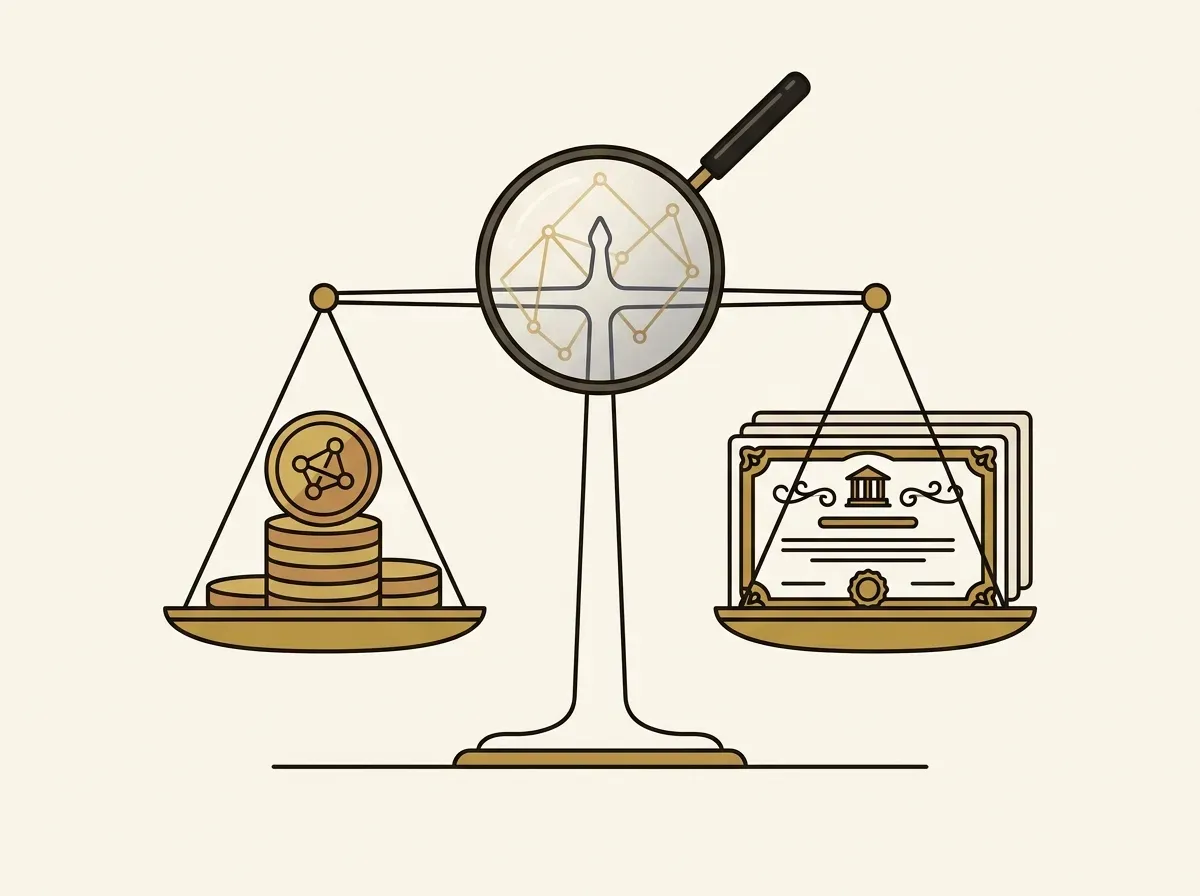
GM Markets' Real-Time, On-Chain Attestation System
At GM Markets, our model is built on a foundation of verifiable backing and transparency. Every tokenized US stock or ETF on our platform is backed 1:1 by a real, underlying share. These shares are held in segregated customer accounts at regulated broker-dealers, including Interactive Brokers and Alpaca Markets. These accounts are legally mandated to keep client funds and securities separate from the broker-dealer's operational assets. This segregation is a primary defense, ensuring that in the unlikely event of broker-dealer insolvency, our users' assets are held in dedicated accounts and are not available to satisfy the broker-dealer's creditors. While GM Markets does not serve users in the United States, clients of US-regulated broker-dealers, including non-US persons, typically benefit from protections like those provided by the Securities Investor Protection Corporation (SIPC). SIPC protects securities customers up to $500,000, including $250,000 for cash, safeguarding against broker-dealer failure, not market risk. Firms like Interactive Brokers also provide excess SIPC coverage, further extending protection for customer securities accounts. This strict adherence to segregation and regulatory oversight provides a robust framework for asset security.
To ensure this 1:1 backing is consistently verifiable, we partner with Accountable, a third-party attestation provider. Our attestation process is powered by Accountable's Data Verification Network (DVN). This private, permissioned network directly connects to our regulated broker partners to continuously pull reserve data. Within the DVN, cryptographic proofs are automatically generated using confidential computing and zero-knowledge protocols. These proofs verify the integrity of the source data and computations without exposing sensitive raw information, ensuring transparency while maintaining privacy. For on-chain verification, Accountable collaborates with RedStone, which functions as an on-chain oracle. RedStone pushes this verified data from Accountable's DVN to the blockchain, creating an immutable and publicly accessible record. This allows anyone to check in real time that every tokenized asset is fully collateralized, far exceeding the transparency of traditional, periodic attestations.
We invite all users to visit our Proof of Reserves page for live, verifiable data on our asset backing. This page displays the token supply versus the attested broker balance and the backing ratio per asset, all verifiable via the on-chain attestation contract.
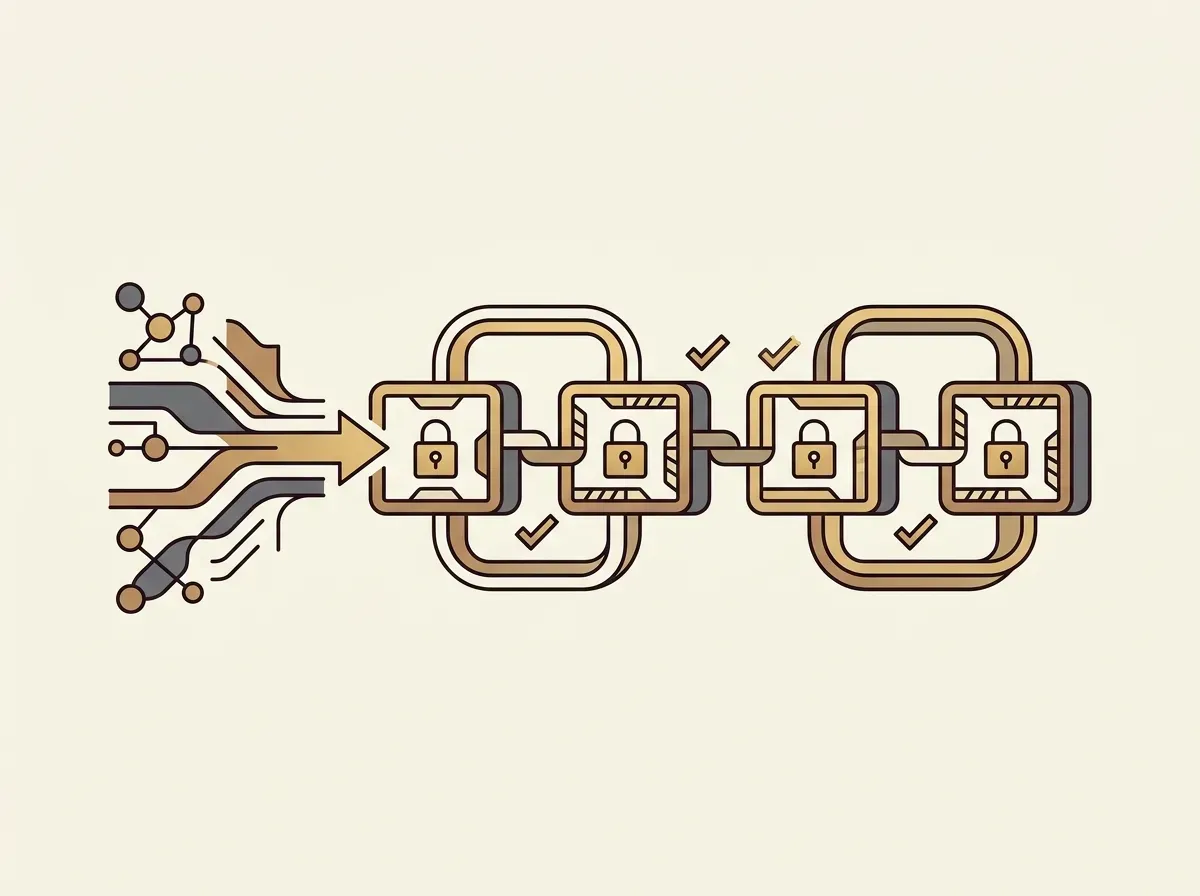
Beyond Transparency: Enhanced Security and Trust
Proof of Reserves is a cornerstone of transparency, but our commitment to security extends further. We empower users with self-custody through Privy MPC (Multi-Party Computation) wallets. With MPC technology, no single party—including GM Markets—holds the complete private key; it is reconstructed from shares only at signing, on your device. This ensures you retain control of your assets, enhancing security and reducing counterparty risk.
The integrity of our platform's infrastructure is also paramount. Our smart contracts, which underpin the tokenization and trading processes, have undergone rigorous audits by leading firms including Sherlock, Halborn, Cantina, and Cyfrin. These audits are crucial for identifying and mitigating potential vulnerabilities, ensuring the robustness and reliability of our on-chain operations.
We also have a clear continuity plan in place. Should GM Markets discontinue operations, a designated security agent has standing authority to act for token holders. This agent works directly with the custodian to redeem outstanding tokens against the underlying shares. This redemption path is enforced by the on-chain contract and is independent of GM Markets' continued operation, ensuring that your assets remain accessible and protected.
It is important to note that GM Markets is not offered to users in the United States or other restricted jurisdictions. While Proof of Reserves significantly enhances transparency and security, tokenized stocks, like all financial instruments, still carry inherent market, settlement, counterparty, smart-contract, and custody risks. We encourage you to review our legal page for a comprehensive understanding of these risks.

Choosing a Tokenized Stock Platform: Key Considerations
When evaluating tokenized stock platforms, prioritizing those that offer verifiable, real-time, and independent Proof of Reserves is essential. This mechanism provides a fundamental layer of trust and transparency, allowing you to confirm that your tokenized assets are genuinely backed 1:1 by their underlying counterparts.
Beyond PoR, we recommend evaluating a platform's regulatory compliance. This includes ensuring the platform uses regulated broker partners and adheres to applicable financial laws in its operating jurisdictions. The global regulatory landscape for tokenized assets is evolving rapidly, with several jurisdictions establishing comprehensive frameworks to ensure market integrity and investor protection. For instance, the EU's Markets in Crypto-Assets Regulation (MiCA), which officially entered into force in June 2023, establishes a uniform set of EU market rules for crypto-assets not already covered by existing financial services legislation. MiCA focuses on transparency, disclosure, authorization, and supervision for issuers and traders of crypto-assets, including asset-reference tokens and e-money tokens, with specific provisions becoming applicable for Crypto-Asset Service Providers (CASPs) by December 2024. This regulation aims to enhance financial stability and consumer protection across the European Union.
Similarly, the UK's Digital Securities Sandbox (DSS), established under the Financial Services and Markets Act (FSMA) 2023, provides a regulated live environment to explore the application of technologies like Distributed Ledger Technology (DLT) in the issuance, trading, and settlement of financial securities. Operational until at least December 2028, the DSS aims to foster innovation in financial market infrastructure and enhance the efficiency of post-trade processes, with updated guidance now including stablecoins as acceptable settlement assets under specific conditions.
In the Middle East, the Dubai Virtual Assets Regulatory Authority (VARA) stands as the world's first dedicated emirate-level regulator for virtual assets. Established in 2022, VARA's mandate covers regulating and supervising virtual asset activities across Dubai's free zones and mainland. It focuses on organizing asset issuance and trading, authorizing service providers, protecting personal data, and monitoring transactions to prevent market manipulation, setting a comprehensive framework with its Virtual Assets and Related Activities Regulations 2023.
Meanwhile, the Monetary Authority of Singapore (MAS) is actively promoting asset tokenization through initiatives like Project Guardian. This project explores the potential of tokenization across various financial asset classes, involving an industry group of financial institutions. MAS has also clarified its Digital Token Service Providers (DTSPs) regime, requiring DTSPs providing services to overseas customers related to digital payment tokens and capital market product tokens to be licensed starting from June 2025. These diverse global efforts highlight a collective move towards regulated and transparent digital asset markets.
Understanding the custody model is another critical consideration. Verify whether assets are held in segregated accounts, separate from the platform's operational funds, and if self-custody options like MPC wallets are available. Platforms that prioritize user control and asset segregation offer greater security. Additionally, assess the platform's overall transparency, including clear fee structures, how corporate actions (like dividends and splits) are handled through mechanisms like a total-return NAV model, and the operational model that underpins its services.
Finally, confirm that the platform's smart contracts and overall infrastructure have undergone independent security audits. These audits provide assurance that the underlying technology is robust and secure against potential exploits.

Frequently Asked Questions
What is the key difference between Proof of Reserves and a traditional financial audit?
Proof of Reserves primarily focuses on verifying that a platform holds sufficient assets to cover its user liabilities, often leveraging cryptographic proofs for real-time, on-chain transparency. A traditional financial audit, conversely, is a broader, periodic assessment of an organization's entire financial position, including all assets, liabilities, income, and expenses, adhering to established accounting standards.
How often are GM Markets' tokenized stock reserves attested and updated on-chain?
At GM Markets, our tokenized stock reserves are attested and updated on-chain in real time by Accountable, our third-party attestation provider. This continuous process ensures that our Proof of Reserves page always reflects the most current backing status of our tokenized assets.
Can individual users verify the Proof of Reserves themselves, and how?
Yes, individual users can verify our Proof of Reserves by visiting our dedicated Proof of Reserves page. This page displays live data, allowing you to cross-reference our token supply with the independently attested broker balances directly on the blockchain.
What measures are in place if one of the regulated broker-dealers holding the underlying shares faces financial distress?
The underlying shares for our tokenized assets are held in segregated customer accounts at regulated broker-dealers, such as Interactive Brokers and Alpaca Markets. These accounts are legally mandated to keep client funds and securities separate from the broker-dealer's operational assets, ensuring they are not available to satisfy the broker-dealer's creditors in the broker-dealer's insolvency. While GM Markets does not serve users in the United States, clients of US-regulated broker-dealers, including non-US persons, typically benefit from protections like those provided by the Securities Investor Protection Corporation (SIPC) up to $500,000, including $250,000 for cash. This segregation, along with potential excess SIPC coverage provided by some firms, offers a robust layer of protection against broker-dealer failure.
Does Proof of Reserves entirely eliminate all risks associated with tokenized stocks?
While Proof of Reserves significantly enhances transparency and mitigates risks related to fractional reserves, it does not eliminate all risks. Tokenized stocks are still subject to market volatility, settlement risks, smart-contract risks, and counterparty risks. We provide detailed information on these and other considerations on our legal page.
Conclusion: Building Trust in the Future of Finance
Proof of Reserves is a fundamental component for building trust and ensuring the integrity of tokenized assets. It moves beyond traditional, periodic audits to provide real-time, verifiable assurance that digital representations of real-world assets are fully backed. This transparency is indispensable for fostering confidence in the evolving landscape of tokenized finance.
At GM Markets, we are dedicated to setting a high standard for transparency, security, and user control. Our real-time, on-chain attestation system, coupled with self-custody solutions and rigorous smart contract audits, underscores our commitment to a secure and user-centric design for global access to tokenized US equities. We invite you to explore our platform and experience secure, transparent tokenized stock trading.