How to Leverage Tokenized Stocks as Collateral in DeFi
Unlock liquidity from your equity holdings by using GM Markets tokenized stocks as collateral in DeFi. Learn the mechanics, benefits, and risks of leveraging 1:1 backed assets in decentralized lending protocols.
How to Leverage Tokenized Stocks as Collateral in DeFi
Decentralized finance, or DeFi, is transforming how we interact with financial assets. At GM Markets, we are bridging traditional markets with the DeFi ecosystem by making real-world assets seamlessly composable on-chain. Our platform issues tokenized US-listed stocks and exchange-traded funds (ETFs) that are fully backed 1:1 by actual shares held in segregated customer accounts at regulated broker-dealers, such as Interactive Brokers and Alpaca Markets. These tokens are standard ERC-20 assets, allowing you to maintain self-custody and leverage your traditional equity exposure within a permissionless, global financial system.
Using tokenized stocks as collateral in DeFi allows you to unlock liquidity from your existing equity holdings without selling them, maintaining your long-term market exposure while accessing capital for other opportunities. We designed GM Markets tokens to offer the same economic exposure as directly held shares, including price movements, dividends (reinvested into the token's on-chain net asset value as explained in our FAQ), and corporate actions. This robust backing and transparent on-chain attestation by Accountable ensure that each token accurately reflects its underlying value. The core benefit for DeFi users is composability: our tokenized stocks can be lent, borrowed against, supplied as liquidity, or used as collateral across various DeFi protocols, unlocking new opportunities for capital efficiency and yield generation.
The Mechanics of Using Tokenized Stocks as Collateral
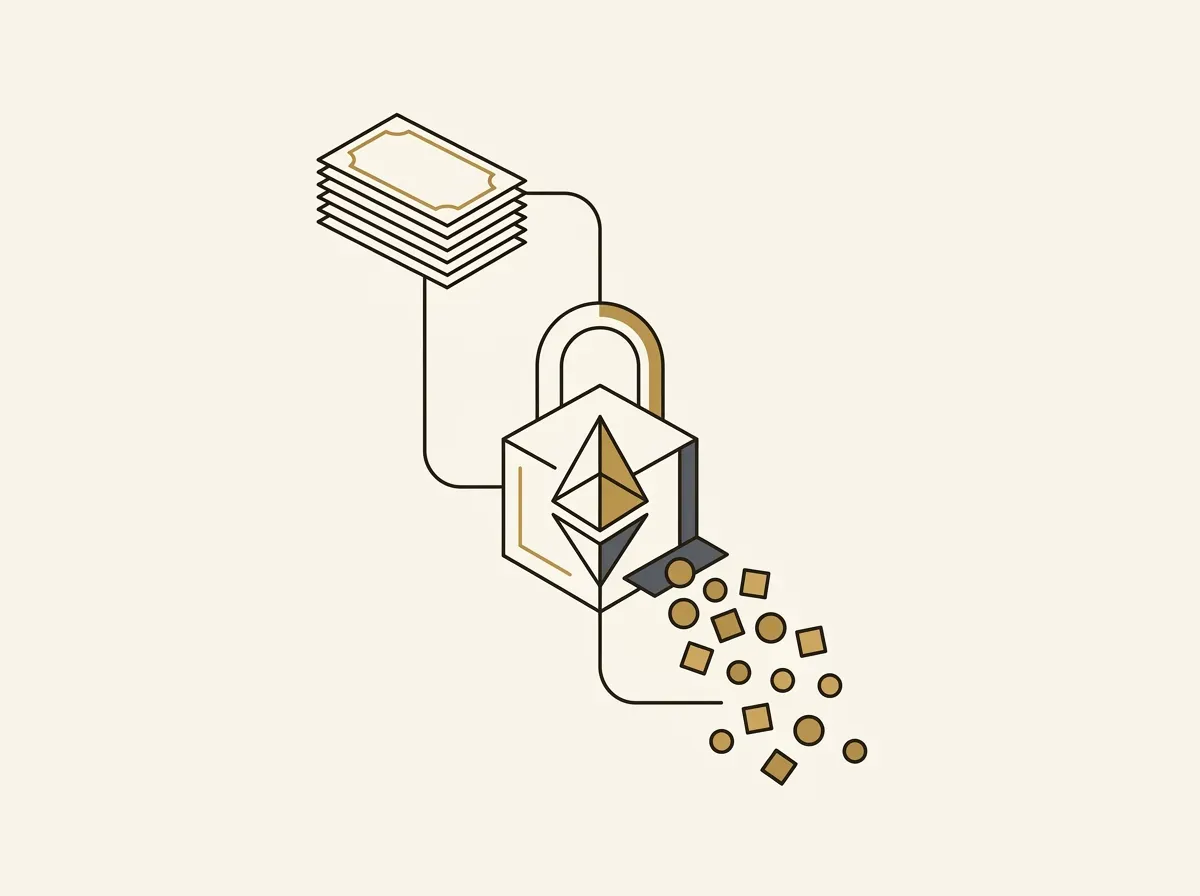
DeFi lending protocols operate on a fundamental principle: users supply assets as collateral to borrow other assets, often stablecoins or other cryptocurrencies. This process allows you to unlock liquidity from your existing holdings without selling them, maintaining your long-term exposure to the underlying asset. When you supply tokenized stocks as collateral, the protocol holds these assets in smart contracts, enabling you to borrow against their value.
Key to understanding DeFi lending is the collateralization ratio, also known as Loan-to-Value (LTV). This ratio defines the maximum amount you can borrow against your supplied collateral. For example, if a protocol has an 80% LTV for a tokenized asset, you can borrow up to $80 for every $100 worth of collateral you supply. However, it is crucial to understand the liquidation threshold. This is the point at which your collateral's value, relative to your borrowed amount, falls below a specific percentage, making your position eligible for automatic liquidation. DeFi platforms typically implement overcollateralization to mitigate volatility risks, with collateralization ratios generally ranging from 110% to 200% for various tokenized assets. For instance, Aave's ETH collateral has an approximate 80.5% maximum LTV and an 83% liquidation threshold, while MakerDAO often requires a 150% minimum collateralization ratio for ETH to borrow DAI, meaning you can borrow up to 66% of the collateral's value. For Real World Assets (RWAs), MakerDAO has historically enforced a minimum collateralization ratio of 150%, though some RWA-backed vaults can hold a 100% collateral ratio.
GM Markets tokenized assets, such as tokenized Apple (AAPL) or NVIDIA (NVDA), are standard ERC-20 tokens designed for composability and integrate with supported protocols within the tokenized real-world assets (RWAs) space. While platforms like Aave and Morpho are leaders in this domain, it is important to understand their specific market structures. For instance, Aave Horizon is a specialized, permissioned market designed for institutional participants to supply tokenized RWAs as collateral, not directly applicable to retail GM Markets users. However, the broader trend of tokenized equities being used as collateral is evident; for example, Ondo Finance has integrated its tokenized stocks (e.g., SPYon, QQQon) with Morpho, allowing them to be used as collateral to borrow stablecoins. This demonstrates the growing utility of tokenized equities in DeFi lending markets.
MakerDAO has extensively incorporated RWAs, including tokenized US T-bonds, to back its DAI stablecoin, with Real-World Asset (RWA) collateral constituting $948 million, or 14% of MakerDAO's reserves as of March 2025. Centrifuge also provides infrastructure for tokenizing diverse real-world assets and partners with MakerDAO and Aave, contributing to the expansion of this ecosystem.
Our total-return NAV model for dividends and corporate actions ensures that the token's value accurately tracks the underlying share's economic performance. This is crucial for collateral valuation in DeFi, as oracles rely on precise price feeds to assess your collateral's worth. We utilize Chainlink for its specialized "Tokenized Equity Feeds" that report "Total Return Values," which is critical for our model where dividends are reinvested and corporate actions adjust the token's on-chain NAV. These feeds calculate the token price based on the underlying equity market price multiplied by a value derived from a SyntheticSharesOracle contract. This multiplier dynamically adjusts for events like dividend reinvestment, stock splits, and spin-offs, ensuring that lending protocols receive accurate, updated information.
During significant corporate actions, the price oracle for the affected token may be temporarily paused while the token's terms or multiplier are updated, ensuring data integrity. The accuracy of these oracle feeds is further supported by GM Markets' robust backing and attestation process: every tokenized asset is backed 1:1 by an underlying share held in segregated customer accounts at regulated US broker-dealers, with reserves independently attested in real time by Accountable. Other oracle networks, such as Pyth Network, DIA, and RedStone, also provide price feeds for tokenized stocks and RWAs, enabling DeFi protocols to access current asset values from diverse, regulated sources.
Step-by-Step: Supplying GM Markets Tokens as Collateral
Using your GM Markets tokenized stocks as collateral in a DeFi lending protocol is a straightforward process. We empower you to connect your self-custodial assets directly to the decentralized ecosystem.
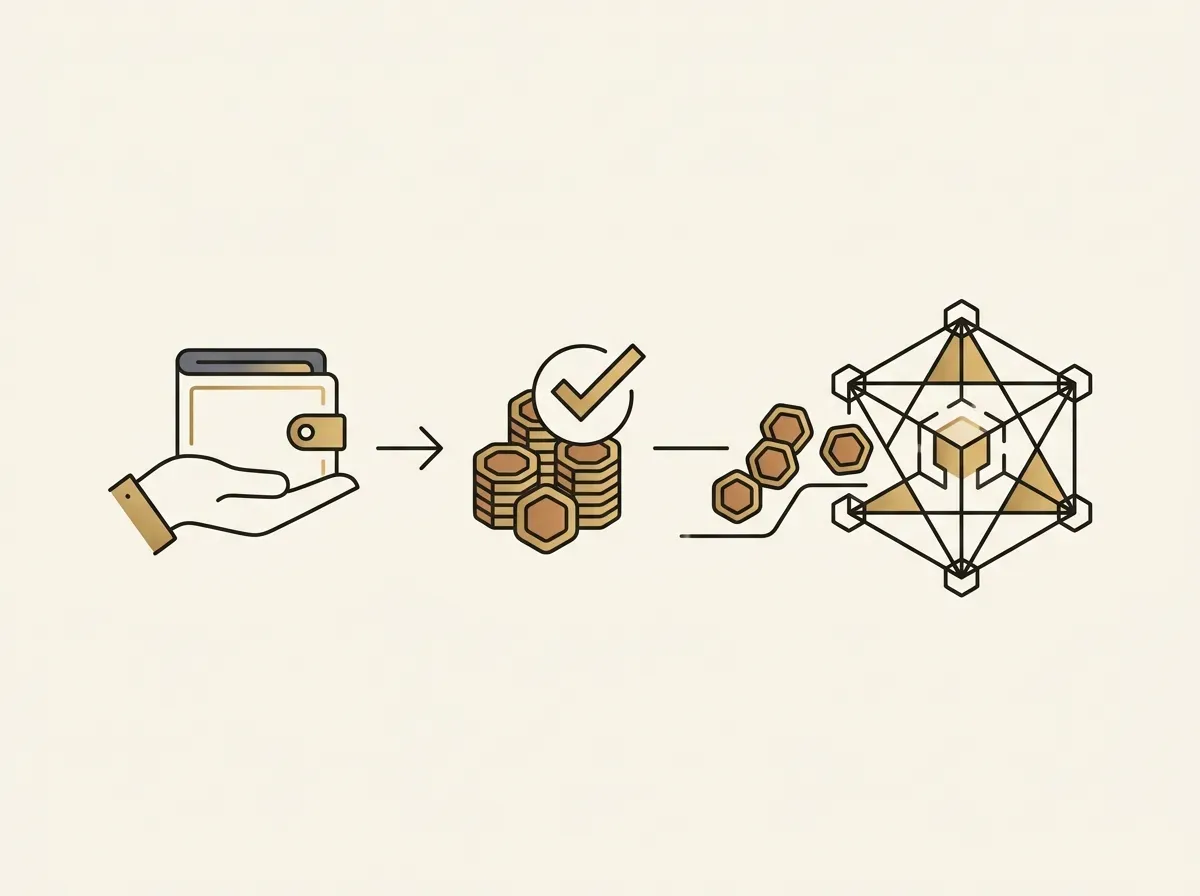
- Connect Your Wallet: Begin by navigating to a compatible DeFi lending protocol (e.g., Aave, Morpho). Connect your external wallet (such as MetaMask) or your embedded GM Markets wallet, which uses Privy's multi-party computation (MPC) for secure key management.
- Select Your Tokenized Stocks: Once connected, the protocol interface will display your wallet balance. Select the specific GM Markets tokenized stock or ETF you wish to use as collateral, such as tokenized Tesla (TSLA) or SPY.
- Approve Token Usage: Before supplying, you must approve the token for use as collateral. This grants the smart contract permission to interact with your tokenized assets for lending or borrowing purposes. Review the transaction details carefully to understand the permissions you are granting.
- Confirm Supply Transaction: After approval, confirm the supply transaction. This action locks your selected tokenized stocks into the protocol's smart contract, making them available as collateral against which you can borrow.
- Initiate Borrow Transaction: With your tokenized stocks supplied, you can now initiate a borrow transaction. Choose the asset you wish to borrow (e.g., USDC, DAI) and specify the amount, ensuring it remains within the protocol's collateralization ratio and health factor limits.
Benefits and Risks of DeFi Collateralization
Leveraging tokenized stocks as collateral in DeFi offers several compelling benefits, alongside inherent risks that users must understand.

Benefits
- Capital Efficiency: Unlock liquidity from your stock exposure without selling your underlying assets, allowing you to maintain long-term equity positions while accessing immediate capital.
- Potential for Yield Generation: In some protocols, supplied collateral may earn additional yield, compounding your returns beyond just price appreciation.
- Diversification: Borrow stablecoins or other cryptocurrencies against your tokenized stocks, enabling you to diversify your portfolio or access capital for other investment opportunities.
- Permissionless Access: DeFi provides global, permissionless access to financial services, allowing individuals in many jurisdictions to participate in lending and borrowing markets that might otherwise be inaccessible.
Risks
- Smart Contract Risk: DeFi protocols rely on smart contracts, which can contain vulnerabilities that lead to exploits and loss of funds. For instance, cumulative exploit-related losses in DeFi have exceeded $7.7 billion all-time. Rigorous code audits by firms like Sherlock, Halborn, Cantina, and Cyfrin, along with formal verification and bug bounties, are crucial mitigation strategies, but risk always remains.
- Liquidation Risk: Market volatility can cause the value of your tokenized stock collateral to drop significantly. If your collateral's value falls below the liquidation threshold, your position may be automatically liquidated, potentially at a loss, to repay the borrowed amount.
- Oracle Risk: DeFi protocols rely on external price feeds (oracles) to determine the real-time value of collateral. If an oracle is manipulated or provides inaccurate data, it can lead to wrongful liquidations or incorrect valuations. For example, a misconfigured oracle incident on February 15, 2026, reportedly cost Moonwell over $1.8 million. Decentralized oracles and multiple price sources mitigate this, but it is a persistent risk.
- Market Risk: The value of your tokenized stock collateral is directly tied to the underlying traditional stock market. General market downturns or specific company news can impact your collateral's value, increasing liquidation risk.
We do not serve users in the United States or other restricted jurisdictions. Markets can move against you, and tokenized stocks carry settlement, counterparty, smart-contract, and custody risk. We do not provide financial, investment, tax, or legal advice. For a comprehensive understanding of these considerations, please review our legal documentation.
GM Markets: Bridging Traditional Assets to DeFi
GM Markets provides a secure and transparent pathway for integrating traditional US-listed stocks and ETFs into the decentralized finance ecosystem. Our core value proposition rests on issuing 1:1 backed, self-custodial ERC-20 tokenized assets, ensuring that your real-world asset exposure is robust and verifiable on-chain. Every token is backed by a real share held in a segregated customer account, with reserves independently attested in real time by Accountable.
By transforming traditional equities into composable digital assets, we enable you to unlock capital efficiency and explore innovative financial strategies within DeFi. The integration of tokenized RWAs into DeFi is a rapidly expanding sector, with total tokenized assets reaching approximately $33.1 billion in July 2026 (excluding stablecoins). This growth underscores the increasing demand for stable, yield-generating assets within the DeFi ecosystem, a demand we are uniquely positioned to address.
Our platform facilitates seamless interaction with leading DeFi protocols, allowing you to participate in a broader financial landscape. The future possibilities for tokenized assets within decentralized finance are vast, promising continued innovation in how we manage and leverage our portfolios.

Frequently Asked Questions
Can I earn additional yield on my tokenized stocks by supplying them as collateral in DeFi?
Yes, some DeFi lending protocols offer additional yield on supplied collateral. This means that in addition to maintaining your exposure to the underlying stock, your tokenized assets can generate passive income while being used to secure a loan.
What happens if the value of my tokenized stock collateral drops significantly?
If the value of your tokenized stock collateral falls below a predefined liquidation threshold, your position may be automatically liquidated by the protocol. This mechanism ensures that the borrowed funds can be repaid, but it can result in a loss for the borrower.
Which specific DeFi protocols currently support GM Markets tokenized stocks as collateral?
GM Markets tokenized stocks are standard ERC-20 assets, making them highly composable. They can be integrated with various protocols that support tokenized real-world assets, including leading platforms like Aave and Morpho. We encourage you to verify specific asset support directly with each protocol.
Are there any additional fees from GM Markets when I use my tokens in external DeFi protocols?
No, there are no additional fees from GM Markets when you use your tokenized assets in external DeFi protocols. We charge a single trading fee of 10 to 20 basis points when you acquire or sell tokenized stocks on our platform. Deposits and withdrawals are free.
Empowering Your Portfolio with Tokenized Stock Collateral
The ability to use tokenized stocks as collateral within decentralized finance represents a transformative shift in portfolio management. It empowers you to enhance financial flexibility, access liquidity, and participate in a global ecosystem without liquidating your long-term equity positions. GM Markets plays a foundational role in enabling this by providing secure, 1:1 backed, and highly composable tokenized US stocks and ETFs.
We invite you to explore the range of tokenized stocks available on GM Markets and discover their potential for integration within the broader DeFi ecosystem. By leveraging these innovative assets, you can unlock new avenues for capital efficiency and portfolio growth.
Remember, we do not serve users in the United States or other restricted jurisdictions. All market activities carry risk, and tokenized assets involve unique considerations, including smart contract and liquidation risks.