How to Buy US Stocks with Crypto from Thailand: A Step-by-Step Guide
Learn how to buy U.S. stocks with crypto from Thailand. This step-by-step guide explains how to use stablecoins to bypass high bank fees and access global markets.
How to Buy US Stocks with Crypto from Thailand: A Step-by-Step Guide
For investors in Thailand, gaining direct exposure to the U.S. stock market has traditionally involved significant hurdles. The process of moving capital from Thai Baht into a U.S. brokerage account is often layered with high costs and complexity that can reduce your investment capital before it is even deployed. Using cryptocurrency, specifically USD-pegged stablecoins, provides a modern and more direct path to bypass these challenges.
This guide provides a step-by-step process for using crypto to invest in tokenized U.S. stocks from Thailand. We explain how this method avoids many of the fees and delays common in traditional finance, and how platforms like ours provide direct, transparent access to global equity markets.
The Traditional Hurdles for Thai Investors Accessing US Stocks
Attempting to invest in the U.S. market from Thailand through conventional banking and brokerage channels presents several distinct financial and logistical challenges. These costs accumulate, creating a significant drag on potential returns.

High International Wire Transfer Fees
The most direct cost is the fee for an international wire transfer. To move funds from a Thai bank account to an overseas brokerage, you must pay a fixed fee for a SWIFT transfer. According to the official fee schedule from Bangkok Bank, for example, these fees range from 400 THB to 1,150 THB per transaction, depending on whether the sender covers only the sending bank's fees or all intermediary and receiving bank charges. Other major Thai banks have similar fee structures, making every transfer a costly event, especially for smaller investment amounts.
Opaque Foreign Exchange (FX) Spreads
A larger, often less visible, cost is the foreign exchange spread. When you convert Thai Baht to U.S. Dollars, banks do not offer the mid-market rate you see on financial news sites. Instead, they apply a retail exchange rate, and the difference between their buying and selling price is the spread. This spread functions as an implicit fee. For THB-to-USD conversions, the spread at Thai retail banks can be between 1% and 3% of the transaction value. This means a significant portion of your capital is lost in the conversion process before you even make an investment.
Brokerage Account Minimums and Complexity
Historically, many U.S. brokerages imposed high barriers to entry for international clients. For years, a Charles Schwab International account required a minimum deposit of $25,000. While Schwab has since removed this requirement, making access easier, the underlying friction of slow, expensive international transfers remains. The onboarding process can also be complex, requiring extensive paperwork and longer verification times compared to modern, digital-native platforms.
How to Buy US Stocks with Crypto from Thailand in 5 Steps
Using stablecoins to purchase tokenized U.S. stocks is a straightforward process that connects the digital asset economy directly to global equity markets. It eliminates many of the intermediaries involved in traditional cross-border investing. Here is how it works on our platform.
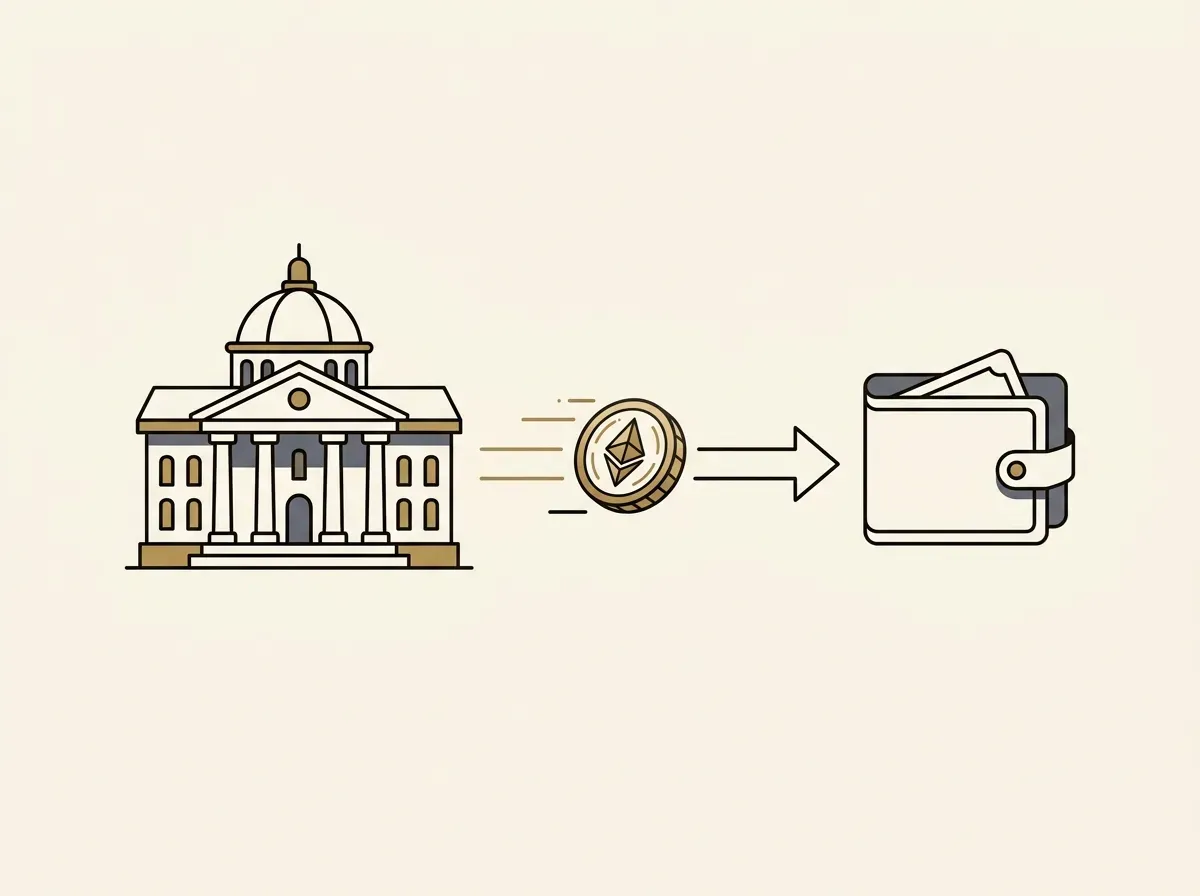
- Acquire Stablecoins on a Thai Exchange. The first step is to convert your Thai Baht into USD-pegged stablecoins like USDC or USDT. You can do this on a locally licensed and regulated cryptocurrency exchange in Thailand. The Thai Securities and Exchange Commission (SEC) maintains a full list of licensed digital asset operators.
- Transfer Stablecoins to a Self-Custody Wallet. Once you purchase stablecoins, you transfer them from the exchange to a self-custody wallet that you control, such as MetaMask, Coinbase Wallet, or Rabby. This action gives you direct ownership and control of your assets on the blockchain, a core principle of decentralized finance.
- Connect to a Tokenized Stock Platform. With your stablecoins secured in your wallet, you can connect to our platform at GM Markets. The onboarding process is permissionless; you simply connect your existing wallet. This avoids the lengthy paperwork and approval waits associated with traditional international brokerages.
- Deposit Your Stablecoins for Trading. You can deposit your USDC or USDT directly onto our platform. We do not charge any fees for stablecoin deposits, meaning the full value of your transfer is available for investing. You can view our complete fee structure on our pricing page.
- Trade for a Tokenized U.S. Stock. On our platform, you can search for the U.S. stock or ETF you wish to invest in, such as NVIDIA (NVDA), Tesla (TSLA), or an S&P 500 ETF (SPY). You can execute a trade for as little as $1, thanks to fractionalization down to six decimal places. The price you are quoted includes our single, transparent trading fee, so the amount of the tokenized stock you receive is final, with no hidden costs.
Understanding Your Investment: How Tokenized Stocks Work
When you buy a tokenized stock on our platform, you are purchasing a digital token that represents a 1:1 claim on one share of the underlying company. To ensure transparency, security, and value, this structure has several key features.
- 1:1 Backing and Regulated Custody: Every token we issue is fully backed 1:1 by a real share of the corresponding stock. These underlying shares are held in segregated customer accounts at established, regulated U.S. broker-dealers like Interactive Brokers and Alpaca Markets. This is a crucial security measure detailed on our security page.
- On-Chain Proof of Reserves: We provide real-time, on-chain attestation of the underlying assets. Our Proof of Reserves page shows the total supply of each tokenized stock and the corresponding number of shares held in custody, verifiable independently by anyone on the blockchain. This offers a level of transparency not available in traditional finance.
- Total-Return Model for Dividends: You receive the full economic benefit of dividends. When a company pays a dividend, the proceeds are automatically used to purchase more of the underlying shares. This increases the net asset value (NAV) of your token. Your return comes from the appreciation in the token's value, rather than a separate cash payment that could create a taxable event.
- Economic Exposure vs. Voting Rights: Holding a tokenized stock gives you the same economic exposure as holding the share directly. Its value moves with the market price and includes the value of all dividends. However, because the shares are held in custody on your behalf, it does not confer shareholder voting rights.

Cost Comparison: Traditional vs. Crypto-Native Platforms
The cost advantages of using a crypto-native platform for U.S. stock investing can be substantial compared to the traditional route from Thailand. The table below breaks down the typical fees, highlighting where capital is preserved.
| Fee Type | Traditional Brokerage (from Thailand) | GM Markets |
|---|---|---|
| FX Conversion Spread | 1% - 3% (implicit fee in THB-USD rate) | Not Applicable (uses stablecoins) |
| International Wire Fee | 400 - 1,150 THB per transfer | Not Applicable |
| Deposit Fee | Varies by broker (may include receiving bank fees) | Free for stablecoins |
| Account Minimums | Varies (e.g., Schwab is now $0, but previously $25,000) | $1 minimum trade |
| Trading Commission | Varies by broker and trade size | 10-20 basis points (0.10% - 0.20%) |
By using stablecoins, you eliminate the largest and least transparent cost: the FX spread charged by banks. The absence of deposit and wire fees further preserves your capital for investment, allowing more of your money to work for you in the market.
Navigating Thai Tax and Regulatory Considerations
The regulatory landscape for digital assets in Thailand is well-defined but focused primarily on domestic, licensed operators. The Thai SEC has not issued explicit rules prohibiting residents from using their own crypto on foreign platforms that do not solicit Thai customers. However, this activity falls outside the direct protection and oversight of Thai regulations.
For tax purposes, a significant change took effect on January 1, 2024. As detailed by legal and tax experts analyzing the Thai Revenue Department's Instruction No. Por. 161/2566, any foreign-sourced income brought into Thailand by a tax resident is now subject to personal income tax. Previously, a loophole allowed residents to avoid tax by remitting foreign income in a different calendar year than it was earned. Under the new rule, the timing of remittance no longer matters; income earned abroad is taxable in the year it is brought into Thailand. This includes capital gains from securities or digital assets. It is important to note that income earned before January 1, 2024, is exempt from this new rule. You can use the transaction history from our platform to assist with your tax reporting obligations.
Disclaimer: We do not provide financial, legal, or tax advice. The information here is for educational purposes only. We strongly recommend you consult a qualified local tax professional in Thailand to understand your specific obligations. All trading involves risk, and you may lose your capital.

Frequently Asked Questions
Is it legal for a Thai resident to use a platform like GM Markets?
Thai regulations govern domestic digital asset exchanges and brokers. While there are no explicit laws preventing Thai residents from using their own crypto on international platforms that do not solicit Thai customers, such activities are not covered by the protections of the Thai SEC. Users are responsible for complying with all applicable local laws, including tax reporting.
What are the main risks of trading tokenized stocks?
Tokenized stocks carry risks similar to traditional securities, including market risk where the price can fall. They also have unique risks associated with the technology, such as smart contract vulnerabilities, settlement risk, and counterparty risk related to the custodian holding the underlying shares. We mitigate these through rigorous audits and by using established, regulated custodians, as outlined on our security page.
How do I convert my tokenized stocks back to Thai Baht?
The process is the reverse of buying. You sell your tokenized stock on our platform for a stablecoin like USDC. You then withdraw the stablecoin to your self-custody wallet. From there, you can transfer it to a licensed Thai crypto exchange to sell it for Thai Baht and withdraw to your Thai bank account.
Conclusion: Start Building Your Global Portfolio from Thailand
For investors in Thailand, tokenized assets offer a direct, low-cost, and efficient bridge to the U.S. equity markets. Our platform enables you to bypass traditional financial friction by using stablecoins to invest in a range of U.S. stocks and ETFs. With fractional shares starting from $1, self-custody of your assets, and transparent 1:1 backing, you can build a global portfolio directly from your digital wallet.
Please note that our services are in public beta. All trading involves significant risk, including the potential loss of principal. We do not offer services to persons in the United States or other restricted jurisdictions. Please review our full risk disclosures on our legal page before trading.