How to Buy US Stocks from South Africa with Crypto: A Guide
Learn how to buy US stocks like NVIDIA and Tesla from South Africa using cryptocurrency. This guide compares costs, covers SARB and SARS regulations, and provides a step-by-step process.
Accessing Global Markets from South Africa
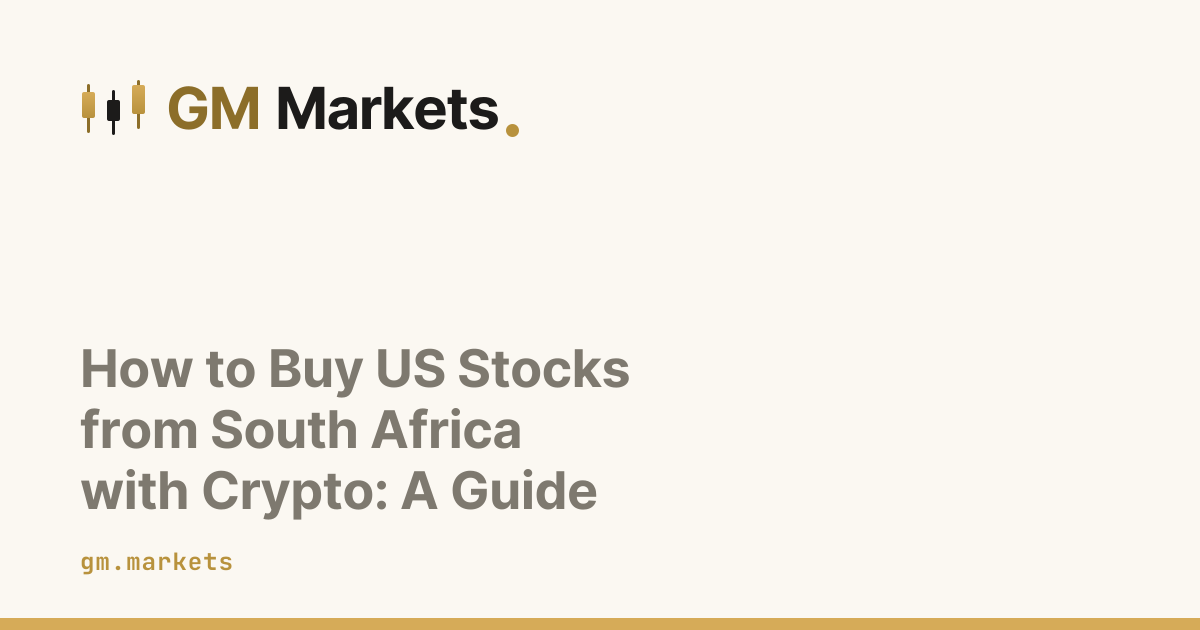
For many South African investors, buying shares in leading US companies like NVIDIA, Tesla, or Apple has traditionally involved a complex and costly process. Navigating exchange controls, high currency conversion fees, and slow settlement times are common hurdles. However, it is now possible to buy US stocks from South Africa directly with cryptocurrency, bypassing many of these challenges.
This is achieved through tokenized stocks. These are digital tokens on a blockchain that represent direct, 1:1 backed ownership of a real-world share. This guide provides a detailed process for using your existing crypto assets to invest in the US stock market through a platform like ours, GM Markets. We will explore the regulatory landscape, compare costs against traditional methods, and explain how this approach offers a more efficient path to global equities.
The Traditional Route: Costs and Regulatory Hurdles in SA
To understand the benefits of a crypto-native approach, it is important to first examine the conventional methods available to South Africans and their associated drawbacks. The process is not only expensive but also constrained by a specific regulatory framework.

High Costs and Layered Fees
When you use a traditional local broker, even one with a dedicated USD wallet, you face multiple layers of fees. Based on publicly available fee schedules from major South African financial institutions, these typically include:
- Currency Conversion Fees: A significant cost is converting South African Rand (ZAR) to US Dollars (USD). This fee can range from 0.5% to 1.0% above the mid-market rate. For example, EasyEquities notes a fee of 70 basis points (0.7%) for USD/ZAR transfers, while Standard Bank's Webtrader platform applies a 1.0% fee.
- Brokerage Commissions: On top of forex costs, trading commissions of around 0.25% to 0.4% per trade are common.
- Transfer Fees: Moving money internationally via SWIFT often involves fixed fees. Standard Bank's Shyft, for example, charges a flat $14 for an international transfer.
Regulatory Framework: SARB, SARS, and FSCA
The process is governed by several South African regulatory bodies, each with specific rules:
- South African Reserve Bank (SARB): You must operate within two allowances for sending money offshore. The Single Discretionary Allowance (SDA) allows for up to R1 million per calendar year without a tax clearance certificate. For larger amounts, the Foreign Investment Allowance (FIA) permits an additional R10 million, but requires a Tax Compliance Status (TCS) PIN from SARS. The SARB's official FAQ explicitly permits using these allowances for crypto asset purchases from abroad.
- South African Revenue Service (SARS): Disposing of an asset, including selling a foreign stock, is a taxable event. Gains are typically subject to Capital Gains Tax (CGT). According to SARS guidance on the 2024 budget, 40% of an individual's net capital gain is included in their taxable income after an annual exclusion of R40,000.
- Financial Sector Conduct Authority (FSCA): As of October 19, 2022, the FSCA officially classified crypto assets as a “financial product.” This was confirmed in an FSCA press release, meaning providers of crypto-related services in South Africa must be licensed.
This framework, while providing a legal path, creates a slow and expensive process that typically takes 2 to 5 business days for funds to clear.
Cost Comparison: Investing R100,000 in US Stocks from SA
To illustrate the difference in costs, let us compare a hypothetical R100,000 investment into a US stock via a traditional South African broker versus our platform, GM Markets, using stablecoins.
| Cost Component | Traditional Broker (Estimated) | GM Markets |
|---|---|---|
| Initial Investment | R100,000 | R100,000 (converted to stablecoins) |
| Forex Conversion (0.7%) | - R700 | N/A (assumes user already holds USDC) |
| Brokerage Fee (0.25%) | - R248.25 (on R99,300) | - R198.60 (0.20% on R99,300 equivalent) |
| SWIFT Transfer Fee | ~ R260 ($14) | ~ R18.50 (blockchain network fee) |
| Total Fees | ~ R1,208.25 | ~ R217.10 |
| Net Investment Amount | ~ R98,791.75 | ~ R99,782.90 |
Note: This is an illustrative example. Actual fees may vary. The GM Markets path assumes the user has already acquired stablecoins like USDC on a local exchange.
A Modern Solution: How Tokenized Stocks Work
Tokenized stocks offer a direct bridge between the crypto ecosystem and traditional equity markets. On our platform, a tokenized stock is a digital asset that lives on a blockchain, such as Base or Arbitrum, and represents ownership of one share of a company.
This is not a synthetic product or a contract for difference. We ensure every token is fully backed 1:1 by a corresponding physical share. We hold these underlying shares in segregated customer accounts at regulated, third-party broker-dealers, including Interactive Brokers and Alpaca Markets. You can verify our reserves in real time on our Proof of Reserves page, which shows the on-chain supply of tokens against the shares held in custody.
This structure provides several core benefits:
- Fractional Ownership: You can buy a fraction of a share from as little as $1, making it accessible to invest in high-priced stocks like NVIDIA.
- Direct Exposure: You gain direct economic exposure to the underlying stock's price movements. We use a total-return model, meaning dividends are reinvested, increasing the token's net asset value (NAV).
- Self-Custody: The token resides in your own crypto wallet, giving you full control over your assets.
How to Buy US Stocks with Crypto on GM Markets (Step-by-Step)
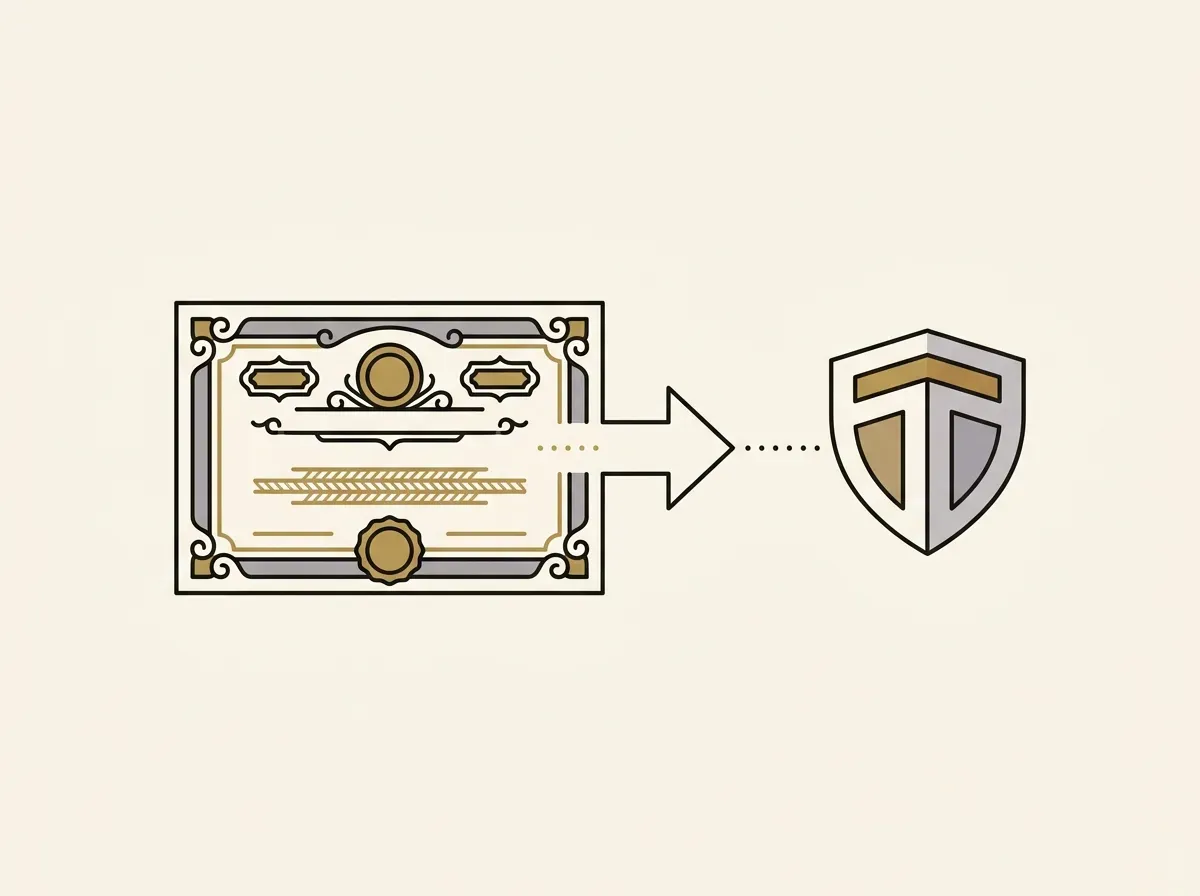
Our platform is designed for a straightforward, crypto-native experience. It allows you to use your existing stablecoins to gain exposure to US equities in minutes.
Step 1: Connect Your Wallet with MPC Security
We offer permissionless onboarding. You can connect an existing crypto wallet or create a new, secure embedded wallet using just your Google account or email address. These embedded wallets are operated by Privy and use multi-party computation (MPC). MPC technology splits your private key into multiple shares, which are stored in different locations. To sign a transaction, a threshold of these shares must be combined. This means no single party, including GM Markets or Privy, ever has access to your full private key, removing single points of failure and significantly enhancing security.
Step 2: Deposit Stablecoins
Instead of a slow ZAR-to-USD bank transfer, you can fund your account by depositing stablecoins like USDC or USDT from any supported chain. Your deposits are converted into a unified USDF balance, which you use for trading. This avoids costly forex conversion fees and banking delays.
Step 3: Choose and Buy Your Stock
Search our platform for the US stock or ETF you want to buy, such as Tesla (TSLA) or NVIDIA (NVDA). When you are ready to trade, we provide a firm price quote through a Request-For-Quote (RFQ) system with our market-making partners. Our trading fee of 10 to 20 basis points (0.10% to 0.20%) is included in the price you see, so the amount you receive is final.
Step 4: Custody Your Asset
Once the trade is complete, the tokenized stock is sent directly to your self-custodial wallet. From there, you can hold it, sell it back for USDF, or withdraw the token to another wallet or DeFi platform. You retain full control over your assets.
Please note: Our services are not offered to users in the United States or other restricted jurisdictions.
Beyond Holding: The Power of DeFi Composability
A key advantage of tokenized stocks over traditional shares is their ability to be used within the decentralized finance (DeFi) ecosystem. Your US stock exposure becomes a productive, on-chain asset. Specific use cases include:
- Lending for Yield: You can deposit your tokenized Apple (AAPL) or NVIDIA (NVDA) shares into a lending protocol like Aave or Morpho. Other users can borrow your assets, and you earn a variable yield on your holdings.
- Collateral for Borrowing: You can use your tokenized stock as collateral to borrow stablecoins. This allows you to unlock liquidity from your portfolio without selling your shares and triggering a taxable event.
- Providing Liquidity: You can pair your tokenized stock with a stablecoin like USDC and deposit it into a liquidity pool on a decentralized exchange like Uniswap. In return, you earn a share of the trading fees generated by that pool.
Frequently Asked Questions
Are tokenized stocks legal for South Africans to own?
Yes. The FSCA's classification of crypto assets as a “financial product” provides a regulatory framework for digital assets. While specific regulations for tokenized securities are still developing, owning a token that represents a foreign security is permissible. This is not legal or financial advice, and you should consider your own circumstances.
What are the tax implications in South Africa?
The South African Revenue Service (SARS) applies Capital Gains Tax (CGT) to crypto assets. For individuals, 40% of the net capital gain is included in your taxable income after an annual exclusion of R40,000. Disposing of an asset, including selling it for stablecoins, is a taxable event. We recommend consulting a qualified tax professional in South Africa for advice specific to your situation.
How do I get my money back into Rand?
The process is the reverse of funding. You can sell your tokenized stock on our platform for stablecoins (USDF, which can be withdrawn as USDC or USDT). You can then send these stablecoins to a licensed South African crypto asset service provider, sell them for ZAR, and withdraw the funds to your South African bank account.
Start Trading US Stocks with Your Crypto
For South Africans holding crypto, tokenized stocks on GM Markets represent a modern, efficient, and cost-effective bridge to the US equity market. By leveraging blockchain technology, we remove many of the fees, delays, and complexities associated with the traditional financial system.
You can use your digital assets to gain exposure to global growth companies without leaving the crypto ecosystem. Explore the available tokenized stocks on our platform and start building your global portfolio.
Disclaimer: All trading and investment activities involve risk. Market prices can fluctuate, and you may lose the entire amount of your investment. Tokenized assets carry additional risks, including smart contract, settlement, and counterparty risk. This content is for informational purposes only and does not constitute financial, investment, or legal advice. Please review our full risk disclosures on our legal page.