How to Buy Tokenized Stocks Without Traditional KYC on GM Markets
Learn how GM Markets offers permissionless access to tokenized US stocks and ETFs for international investors, bypassing traditional KYC requirements through secure, self-custodial, and blockchain-native solutions.
How to Buy Tokenized Stocks Without Traditional KYC on GM Markets
For many global investors, the traditional process of buying stocks is often hindered by complex Know Your Customer (KYC) requirements. These identity verification procedures can create significant barriers, from lengthy documentation to geographical restrictions. At GM Markets, we offer a different path. We provide permissionless, self-custodial access to tokenized US-listed stocks and exchange-traded funds (ETFs) for users outside restricted jurisdictions, allowing you to engage with global equities without the traditional KYC hurdles.
Our approach leverages blockchain technology and advanced cryptographic security to streamline access while upholding robust compliance standards. We aim to enable broader participation in global markets, offering a secure and efficient alternative to traditional brokerage models.
The Challenge of KYC in Traditional Stock Trading
Know Your Customer (KYC) refers to the mandatory identity verification processes that financial institutions undertake to confirm the identity of their clients. This typically involves collecting and verifying personal information such as full name, date of birth, address, and government-issued identification. Beyond basic identity, it can also include proof of address, source of funds, and financial background checks.
Traditional brokerage firms and financial institutions implement KYC primarily to comply with Anti-Money Laundering (AML) and Counter-Terrorist Financing (CTF) regulations. Jurisdictions like the European Union, Singapore, and the United Arab Emirates have stringent frameworks. For instance, the EU's upcoming Anti-Money Laundering Regulation (AMLR) and the Markets in Crypto-Assets Regulation (MiCA) unify and strengthen these rules, placing crypto-asset service providers (CASPs) on par with traditional banks for KYC/AML compliance. Singapore's Monetary Authority of Singapore (MAS) and the UAE's Virtual Assets Regulatory Authority (VARA) also mandate comprehensive customer due diligence for financial and virtual asset service providers.
While essential for combating illicit financial activities, traditional KYC creates common barriers for global investors. These include lengthy, often manual processes that can delay onboarding for weeks, geographical restrictions that exclude residents of certain countries, and significant privacy concerns regarding the extensive personal data collected and stored. Users often find the process repetitive across different services, leading to frustration and high rates of abandonment during sign-up. A 2020 survey indicated that 56% of respondents abandoned an online finance application due to cumbersome onboarding, highlighting a significant user experience challenge.

Tokenized Stocks: An Evolved Approach for Access
Tokenized stocks are on-chain representations of real-world equity, bringing the benefits of blockchain technology to traditional financial assets. Each tokenized stock on our platform is backed 1:1 by an actual share held in custody, offering the same economic exposure as a traditional stock, including price movements and dividends, but with the added advantages of being a crypto asset. This means you gain economic exposure to companies like Apple or Tesla within your self-custodial digital wallet.
The underlying blockchain technology facilitates a fundamentally different model of access compared to traditional finance. Instead of relying on centralized intermediaries for identity verification and transaction settlement, tokenized assets can leverage the decentralized and transparent nature of public ledgers. This enables new forms of permissionless interaction, where the wallet, rather than a personal identity document, becomes the primary identifier for engaging with financial protocols.
The core benefits of tokenized stocks extend beyond just access. They offer fractional ownership, allowing you to buy a portion of a high-value share from as little as $1. Trading can occur 24/7, reflecting the always-on nature of crypto markets, even if the underlying traditional market has specific trading hours. Crucially, tokenized stocks offer composability, meaning they can be integrated with various Decentralized Finance (DeFi) protocols for lending, borrowing, or supplying liquidity. This allows your equity exposure to become productive capital within the broader DeFi ecosystem, a significant advantage over traditional brokerage holdings.
GM Markets' Permissionless Onboarding: Simplifying Access Without Traditional KYC
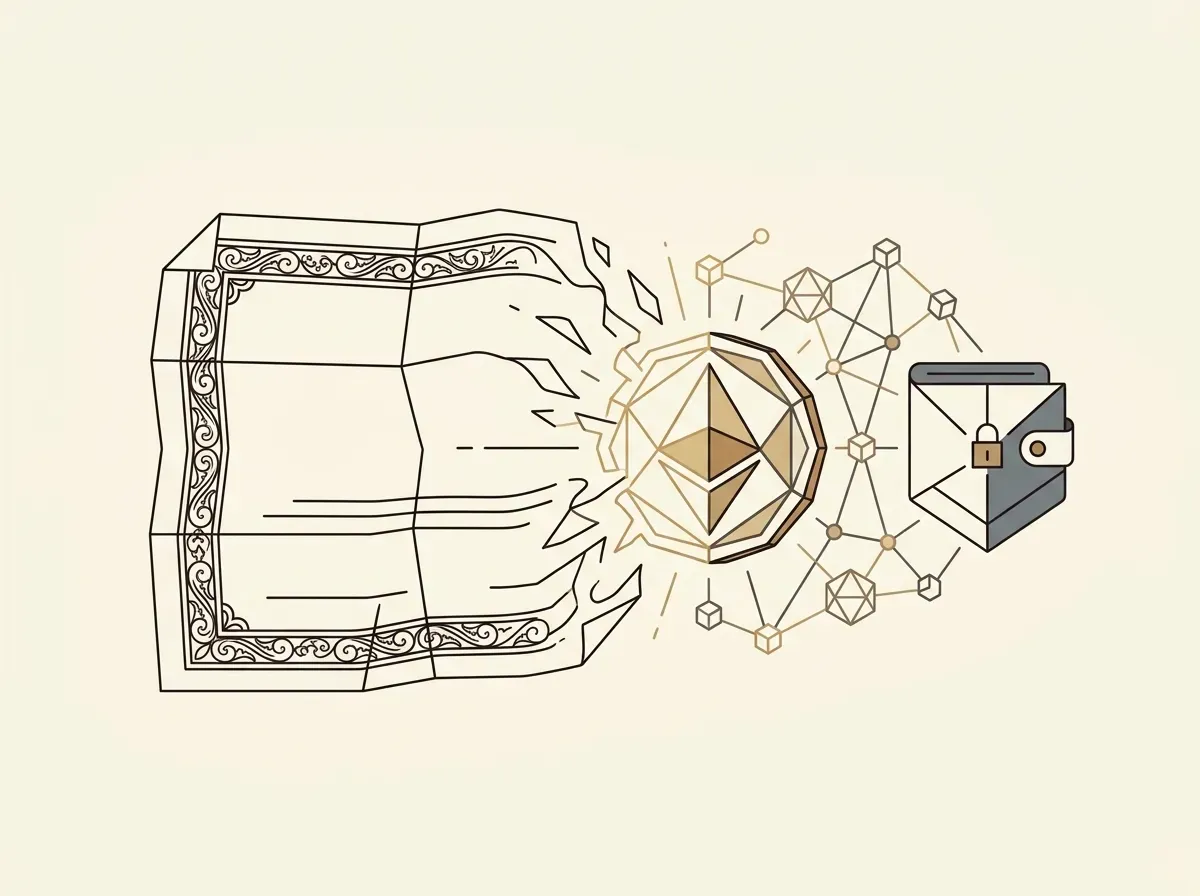
At GM Markets, we have designed our onboarding process to be permissionless and streamlined, allowing you to simplify access without the traditional KYC requirements often associated with stock trading. We do not require extensive document submission or lengthy waiting periods to start trading. Our platform is accessible to users outside restricted jurisdictions, including the United States.
You can connect to GM Markets using your existing external wallet, a Google account, or an email magic-link. This wallet-native approach means that the initial gateway to our platform does not involve uploading identity documents or undergoing a traditional verification interview. Instead, we leverage secure, modern authentication methods.
Central to our permissionless model is the use of Privy MPC (Multi-Party Computation) embedded wallets. These wallets provide self-custody by splitting your private key into multiple encrypted shares. No single party, including GM Markets, ever holds the complete private key. The key is temporarily reconstructed only within a secure, isolated hardware environment (Trusted Execution Environment) for signing transactions, then immediately wiped. This architecture ensures you retain control over your assets without us ever having full custody of your private key, aligning with the principles of self-custody.
Authentication for these embedded wallets relies on familiar methods such as biometrics (Face ID or Touch ID) or passkeys. These replace traditional identity checks for login, providing a secure and convenient way to access and authorize transactions on our platform. This system enables secure, permissionless value transfer, particularly benefiting users who may not have access to traditional banking or brokerage services.
Our trading fees, detailed on our pricing page, range from 10 to 20 basis points (0.10% to 0.20%), depending on your trading volume. This fee is included in the quoted price, and we apply no custody, inactivity, dividend, or FX markup fees.

How Self-Custody and Security Function Without Traditional KYC
Our commitment to permissionless access does not compromise security or the integrity of your assets. Self-custody is a fundamental principle on GM Markets. This means you, as the user, retain direct control over your private keys and, by extension, your tokenized assets. We do not hold your assets on our balance sheet, ensuring that your holdings are independent of our operational status.
Every tokenized share on GM Markets is backed 1:1 by a real share held in a segregated customer account at a regulated broker-dealer. We partner with established firms like Interactive Brokers and Alpaca Markets to ensure the underlying shares are held securely and separately from the brokers' own funds. This segregated custody model provides a crucial layer of investor protection, similar to what you would find in traditional finance.
Trade execution on our platform uses a Request-For-Quote (RFQ) model. Regulated market makers provide real-time quotes against the live underlying market, ensuring efficient and fair pricing for your trades.
To ensure transparency and verifiable backing, we utilize Accountable's real-time, on-chain proof of reserves. This third-party attestation service directly reads broker balances and publishes them on-chain in real time. This allows for independent verification of our backing ratio, demonstrating that token supply matches the underlying shares held in reserve. You can review our live backing ratio and attested assets on our Proof of Reserves page.
Furthermore, the security of our smart contracts, which govern the tokenization and trading processes, is paramount. Our smart contracts have undergone rigorous audits by reputable firms including Sherlock, Halborn, Cantina, and Cyfrin. These audits ensure the robustness and resilience of our on-chain infrastructure, providing a security measure distinct from user-level KYC. We also operate in public beta, continuously iterating and improving our security posture, with SOC 2 Type II compliance in progress.
Should GM Markets discontinue operations, a designated security agent works with the custodian to redeem outstanding tokens against the underlying shares, a path enforced by the on-chain contract and independent of our operational status. More details on this continuity plan are available in our Frequently Asked Questions.

Understanding the Nuances: What 'Without KYC' Means for Compliance and Limitations
It is important to clarify that 'without KYC' on GM Markets does not imply anonymity or a lack of regulatory oversight. Instead, it signifies a different, wallet-native approach to identity and access, distinct from the document-based verification common in traditional finance. Regulators globally, including the SEC, FinCEN, FCA, and ESMA, consistently state that tokenization does not alter the application of existing securities laws and AML/CTF obligations. Platforms facilitating the trading of tokenized securities are typically classified as financial intermediaries and incur their own compliance responsibilities.
Our platform enforces strict jurisdictional restrictions. GM Markets is not offered to users in the United States or other restricted jurisdictions. We implement geofencing and other operational controls to ensure compliance with these geographical limitations. This is a critical aspect of our regulatory posture, ensuring we serve only eligible international users.
While we do not require traditional upfront KYC for onboarding, we employ specific security measures to manage risk and verify transactions. For instance, trades and withdrawals above $10,000 trigger a second-factor confirmation. This transaction-level verification adds an important layer of security and serves as an additional control point, helping to prevent unauthorized large transactions and manage potential illicit activity.
As with any financial market, tokenized stocks carry inherent risks. Market prices can move against you, and you may lose money. Tokenized assets also involve specific risks such as settlement risk, counterparty risk (related to the broker-dealers and market makers), smart-contract risk, and custody risk. We do not provide financial, investment, tax, or legal advice. We encourage all users to understand these risks thoroughly and consult with a professional advisor before trading. Our legal and risk disclosure page provides further details.
Benefits of Permissionless Access to Global Equities
The permissionless access model offered by GM Markets provides several compelling benefits for eligible global investors:
- Global Accessibility: We enable individuals outside restricted jurisdictions to access US-listed stocks and ETFs, expanding participation in global capital markets that might otherwise be inaccessible due to complex traditional brokerage requirements.
- Reduced Friction: Our wallet-native onboarding and streamlined authentication significantly reduce the time and effort traditionally required to open a brokerage account. This faster and simpler process means you can start trading more quickly.
- Enhanced Privacy: By leveraging the pseudonymous nature of blockchain, our model offers enhanced privacy compared to systems that demand extensive personal data. While not anonymous, the focus shifts from upfront identity documents to secure wallet interactions.
- Composability: Tokenized holdings are standard ERC-20 assets that can be used across various DeFi protocols. This means your exposure to US stocks can be lent, borrowed against, supplied as liquidity, or used as collateral within the broader DeFi ecosystem, enabling new strategies to potentially earn additional yield on your assets.
The adoption of permissionless and wallet-native onboarding methods is growing rapidly in the broader crypto and DeFi space. In 2025, approximately 59% of crypto wallet users globally preferred non-custodial wallets, and the number of unique active cryptocurrency wallets reached about 820 million. This trend underscores a clear user preference for self-custody and direct interaction with decentralized applications, which our platform embraces for tokenized equities. For more insights on this trend, you can refer to reports such as a16z crypto's State of Crypto 2025 and Henley & Partners' Crypto Wealth Report 2025.
Frequently Asked Questions
Do I need a bank account to deposit funds on GM Markets?
You do not necessarily need a traditional bank account. We accept deposits via stablecoins (USDC and USDT) across multiple chains (Base, Arbitrum, Ethereum, Optimism), which are unified into USDF on our platform. We also support fiat rails like Apple Pay, card, and bank transfers, offering flexibility depending on your preference and local availability. All deposits are free.
Is my trading truly anonymous if I do not undergo KYC?
No, your trading is not truly anonymous. While our onboarding bypasses traditional document-based KYC, we operate within a regulated framework and maintain a robust compliance posture. Transactions on the blockchain are pseudonymous, meaning they are linked to wallet addresses rather than directly to personal identities. However, we have operational controls and transaction monitoring in place, and we are not offered to users in the United States or other restricted jurisdictions.
What are the tax implications when trading tokenized stocks without traditional KYC?
Tax obligations for trading tokenized stocks are the responsibility of the individual user and depend on your local jurisdiction. On our platform, dividends are reinvested into the underlying asset, raising the token's on-chain NAV rather than paying out separately, which generally means dividends are not a separate taxable event. Realized sales may be taxable. We provide CSV export functionality for your portfolio to assist with tax reporting. We recommend consulting a qualified tax advisor for personalized guidance.
How does GM Markets prevent illicit activity without requiring traditional KYC?
We employ a multi-faceted approach to prevent illicit activity. This includes strict jurisdictional restrictions, real-time transaction monitoring, and a second-factor confirmation for trades and withdrawals exceeding $10,000. Our underlying smart contracts are audited, and our 1:1 asset backing is transparently attested on-chain. While we offer permissionless access, this does not imply a lack of oversight; it reflects a modern, blockchain-native approach to security and compliance.
Trading Tokenized Stocks on GM Markets
GM Markets provides a unique, permissionless pathway to access tokenized US stocks and ETFs for investors outside restricted jurisdictions. By embracing a wallet-native onboarding model and leveraging advanced cryptographic security, we remove the traditional KYC barriers that often hinder global participation in equity markets.
Our platform, as detailed on our About Us page, remains committed to security and transparency through its 1:1 asset backing, segregated customer accounts with regulated broker-dealers, and real-time on-chain proof of reserves. We believe this model offers a powerful combination of accessibility, self-custody, and verifiable trust.
If you are located outside the United States or other restricted jurisdictions and seek a modern, efficient way to engage with global equities, we invite you to explore the GM Markets platform. Markets can move against you, and tokenized stocks carry various risks, including settlement, counterparty, smart-contract, and custody risks. We do not offer financial advice, but we aim to provide the tools and transparency for informed trading decisions.