How to Buy Tokenized Stocks with Phantom Wallet on GM Markets
Learn how to buy tokenized US stocks and ETFs on GM Markets using your Phantom Wallet. Discover EVM compatibility, funding methods, and the benefits of self-custody and DeFi composability.
How to Buy Tokenized Stocks with Phantom Wallet on GM Markets
GM Markets provides a permissionless, self-custodial platform for trading tokenized US-listed stocks and ETFs. Our infrastructure is built on EVM-compatible blockchains, meaning trades settle on networks such as Base, Arbitrum, Ethereum, and Optimism. This architecture enables the robust security and composability that are central to our platform.
Many users approaching tokenized assets for the first time may be familiar with wallets like Phantom Wallet. While Phantom Wallet is widely recognized and popular within the Solana ecosystem, our platform currently operates on EVM-compatible chains. This distinction is important because different blockchain ecosystems, like Solana and EVM chains, often require different wallet configurations or even different wallets for direct interaction. While Phantom has expanded its capabilities to support EVM chains, users primarily accustomed to its Solana functionality must ensure their Phantom Wallet is correctly configured for EVM networks to connect successfully to GM Markets. Alternatively, common EVM-native wallets or our embedded wallet offer direct compatibility.
Understanding these underlying blockchain differences is key. Direct cross-chain wallet connections are not always possible without specific integrations or bridging solutions. For GM Markets, ensuring your wallet is EVM-compatible and correctly configured for one of our supported networks is the first step toward accessing tokenized stocks.
Understanding EVM Compatibility and Tokenized Assets
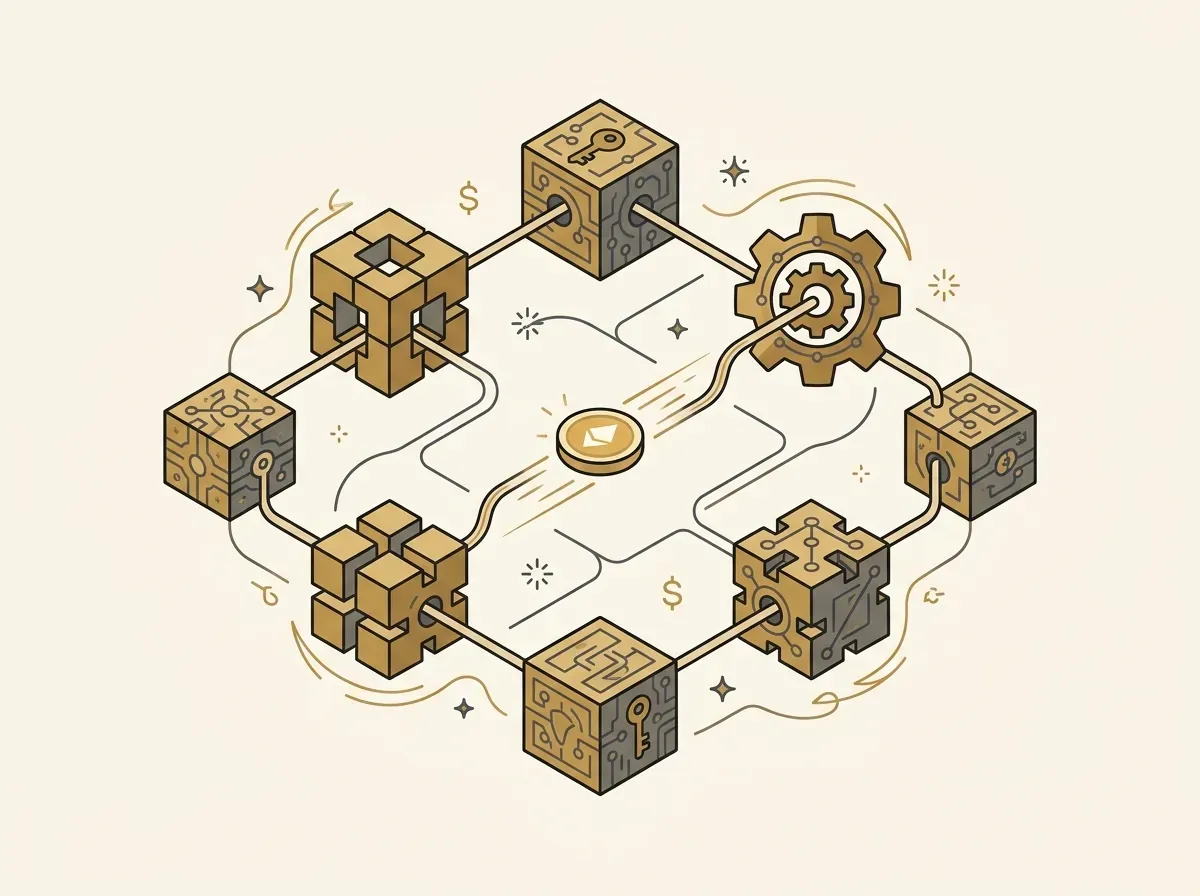
EVM-compatible blockchains are networks that utilize the Ethereum Virtual Machine (EVM) to execute smart contracts, fostering interoperability within the broader Ethereum ecosystem. This compatibility allows developers to deploy the same smart contracts across various EVM blockchains with minimal code alterations. The EVM itself functions as the software environment responsible for executing smart contracts on the Ethereum blockchain, managing all operations, transactions, and gas fee calculations. Key benefits of EVM chains include reduced costs, a standardized environment for decentralized application (dApp) development, and streamlined user onboarding due to widespread wallet support. Prominent examples of EVM-compatible chains include Ethereum Mainnet, BNB Smart Chain, Polygon PoS, Arbitrum, Optimism, and Base. For further technical details on EVM, refer to the Ethereum documentation.
On GM Markets, tokenized stocks and ETFs are standard ERC-20 assets that live on these EVM-compatible chains. This means they inherit the security and transparency of these networks, while also unlocking the ability to interact with the broader DeFi ecosystem, which largely resides on EVM chains.
Connecting Your Wallet to GM Markets: Supported Methods
We offer two primary methods for connecting to GM Markets, designed for both convenience and security. You can use an external EVM-compatible wallet or our secure embedded MPC wallet.
External EVM Wallets (Including Phantom Wallet)
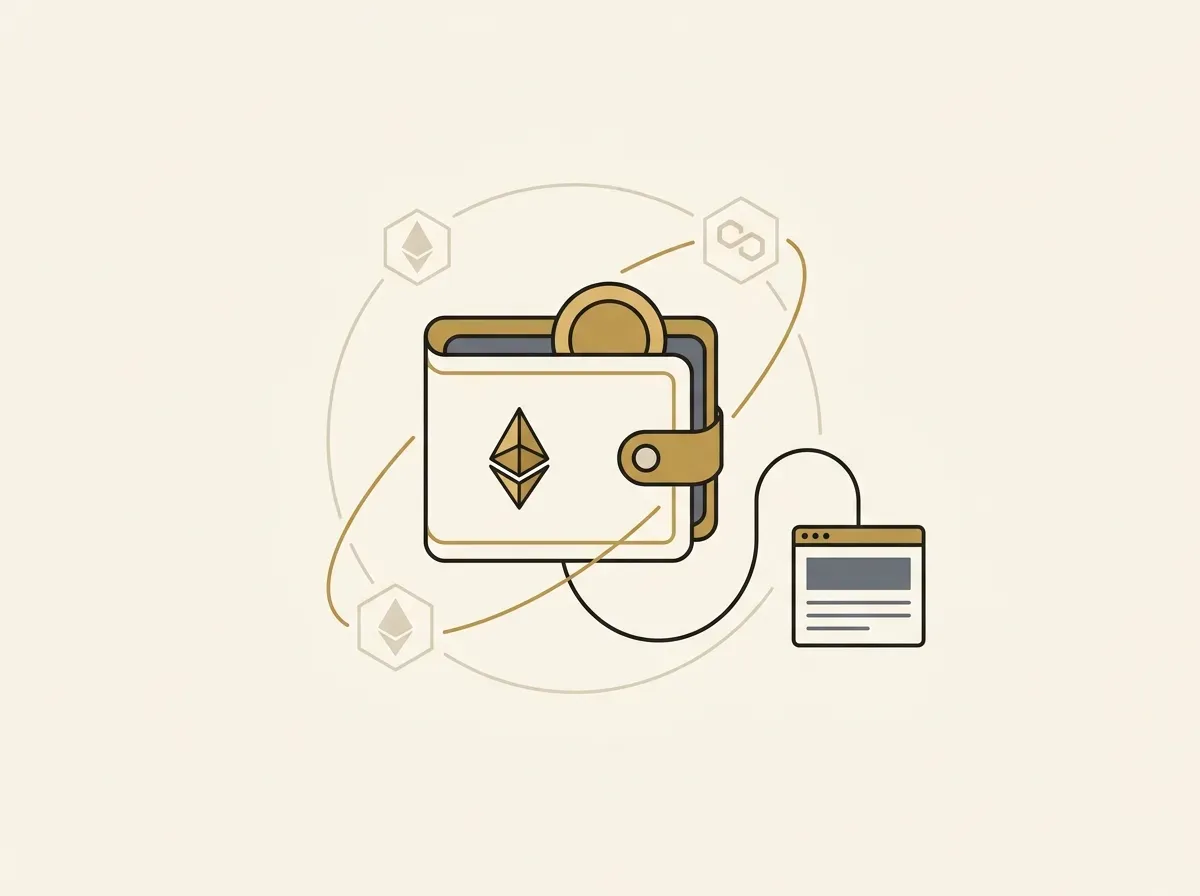
For users who prefer to manage their own wallet keys directly, we support external EVM-compatible wallets. Wallets like MetaMask, which are widely used across EVM networks, can be connected seamlessly. The process typically involves:
- Navigating to the GM Markets website.
- Locating and clicking the "Connect" or "Sign in with wallet" button, usually in the top right corner.
- Selecting your preferred external EVM wallet from the presented options.
- Authorizing the connection request in your wallet's interface, which may require entering your wallet password or confirming the connection.
Phantom Wallet, initially recognized for its Solana compatibility, has evolved into a robust multi-chain wallet with extensive support for Ethereum Virtual Machine (EVM) chains. This includes popular networks such as Ethereum, Base, Arbitrum, Optimism, Polygon, Avalanche, zkSync, Scroll, Gnosis, Celo, Monad, and HyperEVM. For Phantom Wallet users looking to configure their wallet for EVM chains, the process is streamlined:
- Installation and Setup: Users should download and install the official Phantom EVM Wallet extension from the Chrome Web Store. During setup, they can either create a new wallet or import an existing one using a recovery phrase. Hardware wallet integration with Ledger is also an option for desktop users.
- Automatic Network Management: Phantom is designed to automatically manage multiple blockchain networks. Users typically do not need to manually switch between chains. When connecting to a decentralized application (dApp) that operates on an EVM chain, Phantom will often prompt the user to approve the necessary network switch.
- Setting as Default Wallet: If multiple browser wallets, such as Phantom and MetaMask, are installed, users can designate Phantom as their preferred default EVM wallet. This is done within Phantom's settings under "Settings" > "Preferences" > "Default App Wallet" to prevent connection conflicts.
- Connecting to dApps: Phantom is compatible with dApps across Ethereum, Polygon, and Solana. Even if a specific "Connect with Phantom" button is not visible on a dApp, users can often select the "MetaMask" option, and Phantom will intercept the connection if it is set as the default EVM wallet.
- Funding for Gas Fees: To conduct transactions on EVM chains, users will need the native cryptocurrency of that chain (e.g., ETH for Ethereum, MATIC for Polygon) to cover gas fees. These assets can be acquired directly within the Phantom Wallet through integrated services like MoonPay, Coinbase Pay, Robinhood Connect, or PayPal.
Our platform uses Privy for wallet management, which integrates these external wallet options securely. This means that once connected, your external EVM wallet interacts directly with our platform's smart contracts.
Embedded MPC Wallets (Privy)
For new users or those seeking a streamlined experience, our embedded MPC (Multi-Party Computation) wallets offer a high level of security without the complexities of managing seed phrases. You can onboard easily using your Google account or an email magic-link. This method leverages MPC technology, where no single party, including GM Markets, ever holds your complete private key. Key shares are distributed and reconstructed only at the point of signing a transaction, on your device. Multi-party computation is a cryptographic subfield focused on enabling multiple parties to jointly compute a function using their private inputs, all while keeping those inputs confidential from each other. In the context of digital asset wallets, MPC functions by dividing a private key into distinct shares, which are then distributed among several independent parties. The crucial aspect of this method is that the complete private key is never fully assembled in one location at any point in time, thereby enhancing security by eliminating single points of failure. The foundational concepts of secure multi-party computation originated in the late 1970s. For more information on MPC, you can refer to academic resources or cryptographic standards organizations.
Authentication for these embedded wallets is secured with biometrics (Face ID or Touch ID) or passkeys, enhancing security and user convenience. Trades and withdrawals above $10,000 trigger a second-factor confirmation, adding another layer of protection for your assets. Our security page provides further details on how we protect your assets and data.
Funding Your GM Markets Account with Stablecoins
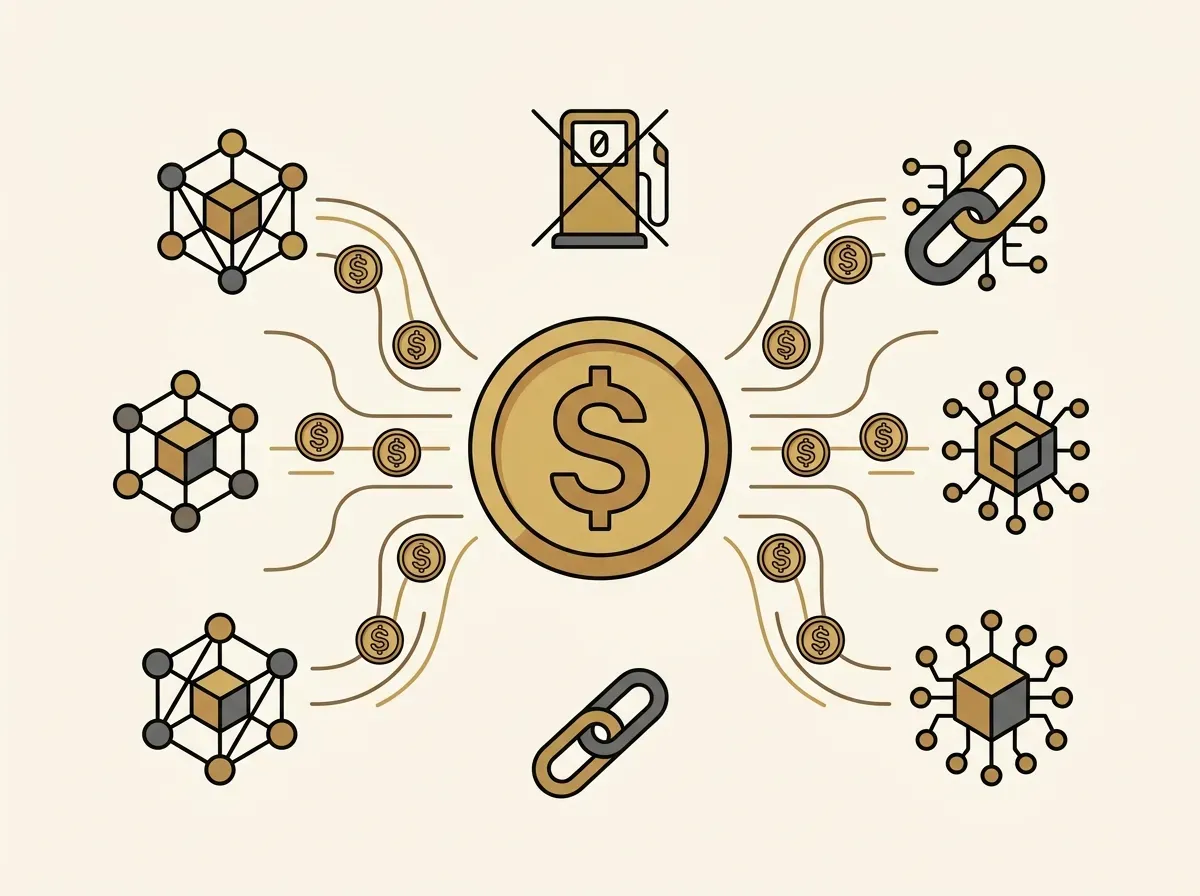
Once your wallet is connected, the next step is to fund your account. We facilitate deposits using USDC and USDT stablecoins. These stablecoins are unified into USDF, our platform's internal stablecoin balance, providing a consistent asset for trading.
We support stablecoin deposits across multiple EVM-compatible chains: Base, Arbitrum, Ethereum, and Optimism. When depositing, it is crucial to ensure that the network selected in your wallet matches the deposit network on GM Markets to avoid potential issues with asset transfers.
A significant advantage of trading on GM Markets is gas abstraction. Our smart account pays the native gas fees required for on-chain transactions and bills the equivalent amount in USDF from your balance. This means you never need to hold native chain tokens (like ETH or MATIC) to cover gas, simplifying the trading experience considerably. Our pricing page details our transparent fee structure, including free deposits and withdrawals.
Finding and Trading Tokenized US Stocks and ETFs
After funding your account, you can begin exploring our selection of tokenized US-listed stocks and ETFs. Our platform provides a user-friendly interface to browse available assets, categorized by sectors like "Mega-cap" or "Semis," or by performance metrics such as "Top Gainers." While a dynamic, real-time list of all available assets is best accessed directly on the GM Markets platform, we aim to provide a broad catalog, allowing users to trade a diverse range of US stocks and ETFs.
Trading on GM Markets utilizes a Request-For-Quote (RFQ) execution model. Regulated market-making partners provide real-time quotes against the live underlying market. This ensures that the price you see reflects current market conditions, with trades settled back-to-back upon acceptance.
Every tokenized stock and ETF on GM Markets is backed 1:1 by a real share held in a segregated customer account at regulated broker-dealers, such as Interactive Brokers or Alpaca Markets. A broker-dealer is an individual or entity officially registered to conduct both broker and dealer activities under the Securities Exchange Act of 1934. In their role as brokers, they execute securities transactions on behalf of clients, typically earning commissions. As dealers, they trade securities for their own accounts and frequently act as market makers by providing liquidity through quoted buy and sell prices. Broker-dealers are subject to stringent regulations designed to uphold market integrity and safeguard investors. In the United States, they are required to register with the Securities and Exchange Commission (SEC) and become members of a self-regulatory organization such as the Financial Industry Regulatory Authority (FINRA). These regulations mandate adherence to transparency, disclosure, capital requirements, and recordkeeping standards. Further information on broker-dealer regulation can be found on the SEC website.
This 1:1 backing is independently attested on-chain in real time by Accountable, a third-party proof-of-reserves provider, which you can verify on our Proof of Reserves page.
We operate a total-return model for dividends and corporate actions. Instead of separate cash payouts, dividends are reinvested into the underlying shares, which increases the token's on-chain Net Asset Value (NAV). Similarly, splits, mergers, and other corporate actions are absorbed into the NAV, ensuring your economic exposure accurately tracks the underlying asset. Our FAQ page provides further details on this model.
Our transparent pricing model includes one trading fee, ranging from 10 to 20 basis points (0.10% to 0.20%). The default fee is 0.20%, which decreases as your 14-day trading volume increases through our VIP ladder. This fee is always included in the quoted price you see, meaning the "You will receive" line is the final amount. Deposits and withdrawals are free, and we do not charge custody, inactivity, dividend, or FX-markup fees.

Managing Your Tokenized Stock Portfolio and Composability
Holding tokenized stocks on GM Markets means you maintain self-custody over your assets in your connected wallet. This provides true ownership and control, a core advantage of on-chain finance.
The ERC-20 standard of our tokens unlocks significant composability benefits across the broader DeFi ecosystem. Decentralized finance (DeFi) platforms represent financial systems built on public blockchains, predominantly Ethereum, that operate through self-executing smart contracts rather than traditional centralized intermediaries like banks or brokers. These protocols facilitate direct peer-to-peer financial transactions such as lending, borrowing, trading, and investing. DeFi systems are characterized by their non-custodial nature, meaning users retain control of their assets, and their permissionless access, allowing anyone with an internet connection to participate without identity verification. Transactions on DeFi platforms are publicly recorded on the blockchain, providing transparency and an immutable audit trail. Examples of well-known DeFi protocols include Uniswap for decentralized exchanges, MakerDAO for decentralized stablecoin lending, and Aave and Compound for lending and borrowing. Your tokenized stock positions are not merely static holdings; they can become productive capital. You can use them as collateral for loans, lend them out to earn yield, borrow against them, or supply them as liquidity across various DeFi protocols such as Aave, Morpho, Uniswap, Curve, and CoW Swap. This flexibility allows you to potentially earn additional yield or leverage your positions within DeFi, a capability not typically available with traditional brokerage accounts. You can explore the DeFi ecosystem further through resources like DeFi Llama.
When you wish to exit your positions, the process for withdrawing funds back to stablecoins is straightforward and designed for efficiency.
Frequently Asked Questions
What kind of wallet do I need to use GM Markets?
You need an EVM-compatible wallet to connect to GM Markets. This can be an external wallet like MetaMask or a correctly configured Phantom Wallet, or you can use our embedded MPC wallet, which you can access via Google or an email magic-link.
Can I use my Phantom Wallet on GM Markets directly?
Phantom Wallet is primarily associated with the Solana blockchain. While Phantom has expanded to support EVM chains, you must ensure your Phantom Wallet is configured for an EVM network (like Base, Arbitrum, Ethereum, or Optimism) to connect successfully to GM Markets. The process involves installing the EVM extension, ensuring automatic network management, and potentially setting it as your default browser wallet.
How do I deposit funds onto GM Markets?
You can deposit USDC or USDT stablecoins on supported EVM chains, including Base, Arbitrum, Ethereum, and Optimism. These stablecoins are unified into USDF on our platform. Deposits are free.
What are the fees for trading tokenized stocks?
We charge a single trading fee ranging from 10 to 20 basis points (0.10% to 0.20%). This fee is included in the quoted price. Deposits and withdrawals are free, and there are no hidden custody, inactivity, dividend, or FX fees.
Do I receive dividends on tokenized stocks?
Yes, you receive the economic benefit of dividends through our total-return model. Dividends are reinvested into the underlying shares, which increases the token's on-chain Net Asset Value (NAV) rather than being paid out as separate cash.
Is GM Markets available in the United States?
No, we do not offer our services to users in the United States or other restricted jurisdictions.
Trading Tokenized Stocks on GM Markets: Accessible and Secure
GM Markets provides a robust and transparent platform for engaging with tokenized US stocks and ETFs. We combine permissionless access and self-custody with the security of 1:1 backing by real shares held in segregated accounts at regulated broker-dealers. Our commitment to transparent pricing, with trading fees clearly integrated into quoted prices and free deposits and withdrawals, ensures you have a clear understanding of your costs.
The composability of our ERC-20 tokenized assets opens up a world of possibilities within DeFi, allowing your investments to be more dynamic and potentially productive. We continuously prioritize the security of your assets through independent real-time proof of reserves and audited smart contracts.
We do not serve users in the United States or other restricted jurisdictions. All trading involves risk; market conditions can move against you, and you may lose money. Tokenized stocks, like all financial instruments, carry inherent risks, including settlement, counterparty, smart-contract, and custody risks. We encourage you to review our risk and legal disclosures.