How to Buy Tokenized PayPal (PYPL) Stock with Crypto
Learn how to buy tokenized PayPal (PYPL) stock with crypto on GM Markets. This guide explains the step-by-step process for global investors to gain 1-to-1 backed exposure to PYPL shares on the blockchain.
What is Tokenized PayPal (PYPL) Stock?
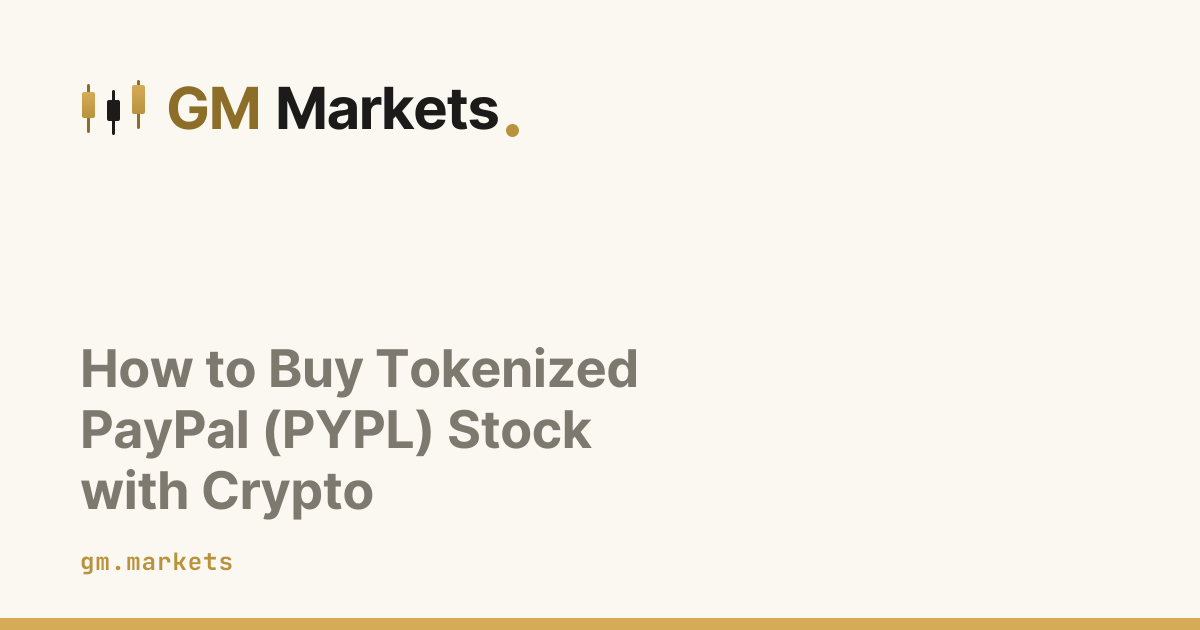
A tokenized stock is a digital representation of a real-world equity share that lives on a blockchain. When you buy tokenized PayPal (PYPL) on our platform, you receive an on-chain token that is fully backed 1-to-1 by a share of PYPL stock. For every tokenized PYPL share we issue, we hold one corresponding share in a segregated customer account at a regulated U.S. broker-dealer, such as Interactive Brokers or Alpaca Markets.
This structure ensures your on-chain asset has a direct, verifiable claim on the underlying security. You can verify this backing yourself on our Proof of Reserves page, which shows a live, independently attested value of all assets held in custody. This model combines the price exposure of traditional stocks with the efficiency, fractional ownership, and composability of crypto assets.
This structure aligns with what global regulators have identified as a custodial model for tokenization. Staff at the U.S. Securities and Exchange Commission (SEC), for example, have described frameworks where a third party holds securities and issues tokenized entitlements representing an interest in those assets. In a joint statement, SEC staff outlined the complexities of such custody arrangements under U.S. securities laws, emphasizing the importance of robust investor protection. Our model is designed with these principles in mind, providing a transparent and secure bridge to U.S. equities.
A Step-by-Step Guide to Buying Tokenized PYPL on GM Markets
Our platform provides direct access to tokenized U.S. stocks like PayPal. The process is designed to be straightforward for users familiar with self-custody wallets and stablecoins. Here are the steps to buy tokenized PYPL with crypto.
- Connect to GM Markets
You can access our platform by connecting an existing crypto wallet or by creating a new, embedded wallet with a Google account or email address. These embedded wallets are secured with multi-party computation (MPC), which means no single party, including GM Markets, has access to your complete private key. You can learn more about our wallet infrastructure on our Security page. - Deposit Stablecoins
To trade, you need to fund your account. We accept deposits of USDC and USDT on several networks, including Base, Arbitrum, Ethereum, and Optimism. All stablecoin deposits are converted into a unified USDF balance for trading. We do not charge any fees for deposits or withdrawals. - Find PayPal (PYPL) in Markets
Go to the markets page to view all available tokenized stocks and ETFs. Use the search bar to find the PYPL market. You will see real-time pricing information for the asset, sourced directly from our regulated market-making partners. - Execute Your Trade
Enter the amount of USDF you wish to spend or the quantity of tokenized PYPL you want to buy. We operate on a Request-For-Quote (RFQ) model, providing a firm price that is held for a short window. This price is final and includes our trading fee, which ranges from 0.10% to 0.20% based on your trading volume. You can see the full schedule on our pricing page. - Receive the Token in Your Wallet
Once you confirm the trade, the transaction settles on the blockchain, and the tokenized PYPL is delivered directly to your wallet. As a self-custodial platform, we ensure you have full control over your assets. The token is a standard ERC-20 asset, making it compatible with the broader DeFi ecosystem.
Understanding Ownership, Dividends, and Risks
Holding a tokenized stock provides economic exposure to the underlying asset, but it is different from holding a share directly at a traditional brokerage. It is essential to understand the mechanics and risks involved.
Economic Exposure vs. Direct Ownership
Tokenized stocks grant you exposure to the price movements of the share, but they do not typically confer shareholder rights like voting. This is a key distinction highlighted by global regulators. The European Securities and Markets Authority (ESMA), in a report on its DLT Pilot Regime, noted the importance of legal certainty for token holders. On our platform, you hold a token representing a verifiable claim on a share held by a custodian, giving you clear economic rights to the asset's value.
Dividends and Corporate Actions
We handle dividends through a total-return model. When PayPal pays a dividend, the funds are automatically used to purchase more of the underlying PYPL stock held in custody. This increases the Net Asset Value (NAV) of the token, so the dividend's value is reflected directly in your token's price. This process avoids separate cash payouts and potential tax complications associated with them in some jurisdictions.
Platform and Market Risks
All trading involves risk, and the value of your assets can decrease. In addition to market risk, on-chain assets carry specific technological risks, including smart contract vulnerabilities. We mitigate these by commissioning regular audits from leading security firms. Furthermore, the broader crypto ecosystem involves intermediary risks. The Bank for International Settlements (BIS) published a report warning that some crypto platforms function like lightly regulated banks, creating risks for consumers. Our 1-to-1, fully-backed, and self-custodial model is designed to minimize these specific risks by ensuring your assets are segregated and under your control. For a complete overview, please review our legal and risk policies.
Frequently Asked Questions
What crypto can I use to buy tokenized PayPal stock?
You can fund your GM Markets account with USDC or USDT stablecoins on supported blockchains like Base, Arbitrum, Ethereum, and Optimism. Your deposit is converted into a USDF balance which is used for all trades on the platform.
Is tokenized PYPL the same as owning PayPal stock?
It provides identical economic exposure to the stock's price and dividends. However, it does not grant direct shareholder voting rights. The primary benefit is that the token is a composable on-chain asset you can use across the DeFi ecosystem, which is not possible with a traditional share.
How are my assets protected if GM Markets ceases operations?
The underlying PYPL shares are held in segregated accounts at regulated brokers, legally separate from our corporate assets. A designated security agent is empowered to work with the custodian to ensure token holders can redeem their assets, a process enforced by on-chain contracts.
What are the total fees for buying tokenized PYPL?
The only fee is a trading fee between 0.10% and 0.20%, which is included in the price you are quoted. We do not charge fees for deposits, withdrawals, custody, or account inactivity.
Can I use my tokenized PYPL in DeFi?
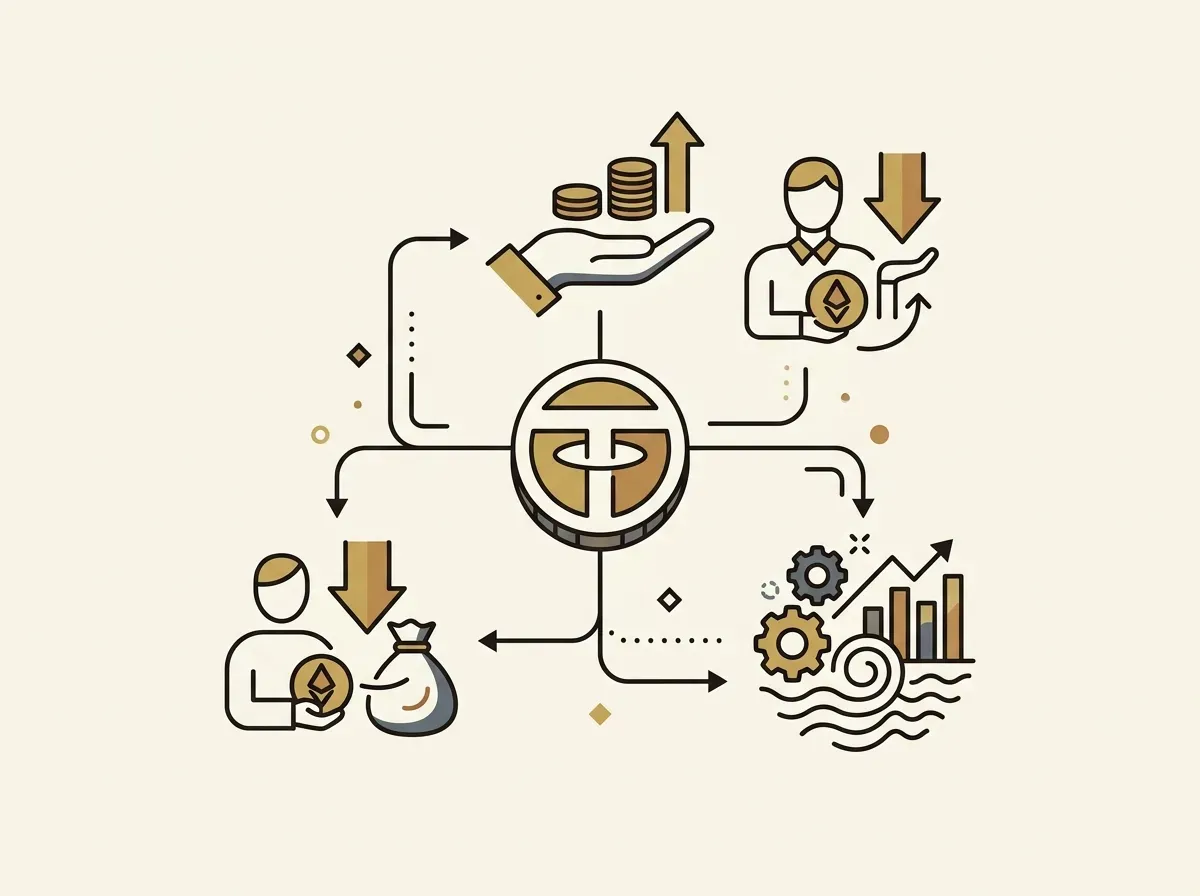
Yes. Because the tokens are standard ERC-20 assets, you can use them across the DeFi ecosystem for activities like lending, borrowing, and providing liquidity on protocols such as Aave and Morpho.
Start Trading Tokenized Equities on GM Markets
Our platform provides a secure and transparent bridge to U.S. equity markets for global users. By offering fully-backed, self-custodial tokenized stocks like PayPal, we enable you to build a diversified portfolio that integrates with the on-chain economy. You can explore the PYPL market and begin trading today.
Please note that our services are not available to persons in the United States or other restricted jurisdictions. All trading involves financial risk, and you may lose money. This material is for informational purposes only and does not constitute financial advice.