How to Buy Tokenized EV Stocks with Crypto: A Technical Guide
Learn how to buy tokenized EV stocks like TSLA and NVDA with crypto. This guide covers the 1:1 backing, DeFi composability, and a step-by-step process.
What Are Tokenized EV Stocks?
A tokenized stock is a digital asset on a blockchain that represents one share of a publicly traded company. When you buy a tokenized electric vehicle (EV) stock on our platform, such as for Tesla (TSLA) or NVIDIA (NVDA), you acquire a token that is directly collateralized by one share of the corresponding stock. We hold the underlying shares in a segregated customer account at a regulated U.S. broker-dealer, such as Interactive Brokers or Alpaca Markets.
This 1:1 backing is a verifiable fact, not a claim. Our third-party attestation partner, Accountable, has read-only access to our custodian's balances and publishes this data on-chain in real time. This mechanism allows any user to independently confirm that every token in circulation is fully collateralized by a real share. You can view this live data on our Proof of Reserves page.
This structure provides distinct, functional advantages over holding stocks in a traditional brokerage account:
- Fractionalization: Blockchains permit ownership to be divided into very small units. You can buy a fraction of a share, down to six decimal places, which allows you to invest with as little as $1.
- Global Accessibility: For investors outside the United States, tokenization removes many of the operational and administrative barriers associated with accessing U.S. equity markets.
- Self-Custody: The token settles directly to your personal crypto wallet. You retain control over your asset, not a financial intermediary. This model removes counterparty risk associated with the brokerage itself. For a complete overview of our custody and security model, please see our Security page.

Why Use Crypto for EV Stock Purchases?
Using stablecoins to purchase tokenized EV stocks offers a level of efficiency that traditional financial rails do not. Funding a U.S. brokerage account from another country typically requires an international wire transfer, a process known for its high costs and delays. According to the World Bank's 'Remittance Prices Worldwide' report for the second quarter of 2024, the global average cost to send $200 was 6.22%. The report identifies banks as the most expensive channel, with average fees reaching 13.40%.
Speed is another significant challenge. The Financial Stability Board (FSB), in its October 2024 progress report on enhancing cross-border payments, noted that while wholesale payment speeds have improved, significant delays persist in the final settlement to end users. These findings underscore the persistent friction in the legacy financial system.
On GM Markets, you fund your account by depositing stablecoins like USDC or USDT. We unify these deposits into a single, stable USDF balance for trading. This process bypasses the delays and high costs of the banking system, making settlement faster and more transparent.
DeFi Composability: Using Your EV Stocks as Active Capital
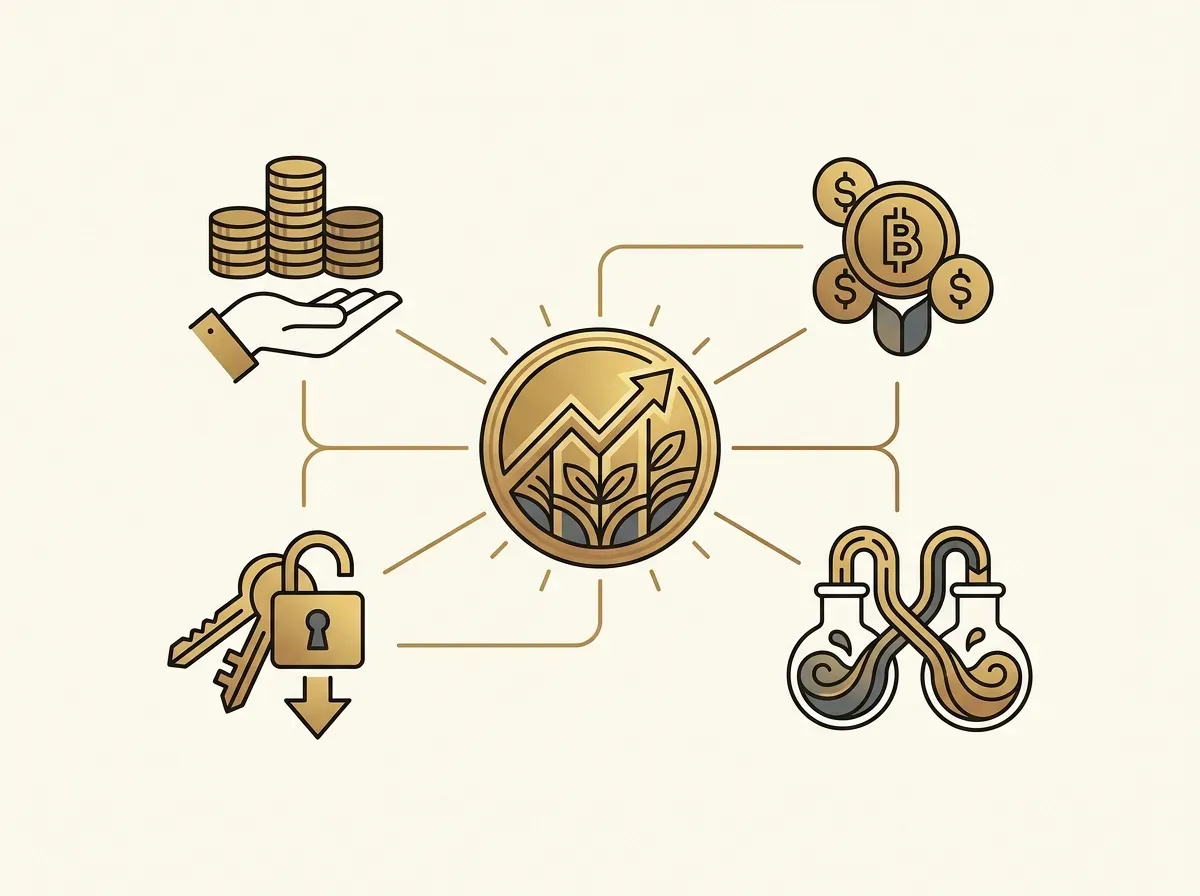
A stock held in a traditional brokerage account is a static asset. A tokenized share, however, is a programmable asset that can be used as collateral or a liquidity source in decentralized finance (DeFi) protocols. This capability, known as composability, transforms an investment into productive capital.
Several major DeFi protocols have begun integrating tokenized equities, including those from the EV sector:
- Lending and Borrowing on Morpho: The Morpho Blue protocol allows for the creation of permissionless, isolated lending markets. For example, markets exist where users can supply tokenized ETF products that hold EV company shares, such as Ondo Finance's OUSG, and borrow stablecoins against them. These markets have specific risk parameters, such as a Liquidation Loan-to-Value (LLTV) of 62.5%, managed by risk analysis firms to ensure stability.
- Collateral on Venus Protocol: On the BNB Chain, Venus Protocol has listed markets for tokenized Tesla (TSLAB) and Nvidia (NVDAB). These assets can be supplied as collateral, allowing users to borrow other assets against their holdings. In these markets, the tokenized stocks were assigned a collateral factor of 60%, meaning a user can borrow up to 60% of the value of their supplied assets.
- Liquidity Provision on Uniswap: Tokenized EV stocks can be paired with stablecoins like USDC in liquidity pools on automated market makers (AMMs) like Uniswap. By providing liquidity, you can earn trading fees from swaps that occur in the pool. Uniswap v3's concentrated liquidity feature allows you to provide capital within a specific price range, which can increase fee-earning efficiency for volatile assets like individual stocks. These pools often use higher fee tiers, such as 0.3% or 1%, to compensate liquidity providers for the risk of impermanent loss.
The Tokenized EV Ecosystem Beyond a Single Stock
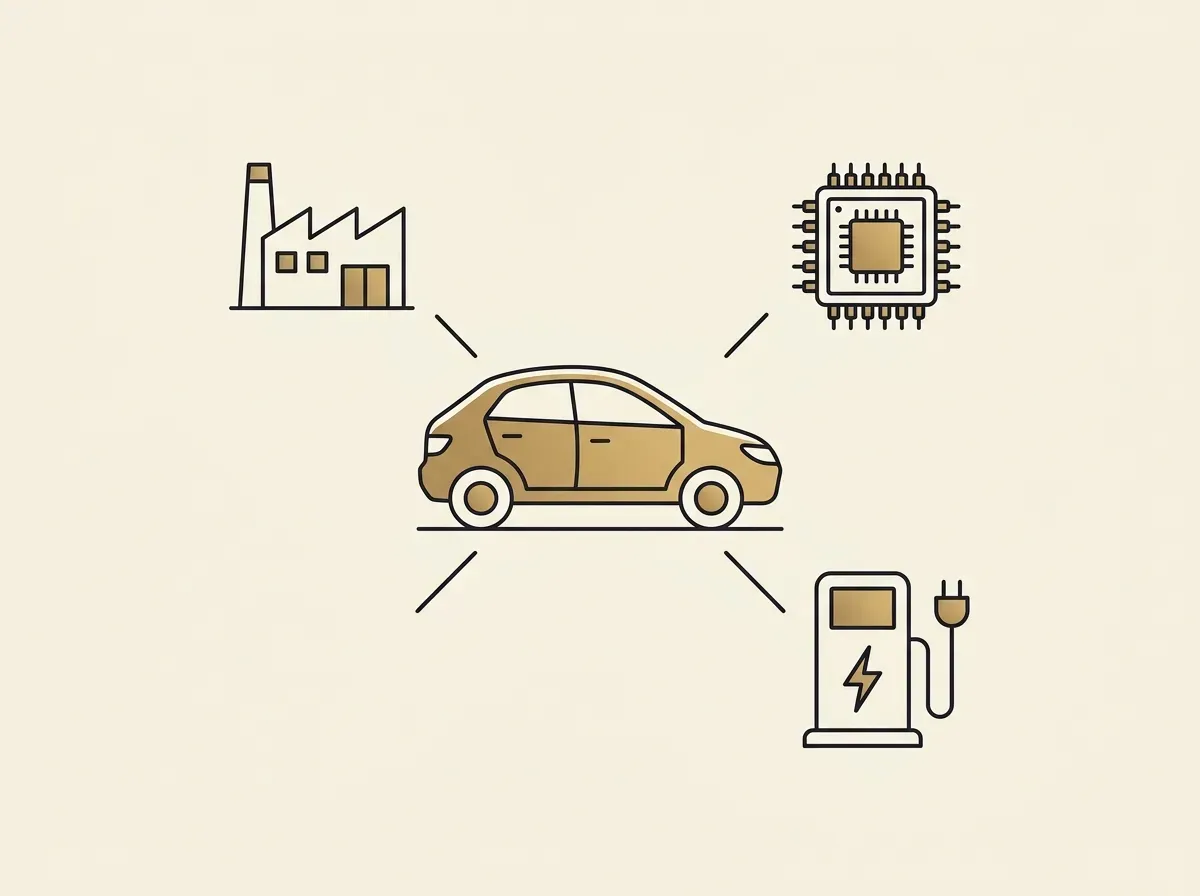
The EV industry is a diverse ecosystem with investment opportunities across the entire value chain. Our platform provides access to a range of companies, allowing you to build a portfolio that reflects the sector's complexity.
Pure-Play EV Manufacturers
These companies focus exclusively on designing and manufacturing electric vehicles. They are often at the forefront of innovation in battery technology, software, and autonomous driving.
- Tesla (TSLA): A market leader recognized for its electric cars, energy storage solutions, and its extensive Supercharger network.
- Rivian (RIVN): A U.S.-based manufacturer specializing in electric trucks and SUVs for consumer and commercial markets.
- Lucid Group (LCID): A luxury EV manufacturer focused on producing high-performance, long-range vehicles with advanced technology.
- NIO Inc. (NIO): A prominent Chinese EV company known for its premium electric vehicles and its innovative battery-swapping service.
Legacy Automakers in Transition
Traditional automotive companies are investing billions of dollars to transition their vehicle lineups to electric, using their established manufacturing scale and brand recognition to compete.
- General Motors (GM): The American automaker is executing a significant transition to EVs with its Ultium battery platform, underpinning a new generation of electric cars and trucks.
- Ford (F): A major U.S. automaker that is heavily investing in the production of popular electric models, including trucks and SUVs.
Charging Networks and Infrastructure
The expansion of the EV market depends on a robust and accessible network of charging stations. Companies in this segment are building the essential infrastructure for mass adoption.
- ChargePoint (CHPT): Operates one of the largest networks of independently owned EV charging stations globally.
- Blink Charging (BLNK): A provider of EV charging equipment and an owner-operator of charging stations across multiple countries.
Semiconductors and Key Components
Modern EVs rely on advanced semiconductors for functions ranging from battery management and powertrain control to infotainment and autonomous driving systems.
- NVIDIA (NVDA): A leading producer of high-performance processors and artificial intelligence platforms that are critical for developing and deploying autonomous driving systems.
- ON Semiconductor (ON): A key supplier of a wide range of semiconductor components, including power management and sensor technologies used throughout the automotive industry.
How to Buy Tokenized EV Stocks on GM Markets: 5 Steps
Purchasing a tokenized EV stock on our platform is a direct, on-chain process. Here is how it works.
- Connect or Create a Wallet
Our platform is permissionless. You can connect an existing crypto wallet or create a new, secure smart wallet in seconds using a Google account or email. These embedded wallets are operated by Privy and use multi-party computation (MPC), which means no single party, including GM Markets, has access to your complete private key. - Fund Your Account
Once your wallet is connected, deposit stablecoins like USDC or USDT to fund your account. You can send these from a centralized exchange or another wallet on a supported network, such as Base or Arbitrum. Deposits are free and are credited to your unified USDF balance. - Select an EV Stock
Navigate to the markets section of our platform. Here you will find a list of available tokenized stocks and ETFs. You can search for the ticker you wish to purchase, such as TSLA for Tesla or RIVN for Rivian. According to the International Energy Agency's 'Global EV Outlook 2024', global electric car sales are projected to reach 17 million in 2024, representing more than one in five cars sold worldwide. - Execute Your Trade
Enter the amount you wish to invest. We use a Request-for-Quote (RFQ) system, where regulated market makers provide a real-time price based on the live underlying market. The price you see is the final price you pay, with our trading fee included. You can also configure your slippage tolerance to protect your trade from market movements during execution. - Receive Your Tokens
After you confirm the trade, the transaction is settled on the blockchain. The tokenized shares are sent directly to your self-custodial wallet. You can view the on-chain transaction to verify the settlement and see the tokens in your portfolio immediately.

Understanding the Costs and Risks
We use a transparent pricing model. Our revenue is based on a single trading fee that ranges from 10 to 20 basis points (0.10% to 0.20%), which is included in the price you are quoted. There are no fees for deposits, withdrawals, or custody. We also abstract gas fees; network transaction costs are paid from your USDC balance, so you do not need to hold a chain's native token (like ETH) to trade. You can see a full breakdown on our Pricing page.
Investing in any asset carries risk. It is important to understand the specific risks associated with tokenized stocks:
- Market Risk: The value of EV stocks can be volatile and may decline due to market conditions, industry trends, or company-specific news. You could lose some or all of your investment.
- Smart Contract Risk: Our platform is built on smart contracts, which carry inherent technological risks, including potential bugs or vulnerabilities. We have our contracts audited by leading security firms to mitigate this risk.
- Counterparty Risk: We rely on regulated broker-dealers to custody the underlying shares and market makers to provide liquidity. While we select reputable partners, there is always a risk associated with the performance and stability of third parties.
Please note that our platform does not provide financial advice. All investments involve risk, and you should perform your own research. For a complete overview of the risks, please review our legal disclosures.
GM Markets is not available to users in the United States or other restricted jurisdictions.
Frequently Asked Questions
What happens to dividends with tokenized EV stocks?
We use a total-return model. When a company pays a dividend, the funds are used to purchase more of the underlying stock. This increases the Net Asset Value (NAV) of your token, so its price reflects the value of the dividend payment. You do not receive a separate cash distribution.
Can I buy a fraction of a TSLA share?
Yes. Tokenization makes it possible to own a fraction of any share. On GM Markets, you can invest in any available stock with as little as $1, giving you precise control over your portfolio allocation regardless of the share price.
How are my assets protected if GM Markets ceases operations?
The legal structure is designed for investor protection. The underlying shares are held in segregated accounts at regulated custodians, not on our balance sheet. A designated security agent has the authority to work with the custodian to redeem tokens for the underlying shares on behalf of token holders. This process is enforceable by the on-chain contract and is independent of our operations.
On which blockchain networks can I trade?
Our platform supports multiple blockchain networks for settlement, including Base, Arbitrum, Ethereum, and Optimism. This allows you to choose the network that best suits your preferences for speed and transaction costs.
Conclusion: Direct On-Chain Access to the EV Market
Using cryptocurrency to invest in the EV market provides a direct method for accessing global equities. This model combines the price exposure of traditional stocks with the efficiency and self-custody of on-chain assets. It allows you to put your capital to work without the friction of legacy financial systems and creates opportunities to use your assets productively in DeFi protocols.
To get started, you can explore the full range of tokenized stocks and ETFs on our Markets page. Remember to invest responsibly and be aware of the risks involved. Our services are not offered to persons in the United States or other restricted jurisdictions.