How Stock Splits Affect Your Tokenized Stocks on GM Markets
Learn how stock splits work for tokenized stocks on GM Markets. Our total-return NAV model automatically adjusts for splits like NVIDIA's, preserving your investment's value seamlessly.

How Stock Splits Affect Your Tokenized Stocks on GM Markets
When a company announces a stock split, investors often have one primary question: how does this affect the value of my investment? The direct answer is that a stock split does not change the total value of your holdings. On our platform, the process is handled automatically through a mechanism we designed called the total-return Net Asset Value (NAV). This system seamlessly manages corporate actions like splits, preserving your economic exposure without requiring any action from you.
We built this model to ensure that the value of your tokenized stocks accurately and reliably tracks the underlying shares through all corporate events. This post explains what a stock split is, the market psychology behind it, how different platforms handle them, and how our total-return NAV model processes splits automatically.
What Is a Stock Split?
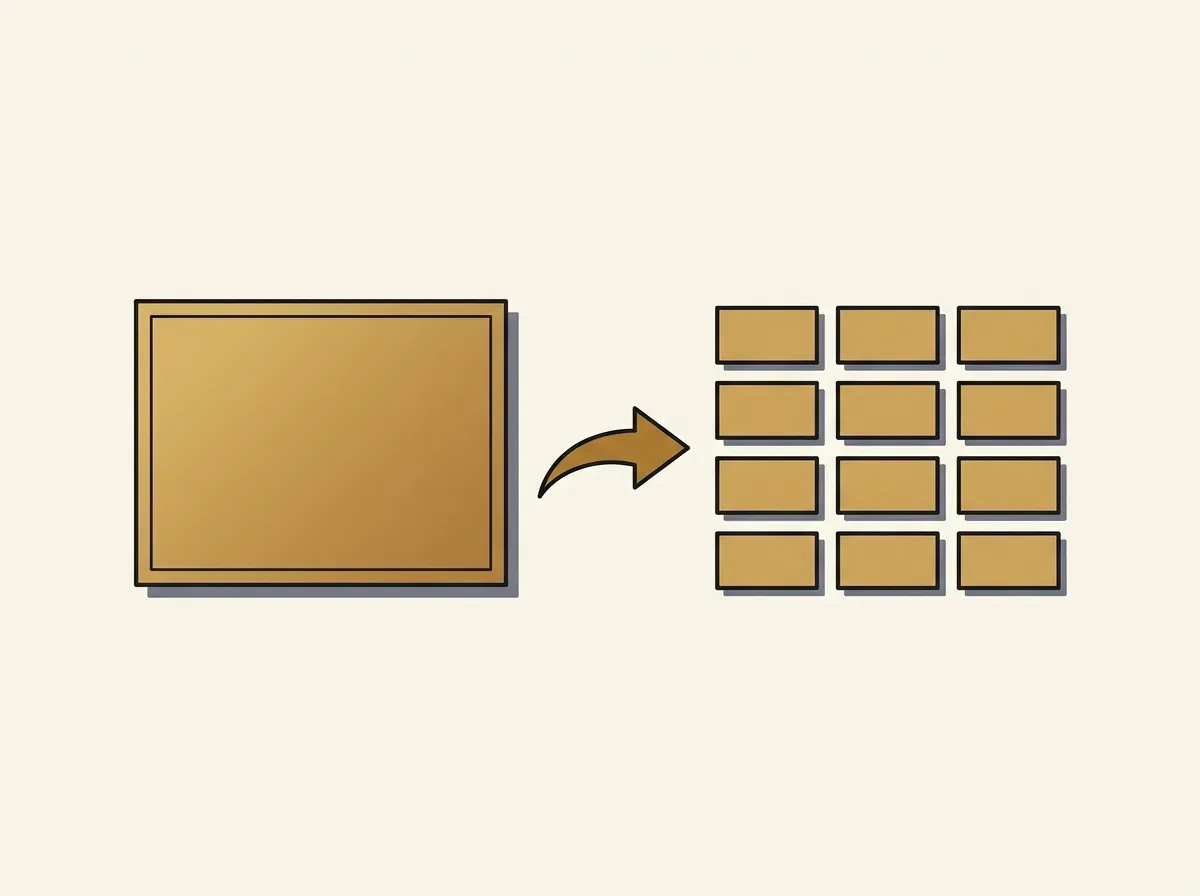
A stock split is a corporate action where a company increases its number of outstanding shares while proportionally lowering the price per share. According to the U.S. Securities and Exchange Commission's Investor Bulletin on stock splits, the main purpose is often to make shares more affordable for a broader range of investors. The company's total market capitalization and the total value of an investor's position remain unchanged immediately after the split.
There are two main types of stock splits:
- Forward Stock Split: This increases the number of shares. In a 2-for-1 split, for example, an investor holding one share valued at $200 will own two shares valued at $100 each after the split. The total value remains $200.
- Reverse Stock Split: This decreases the number of shares. In a 1-for-10 reverse split, an investor holding ten shares at $5 each will own one share at $50. This is often done to increase a stock's price, sometimes to meet exchange listing requirements.
In both cases, the key principle is that the action does not create or destroy value. It simply reorganizes the company's existing equity into a different number of units.
The Psychology of Stock Splits: More Than Just Math
While a stock split is mechanically neutral, it can have a significant psychological impact on the market. These corporate actions often generate investor interest and can influence trading behavior, even though the company's fundamental value has not changed.
Key psychological drivers include:
- Perceived Affordability: A lower share price can make a stock seem more accessible to retail investors. This can create the perception of a better entry point, even though fractional shares on platforms like ours already solve for high per-share costs.
- Signaling Confidence: As discussed in analysis from organizations like the CFA Institute, investors often interpret a stock split as a signal of management's confidence in future growth. The board may expect the stock price to continue rising, and the split is a proactive measure to keep it in an accessible range.
- Increased Attention and Liquidity: A split announcement frequently attracts media coverage and investor attention. This heightened visibility can lead to increased trading volume, which may improve liquidity, at least in the short term.
These factors demonstrate that while the math of a stock split is simple, its effect on market dynamics can be complex. Understanding this context is useful for interpreting market reactions surrounding such events.
How Stock Splits Work on Different Platforms
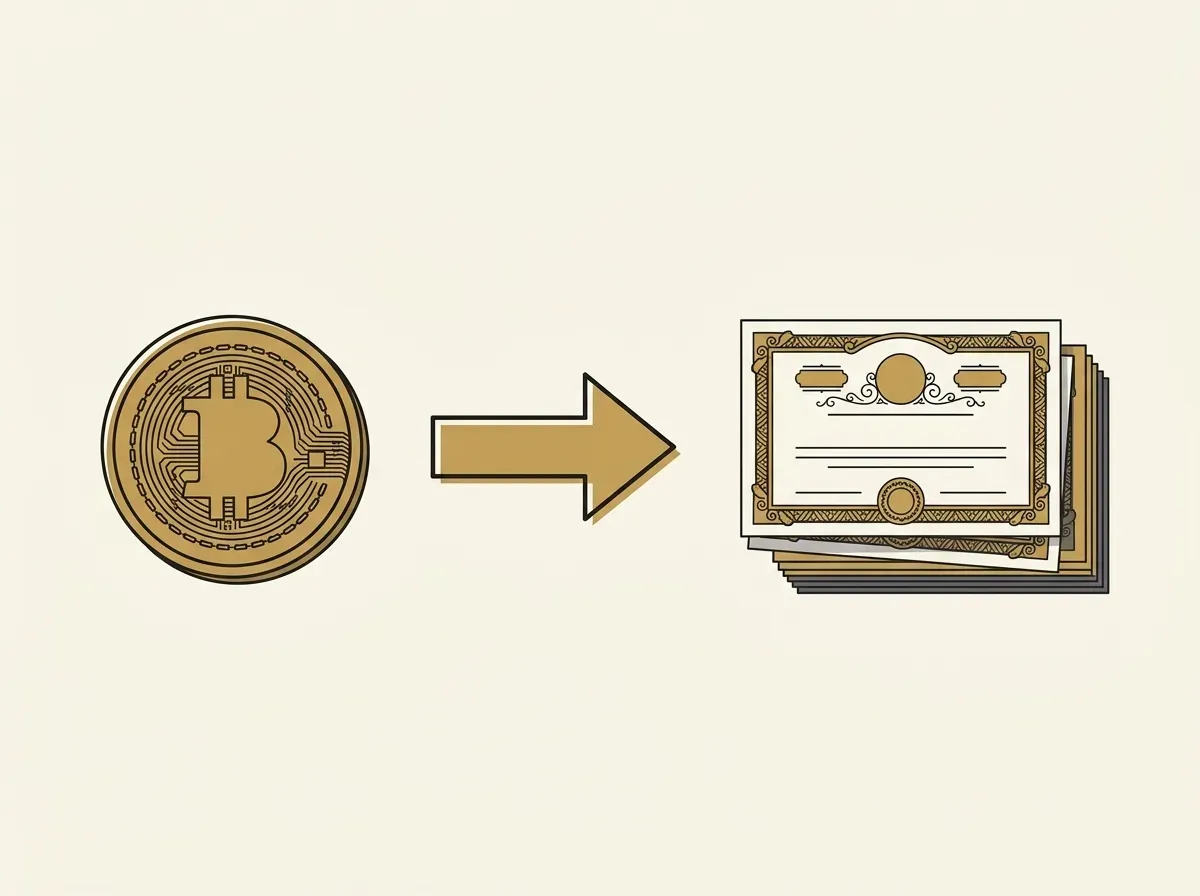
The operational handling of a stock split varies between traditional brokerages and modern tokenization platforms. While the goal is the same, to preserve the investor's total value, the underlying mechanics and transparency can differ.
The Traditional Brokerage Model
For clients of traditional brokerages, a stock split is a largely automated background event. As explained by firms like Fidelity, their systems automatically update account statements to show the new number of shares and the adjusted price. The process is designed to be seamless for the investor, requiring no action. In cases like a reverse split that may result in fractional shares, a brokerage might liquidate the fraction and pay cash in lieu of the partial share.
The GM Markets Approach: Total-Return NAV
Our platform uses a total-return model to manage all economic events related to the underlying shares. This means that all value from the asset, including dividends and the effects of corporate actions like stock splits, is reflected directly in the token's on-chain Net Asset Value. You gain the full economic exposure of the stock in a single, composable on-chain asset.
When a stock split occurs, the process works as follows:
- Custodian Adjustment: The real shares backing your tokens are held in segregated accounts at our regulated custodian partners, such as Interactive Brokers and Alpaca Markets. These custodians automatically process the split, updating the account to reflect the new number of shares at the new price. You can read more about our security and custody model.
- On-Chain NAV Update: We then update the on-chain NAV for the corresponding tokenized stock. The NAV is adjusted to show that one token now represents the new, post-split quantity of underlying shares.
- Constant Token Supply: The supply of the tokenized stock itself does not change. If you hold one token representing one share of a company, you will still hold one token after a 10-for-1 split. However, that single token's NAV now reflects the value of the ten post-split shares it is backed by.
The primary benefit for you is that this entire adjustment is automatic and transparent. You do not need to take any action, and your economic position is precisely maintained throughout the event. This efficiency is part of our commitment to a simple pricing structure with no hidden fees for corporate actions.
A Real Example: NVIDIA's 10-for-1 Split
To make this concrete, let's look at the 10-for-1 stock split for NVIDIA, a tokenized stock available on our platform as NVDA. The stock began trading on a split-adjusted basis on June 10, 2024.
Here is how the value was preserved:
- Before the split: If you held a position equivalent to one share of NVDA trading at approximately $1,200, the total value of your holding was $1,200.
- After the split: The price per share adjusted to approximately $120. The one share in the custodian account became ten shares. The total value of those ten shares remained $1,200.
On our platform, the token representing NVDA had its NAV updated to reflect this change. The value of your tokenized holding remained constant because it continued to be backed by the same total equity, just represented by a different number of underlying shares.
Verifying Your Holdings Post-Split
A core principle of our platform is verifiable trust. We ensure that every token is always fully backed 1:1 by the underlying asset. After a stock split, this backing is maintained on a split-adjusted basis. For example, after NVIDIA's 10-for-1 split, one tokenized NVDA is backed by ten post-split shares held at the custodian.
You can always verify the backing of our tokens using our Proof of Reserves page. This page shows real-time data from a third-party attestation service that reads our custodians' holdings and compares them to the total supply of tokens on-chain. The total value of the underlying assets held in custody will always match the total value of the tokens we have issued.

Frequently Asked Questions
What about reverse stock splits?
The total-return NAV mechanism works identically for reverse stock splits, just in the opposite direction. The on-chain NAV of the token is adjusted upwards to reflect that it now represents a smaller number of higher-priced shares. The total value of your holding remains the same.
Do I need to do anything during a stock split?
No. The entire process is fully automated on our platform. The adjustment to the token's NAV happens without any required action from you.
Does a stock split affect my voting rights?
Our tokens are designed to provide economic exposure to an asset, not the voting rights associated with direct share ownership. This is true both before and after a stock split occurs.
Is a stock split a taxable event?
For most retail investors in jurisdictions like the UK and the European Union, a stock split is generally not considered a taxable event. It is treated as a reorganization of share capital, not a disposal of an asset. Your original cost basis is simply reapportioned across the new number of shares. As tax laws vary significantly, you should consult a local tax professional for advice specific to your circumstances.
Total-Return NAV: Simplicity and Transparency
Corporate actions like stock splits can create operational complexity for investors on some platforms. Our total-return model was designed to eliminate this complexity. By automatically adjusting the token's on-chain NAV, we ensure that the economic value of your tokenized stock holdings is preserved seamlessly and accurately, with on-chain transparency.
This automated handling of corporate actions is a core feature of our platform, allowing you to focus on your portfolio. You can explore the tokenized stocks available on GM Markets or visit our Learn page for more details on how the platform works.
All investments involve risk, and markets can move against you. GM Markets does not provide financial, legal, or tax advice. Our services are not offered to users in the United States or other restricted jurisdictions. Please review our legal disclosures for more information.