How Do Tokenized Stocks Actually Work? A Step-by-Step Guide
Learn the step-by-step process of how tokenized stocks work, from 1-to-1 backing with real shares to on-chain proof of reserves. This guide explains the full lifecycle.
What is a Tokenized Stock, Exactly?
A tokenized stock is a digital token on a blockchain that represents direct economic ownership of one share of a publicly traded company. When you hold one of our tokenized TSLA tokens, for example, it is backed 1-to-1 by a real share of Tesla, Inc. held in a segregated account at a regulated broker. This structure is the foundation of its value.
This instrument combines the price exposure of traditional stocks with the core benefits of on-chain assets. Unlike a stock held in a conventional brokerage account, a tokenized stock lives in your own self-custodial wallet. This gives you direct control and enables its use across the decentralized finance (DeFi) ecosystem. Unlike a native cryptocurrency like Bitcoin, its value is directly tied to an external, regulated, real-world asset.
The global market for tokenizing real-world assets (RWAs) is projected to grow significantly. Boston Consulting Group, for instance, forecasts the market for tokenized illiquid assets could reach $16.1 trillion by 2030. This growth is driven by the efficiency, accessibility, and composability that this technology brings to traditional finance.
The 6 Steps: From Real Share to On-Chain Token
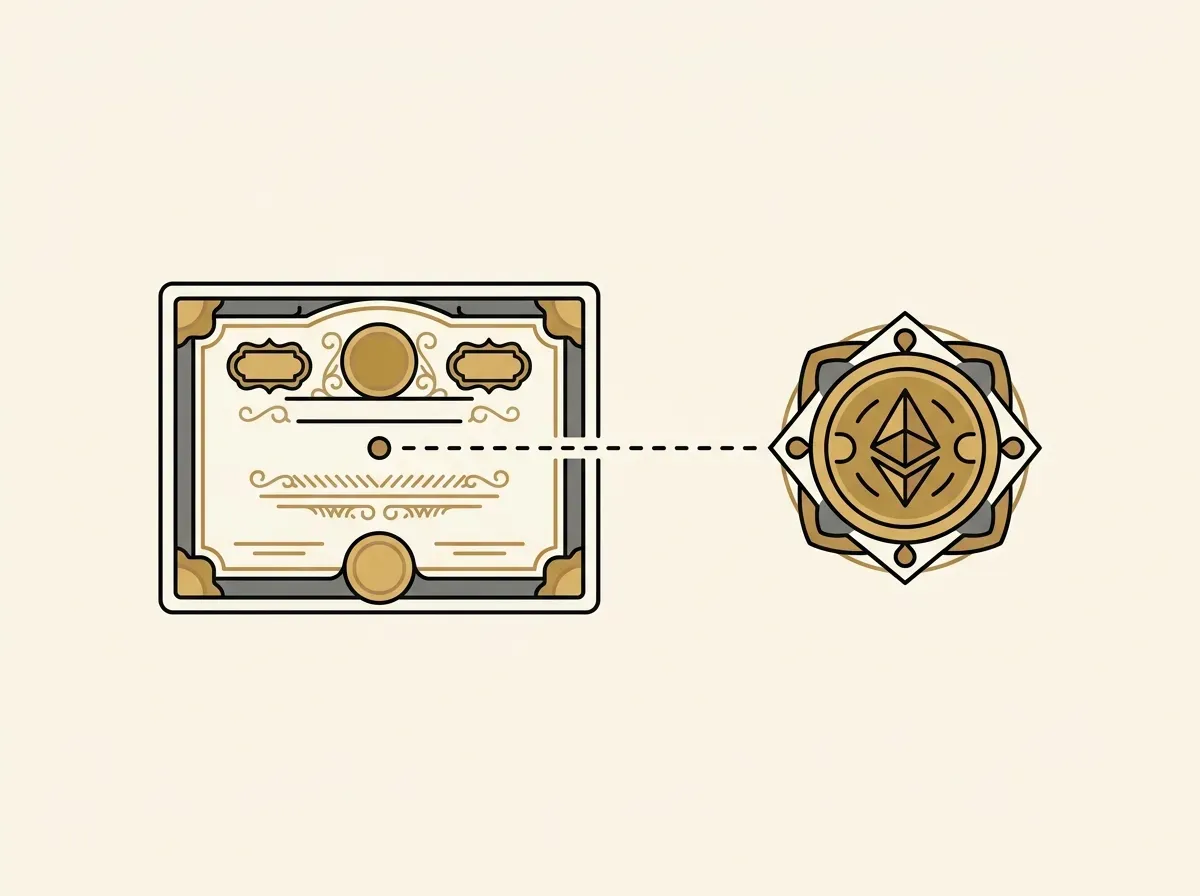
The integrity of a tokenized stock depends on a clear, auditable process that connects the on-chain token to its underlying asset. Here is the step-by-step lifecycle of every tokenized stock available on the GM Markets platform.
Step 1: A Real Share is Purchased and Held in Custody
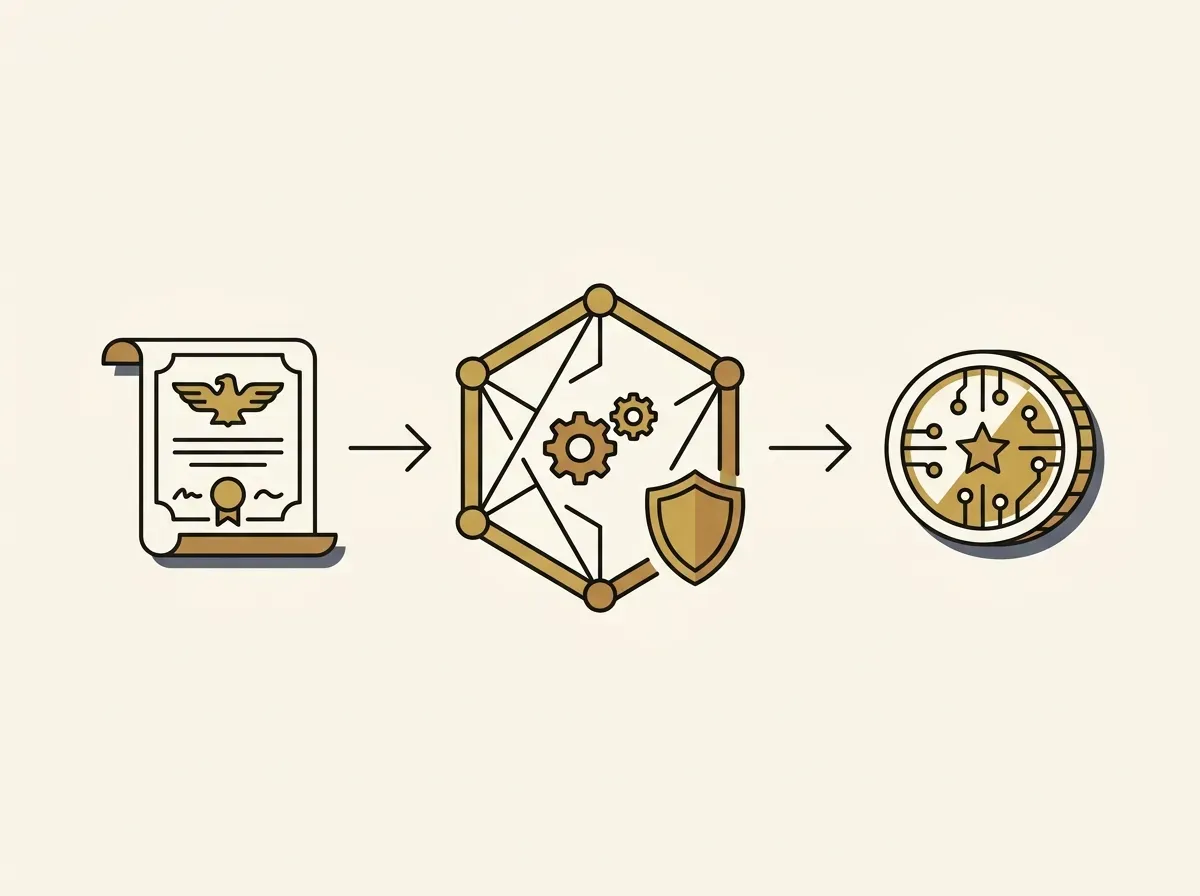
Everything begins with the real-world asset. When capital is allocated to create a tokenized stock, our partners purchase the corresponding share on the open market. These shares are then held in segregated customer accounts at highly regulated, established U.S. broker-dealers, including Interactive Brokers and Alpaca Securities. Under regulations like the SEC's Customer Protection Rule, these accounts legally separate customer assets from the broker's own funds, protecting them in the event of the broker's insolvency.
Step 2: A Token is Minted 1-to-1 on the Blockchain
For each share secured in custody, one corresponding token is minted on a public blockchain like Base, Arbitrum, Ethereum, or Optimism. This strict 1-to-1 minting ratio is enforced by our smart contracts and ensures there is never a token in circulation that does not have a corresponding real share backing it. This maintains the direct link between the digital representation and its real-world value.
Step 3: The Backing is Verified in Real Time
Trust requires verification. We provide a live, on-chain Proof of Reserves system. Our third-party attestation partner, Accountable, has read-only access to our brokerage accounts. It continuously and automatically compares the number of shares held in custody with the total supply of tokens on the blockchain. The results of this reconciliation are published on-chain, allowing anyone to verify that every token is fully backed at all times.
Step 4: You Acquire and Manage the Token
When you buy a tokenized stock on our platform, you interact with our Request-for-Quote (RFQ) system, which sources liquidity from regulated market makers. The trade settles nearly instantly on-chain, and the token is delivered to your self-custodial wallet. These embedded wallets are operated by Privy using multi-party computation (MPC), which means no single party, including GM Markets, has access to your complete private key.
Step 5: Dividends and Corporate Actions are Processed
We use a total-return model to handle dividends and other corporate actions. When a company like Apple pays a dividend, the proceeds are automatically used to purchase more AAPL shares in the custody account. This increases the total value of the underlying asset pool, which is reflected as an increase in the Net Asset Value (NAV) of each token. Your economic exposure grows without you needing to take any action, and it avoids the complexities of cross-border cash distributions.
Step 6: The Token is Redeemed for the Underlying Share
The lifecycle completes upon redemption. When you sell your tokenized stock, the on-chain token is permanently removed from circulation (burned). Simultaneously, a corresponding share is sold from the custody account, and the cash proceeds are credited to your balance. This burn mechanism ensures the 1-to-1 backing ratio is always maintained.
Tokenized vs. Traditional Stocks: A Direct Comparison
While both provide economic exposure to the same asset, the mechanics of holding and trading them differ significantly.
| Feature | Tokenized Stocks (on GM Markets) | Traditional Stocks (at a Brokerage) |
|---|---|---|
| Custody | Self-custody in your own MPC wallet. You hold the asset directly. | Held by the brokerage on your behalf. You are a beneficial owner. |
| Settlement | Near-instant settlement on the blockchain, 24/7. | T+1 or T+2 settlement cycle during market hours. |
| Composability | Can be used as collateral, lent, or supplied as liquidity in DeFi protocols. | Locked within the brokerage's system; cannot be used on-chain. |
| Ownership Rights | Economic exposure to price and dividends. Typically no shareholder voting rights. | Full shareholder rights, including voting. |
| Fractionalization | Highly fractional, tradable to six decimal places from a $1 minimum. | Fractional shares are often available but may have limitations. |
| Accessibility | Permissionless onboarding via a crypto wallet from anywhere in the world. | Requires account opening, subject to jurisdictional and banking limitations. |
Understanding the Risks and Our Mitigations
Like any financial product, tokenized stocks involve risks. We believe in transparency and have built our platform with multiple layers of security to address them directly.
- Smart Contract Risk: This is the risk of a bug or vulnerability in the on-chain code. To mitigate this, our smart contract infrastructure has undergone four independent audits from leading security firms: Sherlock, Halborn, Cantina, and Cyfrin. We re-audit upon any material upgrade.
- Counterparty Risk: This involves the brokers and market makers we partner with. We mitigate this by working exclusively with established, regulated entities like Interactive Brokers and Alpaca Securities, and by holding assets in bankruptcy-remote segregated accounts.
- Custody Risk: The security of your assets is paramount. Our use of Privy's MPC wallets provides enhanced security over traditional single-key wallets, and our continuity plan includes a designated security agent who can ensure token holders can redeem their assets even if GM Markets ceases to operate.
It is important to understand that GM Markets does not provide financial, investment, or legal advice. All trading involves risk, and you may lose money. Our services are not offered to persons in the United States or other restricted jurisdictions. For a full breakdown of risks, please review our legal disclosures.
Frequently Asked Questions
Are tokenized stocks regulated?
Yes. Regulators globally, including the SEC in the U.S. and ESMA in Europe, generally apply existing securities laws to tokenized assets. The principle is one of technology neutrality: if an instrument functions like a security, it is regulated as one, regardless of the technology used to issue it.
What are the fees for trading tokenized stocks?
On our platform, the only fee is a trading fee that ranges from 0.10% to 0.20% (10 to 20 basis points), which is included in the price you are quoted. There are no fees for deposits, withdrawals, custody, or inactivity. You can find the full details on our pricing page.
Can I move my tokenized stocks to an external wallet?
Yes. The tokens are standard ERC-20 compatible assets. You can withdraw them from your embedded GM Markets wallet to any compatible external wallet on the supported chains, giving you full control over your assets.
Conclusion: A More Accessible Financial Future
Tokenized stocks work by creating a robust, verifiable link between a real-world share and a digital token. The key is the unbreakable 1-to-1 backing, maintained through regulated custody and proven by real-time, on-chain attestations. This model merges the stability of traditional equities with the efficiency and openness of blockchain technology.
By solving for custody, settlement, and transparency in this way, we are building a more accessible and composable global equity market. We invite you to see the system in action for yourself by exploring our live Proof of Reserves page, where you can verify the backing of every token we issue.