How Crypto Holders Diversify with Tokenized Stocks: Gain Equity Exposure On-Chain
Diversify your crypto portfolio with tokenized US stocks and ETFs on-chain. Gain equity exposure with self-custody and composability, bypassing traditional off-ramping.
How Crypto Holders Diversify with Tokenized Stocks: Gain Equity Exposure On-Chain
Cryptocurrency portfolios, while offering significant opportunities, often involve inherent volatility and concentrated risk. Many crypto holders seek to diversify into traditional assets like stocks to balance risk and achieve more stable returns. However, this traditionally means converting crypto to fiat currency and moving funds to brokerage accounts, which can be cumbersome and results in a loss of self-custody. We offer an alternative: tokenized stocks. Our platform allows crypto holders to gain direct exposure to traditional equity markets and diversify their portfolios without off-ramping to fiat, leveraging the self-custody and composability benefits of on-chain tokenized stocks.
Tokenized stocks connect decentralized finance with traditional equities, providing a way to integrate real-world assets into your on-chain strategy. This approach enables you to maintain control over your assets within your own wallet while accessing the stability and growth potential of the global stock market. We enable crypto holders to expand their investments while maintaining the self-custody and composability principles of the decentralized ecosystem.
The Challenge: Diversifying a Crypto-Native Portfolio
The cryptocurrency market is known for its dynamic nature, offering both high potential returns and significant volatility. While this can be attractive, a portfolio solely concentrated in crypto assets often faces inherent risks, including market-wide corrections and high correlations within the asset class itself. For instance, Bitcoin's correlation with major equity indices like the S&P 500 and Nasdaq-100 has shown a notable shift. Historically low, this relationship became positively correlated in 2020, with rolling correlations reaching approximately 0.5. By March 2026, the 30-day correlation between Bitcoin and the S&P 500 surged to 0.74, marking its highest reading for the year, with intraday correlations occasionally reaching 0.94. This indicates a tendency for these assets to move in sync during periods of market stress, challenging Bitcoin's role as an independent diversifier. Research firm Kaiko noted in August 2022 that Bitcoin's correlation with the Nasdaq 100 remained influenced by global risk sentiment, classifying Bitcoin as a "risk-on" asset that responds to the same macroeconomic forces as growth-oriented U.S. technology stocks. For further context on these correlation dynamics, a report by Fidelity Investments provides detailed analysis on Bitcoin's evolving relationship with traditional assets.
Many crypto holders recognize the need to mitigate this risk and seek diversification into traditional asset classes. However, the conventional path presents several barriers. Diversifying through traditional means typically requires off-ramping digital assets to fiat currency, a process that can involve multiple steps, fees, and delays. Once fiat, funds then need to be moved to a traditional brokerage account, which often comes with its own set of onboarding complexities, geographical restrictions, and the requirement to surrender self-custody. This friction can deter crypto-native investors who value the autonomy and efficiency of on-chain transactions.
A June 2024 Kraken survey highlighted that 73% of U.S. crypto holders intended to continue investing in cryptocurrency in 2025, indicating a long-term market view. Despite this, a July 2025 Kraken survey found that expected growth in crypto investment largely comes at the expense of traditional assets like stocks (30%). Diversification can serve as a strategy to mitigate the effects of impulsive choices, promoting a more balanced and resilient investment approach. The desire to remain 'on-chain' and maintain the benefits of decentralized finance, such as transparency, speed, and self-custody, has become a significant driver for innovation in the financial sector.

What Are Tokenized Stocks and How Do They Work?
Tokenized stocks are digital representations of real-world equity shares, designed to connect traditional financial markets with the blockchain ecosystem. Each tokenized stock on our platform is fully backed 1:1 by an actual share held in a segregated customer account at a regulated broker-dealer, such as Interactive Brokers or Alpaca Markets. This ensures that the token's value directly tracks the economic performance of the underlying traditional stock or exchange-traded fund (ETF).
The core mechanics of tokenized stocks involve on-chain settlement, providing transparency and efficiency that traditional markets often lack. These tokens offer fractional ownership, meaning you can buy a portion of a high-value stock, such as Tesla or Apple, with as little as $1. This democratizes access to expensive equities, making them available to a broader range of investors. The process is permissionless; users can connect their external wallet or sign up with a Google or email magic-link. Our embedded wallets are operated by Privy using multi-party computation (MPC), which ensures that no single party, including GM Markets, holds the full key to your funds, enhancing security and maintaining your self-custody. Learn more about our security measures on our security page.

Transparent Execution with Request-For-Quote (RFQ)
Our platform uses a Request-For-Quote (RFQ) execution model. Regulated market-making partners provide real-time quotes against the live underlying market, and trades settle back-to-back upon acceptance. This ensures pricing accuracy and efficiency. Users can configure their slippage tolerance, with a default of 0.5%. If the market moves beyond this tolerance during the quote window, the trade will not execute, and a fresh quote is issued. For orders placed outside traditional market hours, they are queued on-chain and fill when liquidity becomes available or the market reopens, ensuring continuous order placement capability.
Total-Return Model for Dividends and Corporate Actions
Our tokenized stocks operate on a total-return model. This means that dividends are not paid out separately as cash; instead, they are automatically reinvested into the underlying shares. This reinvestment increases the token's on-chain Net Asset Value (NAV), so you see the dividend value reflected in the token's price rather than as a separate distribution. Similarly, corporate actions such as stock splits, mergers, spin-offs, and name changes are absorbed into the token's NAV. This ensures that your economic exposure precisely tracks the underlying asset's performance without requiring any manual intervention or adjustment to your token balance. The supply of tokens only changes upon minting or redemption.
Deposits are made via stablecoins, with USDF serving as the unified balance backed 1:1 by USDC and USDT across various chains, including Base, Arbitrum, Ethereum, and Optimism. This allows you to acquire equity exposure directly with your crypto assets, eliminating the need for fiat conversions. We also abstract gas fees; your smart account pays native gas, and the equivalent is billed in USDC/USDF from your balance. This means you never need to hold a native chain token for gas and will not see a separate gas line item, simplifying the trading experience. For more details on how our tokenized stocks function, you can visit our tokenized stocks learning page. Our trading fees, which range from 10 to 20 basis points, are transparently displayed on our pricing page.
Key Benefits for Crypto Holders Using Tokenized Stocks
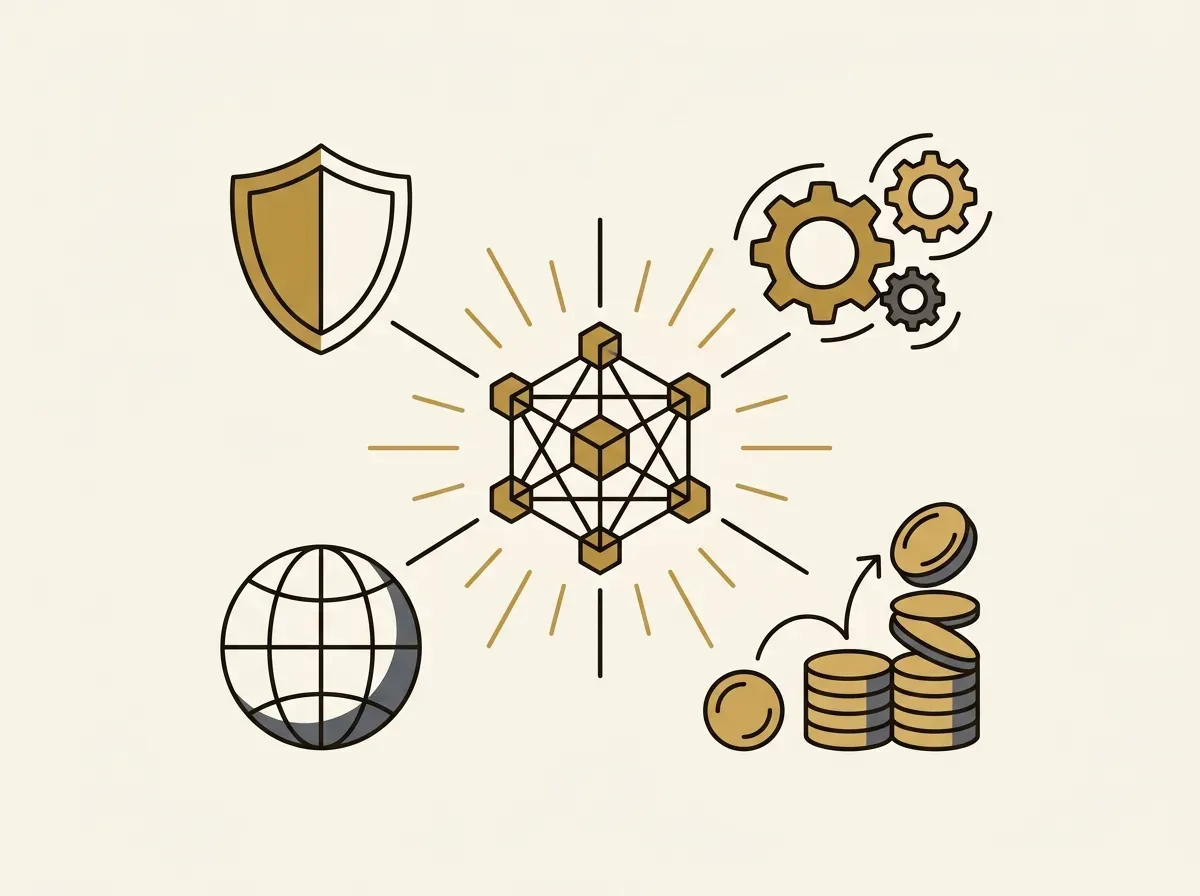
Tokenized stocks offer several compelling advantages for crypto holders seeking diversification while remaining within the decentralized finance ecosystem:
Stay On-Chain
One of the primary benefits is the ability to acquire equity exposure directly with stablecoins, such as USDF, without the need to convert your cryptocurrency to fiat currency. This eliminates the friction, delays, and potential costs associated with off-ramping, allowing you to seamlessly integrate traditional assets into your crypto-native portfolio. You maintain continuous exposure to the digital asset ecosystem while diversifying into equities.
Self-Custody
Our platform prioritizes self-custody. You hold your tokenized stocks in your own non-custodial wallet, maintaining complete control over your assets. The embedded wallets, powered by Privy’s multi-party computation (MPC) technology, ensure that your private key is never held by a single entity, including GM Markets. This aligns with the fundamental principles of decentralized finance, where you retain true ownership and control of your investments.
Composability
GM Markets' tokenized stocks are standard ERC-20 assets, making them highly composable within the broader DeFi ecosystem. This means you can utilize your tokenized equity positions across various decentralized applications for purposes like lending, borrowing, or as collateral on other protocols. For instance, platforms like Tenderly provide essential tools for building and monitoring smart contracts in the RWA space, supporting the infrastructure for tokenized asset development. Our tokens can be used on leading lending protocols such as Aave, which is actively integrating tokenized stocks into its upcoming Aave V4 to allow users to deposit tokenized shares as collateral. Decentralized exchanges like CoW Swap facilitate the efficient trading of tokenized stocks, utilizing batch auctions to reduce gas costs and protect against MEV attacks. Additionally, Curve Finance is becoming a key liquidity hub for stablecoins and real-world assets, enabling trading and liquidity provision for tokenized RWA yield. This composability transforms your equity exposure into productive capital within DeFi, offering opportunities to earn additional yield while holding your positions.
Fractional Ownership
Tokenized stocks enable fractional ownership of high-value US stocks and ETFs. This means you can invest in companies like NVIDIA or Google with smaller capital allocations, starting from just $1. This significantly lowers the barrier to entry for many investors who might otherwise find it prohibitive to purchase full shares of expensive stocks. Fractional ownership allows for greater portfolio granularity and more precise diversification strategies, even for those with limited capital.
Global Access
Our platform provides access to tokenized US-listed stocks and ETFs, bypassing many geographical restrictions common in traditional brokerage services. This opens up opportunities for investors in numerous regions worldwide to participate in the US equity market. However, we do not serve users in the United States or other restricted jurisdictions.
GM Markets: Your Gateway to On-Chain Equity Diversification
We facilitate seamless access to tokenized US-listed stocks and ETFs, enabling crypto holders to diversify their portfolios directly on-chain. Our platform is built on a foundation of robust security, transparency, and user-centric design to ensure a reliable trading experience.
Our security framework is paramount. Every tokenized stock is backed 1:1 by a real share held in a segregated customer account at regulated broker-dealers. This backing is independently attested in real time by Accountable, a third-party proof-of-reserves provider, with the live backing ratio publicly verifiable on our Proof of Reserves page. Our smart contracts have undergone rigorous audits by reputable firms including Sherlock, Halborn, Cantina, and Cyfrin, with SOC 2 Type II compliance in progress, providing an additional layer of trust and security.
We believe in transparent and straightforward pricing. Our revenue model consists solely of a single trading fee ranging from 10 to 20 basis points (0.10% to 0.20%). The default fee is 20 bps, which can drop to 10 bps at our top VIP tier as your 14-day trading volume grows. This fee is always included in the quoted price, so the 'You will receive' line is final.

Ensuring Continuity for Token Holders
A critical aspect of trust in tokenized assets is the continuity plan. In the unlikely event that GM Markets discontinues operations, a designated security agent is in place with standing authority to act on behalf of token holders. This agent works directly with the custodian to facilitate the redemption of outstanding tokens against the underlying shares. This redemption path is enforced by the on-chain contract, operating independently of GM Markets' continued existence. The underlying shares are held in segregated customer accounts, not on GM Markets' balance sheet, providing an additional layer of protection for your assets.
All investment decisions are the user's responsibility, and markets can move adversely, potentially leading to financial losses. GM Markets does not provide financial, investment, tax, or legal advice. Tokenized stocks carry specific risks including settlement risk, counterparty risk, smart-contract risk, and custody risk. While we mitigate custody risk by holding underlying shares in segregated customer accounts with regulated broker-dealers and our smart contracts are audited by firms like Sherlock, Halborn, Cantina, and Cyfrin, these risks remain inherent to on-chain trading. If you do not understand a risk, you should not proceed with the trade. For a comprehensive understanding of all applicable terms and conditions, please refer to our legal page.
Frequently asked questions
What am I actually buying when I buy AAPL on GM Markets?
When you acquire AAPL on our platform, you are obtaining a tokenized representation of a single Apple share. This token is fully backed 1:1 by an actual AAPL share that is held securely in custody by a regulated broker-dealer on your behalf. The token's value mirrors the economic performance of the underlying stock, including its price movements, dividends (via NAV adjustment), and corporate actions. Since it resides in your embedded wallet, you maintain custody and have the flexibility to move, trade, lend, borrow, or provide it as liquidity within the DeFi ecosystem.
What happens to my tokens if GM Markets discontinues operations?
Should GM Markets cease its operations, a pre-appointed security agent is authorized to collaborate directly with the custodian to enable the redemption of all outstanding tokens for their corresponding underlying shares. This redemption process is hard-coded into the on-chain contract, ensuring it functions independently of GM Markets' operational status. The value of your assets is safeguarded in segregated customer accounts at the custodian, distinct from GM Markets' own financial holdings.
How are the underlying shares held and protected?
The underlying shares backing your tokens are held in segregated customer accounts at regulated US broker-dealers. These accounts are kept entirely separate from the brokers' operational funds and are protected by applicable investor-protection regulations for client accounts. This arrangement ensures that the shares remain accessible to token holders, regardless of GM Markets' or any individual broker's commercial standing.
Where can I use these tokens?
Our tokenized stocks are standard ERC-20 assets, making them highly versatile across the DeFi landscape. You can utilize them for various purposes, such as lending and borrowing on protocols like Aave and Morpho, engaging in margin or leverage trading on perps protocols, and contributing liquidity on decentralized exchanges like Uniswap, Curve, and CoW Swap. This inherent composability allows your equity exposure to become productive capital, potentially generating additional yield within the decentralized finance space.
What are the total fees on a trade?
The trading fee on our platform ranges from 10 to 20 basis points (0.10% to 0.20%). The standard fee is 20 bps, which can decrease to 10 bps as your 14-day trading volume increases, qualifying you for higher VIP tiers. This fee is always incorporated into the quoted price you see, meaning the "You will receive" amount is the final figure. Additionally, all deposits and withdrawals are processed free of charge across every supported rail.
Do I receive dividends? What happens during corporate actions?
Yes, you receive the full economic benefit of dividends through our total-return model. Instead of a separate cash payout, dividends are automatically reinvested into the underlying shares, which then causes the token's on-chain Net Asset Value (NAV) to increase accordingly. You will observe the dividend's value reflected in the token's price. Similarly, all other corporate actions, such as stock splits or mergers, are seamlessly integrated into the NAV, ensuring your tokenized position precisely tracks the underlying asset's economic performance.
Trading Tokenized Stocks on GM Markets
GM Markets provides a robust platform for crypto holders to diversify their portfolios by gaining exposure to US-listed stocks and ETFs directly on-chain. By offering self-custody, composability, fractional ownership, and a transparent execution model, we enable you to integrate traditional assets into your decentralized finance strategy without the need to off-ramp to fiat. We are committed to transparency in our operations and pricing, and our security measures are designed to protect your assets.
We invite you to explore the opportunities that tokenized stocks offer for enhancing your portfolio diversification. Discover more about how tokenized stocks work and how to get started on our tokenized stocks learning page. Remember, we do not serve users in the United States or other restricted jurisdictions, and all investment decisions carry inherent risks, as markets can move against you.