How Are Tokenized Stocks Priced? Oracles vs. RFQ Explained
Learn how tokenized stocks are priced on-chain. This post explains the difference between blockchain price oracles and RFQ systems, and why RFQ offers greater security for executing trades.
How Are Tokenized Stocks Priced? Oracles vs. RFQ Explained
For a tokenized stock to have value, it must accurately reflect the price of its real-world counterpart. This requires bridging the gap between the off-chain world of traditional finance and the on-chain world of blockchain. Two primary mechanisms exist for this: blockchain price oracles and Request-for-Quote (RFQ) systems. While both are essential to the ecosystem, they serve different purposes. Understanding the distinction is critical for anyone trading digital assets.
Oracles are the data backbone for decentralized finance (DeFi), providing the reference prices that allow protocols to value collateral. However, for the specific act of executing a trade, relying on oracle prices introduces risks of slippage and manipulation. At GM Markets, we use an RFQ system for trade execution to provide price certainty, while leveraging oracles to ensure our tokens are ready for the broader DeFi ecosystem.
The Role of Blockchain Oracles in DeFi
Blockchains are deterministic, self-contained systems. They cannot independently access external data, such as the current price of NVIDIA stock on the NASDAQ. A blockchain oracle is a service that securely finds, verifies, and delivers this external, real-world data to smart contracts on the blockchain.
Decentralized oracle networks like Chainlink are not single sources of data. Instead, they are networks of independent nodes that pull price information from numerous high-quality data aggregators. These nodes compute a volume-weighted average price and broadcast it on-chain for smart contracts to use. This decentralized model provides a high degree of security and reliability, preventing any single data provider from being a point of failure.
To balance data freshness with the cost of making on-chain transactions, these price feeds update based on specific triggers:
- Time Interval (Heartbeat): The price is updated after a set period, such as every hour, ensuring the on-chain data does not become excessively stale.
- Deviation Threshold: A new price is pushed on-chain only when the off-chain price moves by a predefined percentage from the current on-chain price. For example, Chainlink's NVDA/USD feed on Arbitrum has a 0.5% deviation threshold.
This system provides a robust and reliable reference price that is essential for many DeFi applications, particularly lending protocols that need to value collateral to manage loan health.

The Inherent Risks of Oracle Pricing for Live Trades
While oracles are critical infrastructure, their prices are not suitable for direct trade execution. The core issue is latency. An oracle price is a snapshot of the market from the recent past, not a live, executable price. This lag, even if just seconds long, can be significant in volatile markets and creates risks for traders.
Trading against a stale oracle price can lead to slippage, which is the difference between the expected price of a trade and the price at which it is actually executed. This latency can also be exploited by malicious actors. In 2022 alone, DeFi protocols lost over $403 million from oracle manipulation attacks. These attacks highlight the danger of using reference prices for execution.
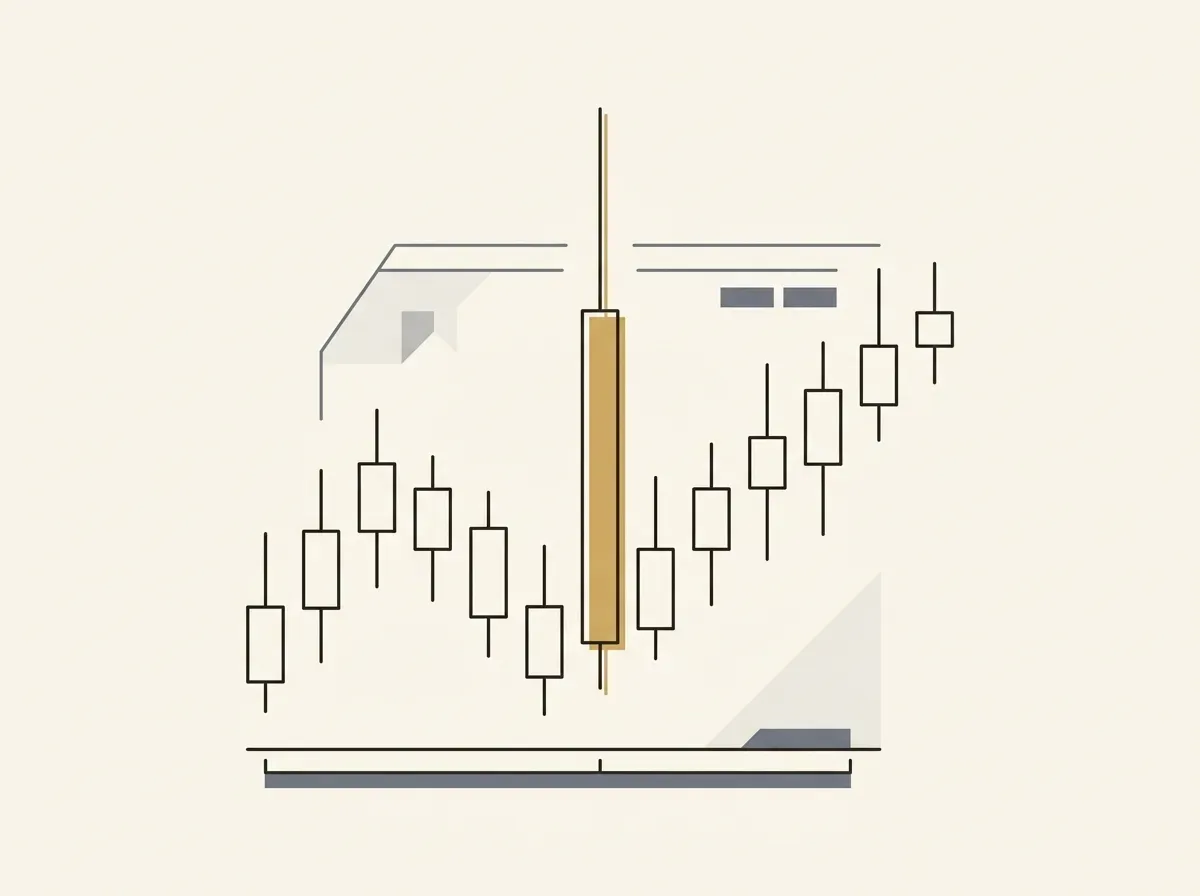
A History of Oracle Manipulation Exploits
The risks are not theoretical. Several high-profile exploits demonstrate the different ways oracle-based systems can fail:
- Mango Markets (October 2022): In one of the most famous examples, an attacker manipulated the price of the MNGO token on a single exchange, which was part of the oracle's data sources. This temporarily inflated the on-chain value of their collateral, allowing them to borrow and drain $117 million from the protocol.
- bZx Protocol (February 2020): An attacker used a flash loan to execute a series of trades on a low-liquidity decentralized exchange, causing a massive, temporary price drop for an asset. Because the bZx protocol used that exchange as a price oracle, it was tricked into issuing a loan against what it perceived as valid but was actually manipulated collateral, resulting in a loss of nearly $1 million over two attacks. This case is detailed in a post-mortem by security firm PeckShield.
- KiloEx (November 2023): This exchange was exploited when an attacker found a vulnerability that allowed them to impersonate a trusted "Keeper" address authorized to submit price updates. As reported by security firm CertiK, the attacker submitted fraudulent price data to execute leveraged trades at artificial prices, draining approximately $78,000.
- Ostium (July 2024): This platform lost over $23 million when an attacker compromised the credentials for an off-chain oracle signer. The protocol correctly verified that the price updates were from an authorized source, but it could not verify that the price data itself was valid. The attacker submitted manipulated prices to open and close large positions at a profit.
These examples show that whether through market manipulation, smart contract bugs, or compromised infrastructure, relying on a reference price for execution creates a critical vulnerability.
Our Solution: The Request-for-Quote (RFQ) System
At GM Markets, we use a Request-for-Quote (RFQ) system for all trades to provide you with a real-time, executable price and eliminate the risks associated with oracle latency. This model is standard in traditional institutional finance for its precision and security.

How Our RFQ Process Delivers Executable Prices
When you initiate a trade on our platform, a simple and secure process unfolds in seconds:
- You enter the amount of the asset you wish to buy or sell, for example on our tokenized Tesla market page.
- Our system instantly requests a live, executable price for your specific trade size from our network of regulated market-making partners.
- You receive a firm quote. This price is held for you for a very short window, typically just a few seconds, to protect against market volatility. The price you see is the final price you get.
- You confirm the trade, and it executes at that exact price, with our trading fee already included. You can see our full fee structure on our pricing page.
This RFQ model provides price certainty and minimizes your risk. It protects you from the slippage and front-running vulnerabilities associated with trading on public order books or against stale oracle prices. When a traditional stock market is closed, our partners may provide wider spreads to account for their inability to hedge in real time, but the price you are quoted remains firm and executable.
All trading involves risk, and the value of your assets can go down as well as up. You can learn more about the risks on our legal and risk disclosure page. Our platform is not offered to users in the United States or other restricted jurisdictions.
Oracles and RFQ: Complementary Systems for a Composable Future
Our use of an RFQ system for trading does not diminish the critical role oracles play. These two systems are designed for different tasks and are complementary.
Our tokenized stocks are standard ERC-20 tokens built for composability. This means they are designed to be used as collateral in lending platforms like Aave or Morpho. For these protocols to function safely, they need a reliable way to continuously value user collateral to manage liquidations. Oracle reference prices are perfectly suited for this ongoing valuation task.
To that end, our infrastructure is built to be DeFi-native. We use Chainlink as the designated oracle provider for pricing our assets. This is verifiable on-chain through our public smart contracts, such as the PriceOracle contract on Arbitrum. This ensures our tokens are ready for secure integration across the DeFi ecosystem, where their value can be reliably checked by other protocols. This commitment to on-chain transparency is the same principle behind our Proof of Reserves system.

Conclusion: The Right Price for Secure and Fair Trading
Understanding how tokenized stocks are priced on-chain is essential for navigating the digital asset market. While blockchain oracles provide an indispensable service by bridging blockchains to real-world financial data for valuation, their inherent latency makes them unsuitable for direct trade execution.
For the specific act of trading, a real-time, guaranteed price is non-negotiable for security and fairness. We built the GM Markets platform around an RFQ model to provide this certainty, connecting you directly with institutional-grade liquidity. This ensures you can trade global equities on-chain with confidence, protected from the risks of slippage and price manipulation. To learn more about our execution model and institutional-grade custody, visit our page on platform security.
Frequently Asked Questions
What is the main difference between an oracle price and an RFQ price?
An oracle price is a periodic, general reference price aggregated from multiple sources, used for on-chain valuation. An RFQ price is a real-time, firm, and executable quote for a specific trade, provided directly by a market maker.
Why can't I just trade against the oracle price?
Trading against an oracle price exposes you to slippage, which is the risk that the market price will change between the time the oracle last updated and the time your trade executes. It also creates vulnerabilities for price manipulation attacks.
How are tokenized stocks priced when the stock market is closed?
During after-hours periods, liquidity is lower. Market makers use alternative price discovery methods and widen their spreads to manage risk. With our RFQ system, you still receive a firm, executable quote, though it may differ more from the last closing price than during market hours.
Are GM Markets' tokenized stocks compatible with DeFi lending protocols?
Yes, they are designed as standard ERC-20 tokens for full composability. We use Chainlink oracles to provide the necessary price feeds, ensuring our tokens can be safely and reliably valued as collateral by other DeFi protocols.