Fractional Shares vs. Tokenized: A Guide to Ownership Models
Explore the differences between traditional and tokenized fractional shares. Learn how on-chain ownership provides greater portability, transparency, and utility for investors.
What Are Fractional Shares?
Fractional ownership allows you to buy a portion of a single, more expensive share of a company’s stock. Instead of needing hundreds or thousands of dollars to purchase one full share of a company like NVIDIA or Microsoft, you can invest with as little as $1. This model lowers the barrier to entry for stock market participation, a significant factor in the recent growth of retail investing. According to the UK's Financial Conduct Authority (FCA), this is a “significant and growing part of the consumer investment market,” with their 2024 survey finding that 31% of UK adults who use trading apps have bought or sold fractional shares.
This accessibility enables investors to build a diversified portfolio with a smaller amount of capital. Rather than concentrating funds into one or two affordable stocks, you can spread your investment across many different companies and sectors. There are two primary models for achieving fractional ownership: the traditional brokerage model and the on-chain tokenization model. While both allow you to invest with small amounts, they operate differently and provide distinct levels of ownership, control, and utility.
How Traditional Brokerages Provide Fractional Shares
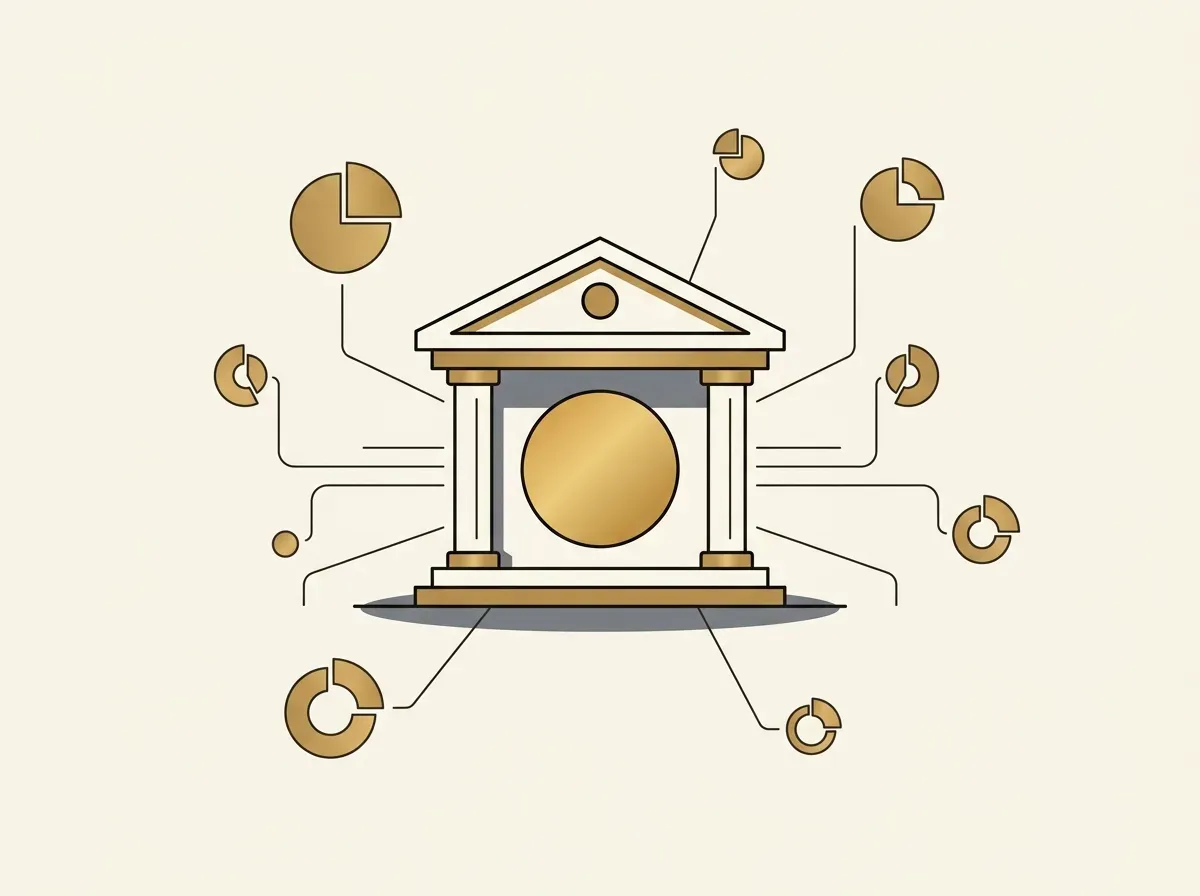
When you buy a fractional share through a traditional brokerage, the process happens on the firm's internal records. These firms typically purchase whole shares and hold them in a single “omnibus account” under the brokerage’s name, a practice known as holding securities in “street name.” The Depository Trust & Clearing Corporation (DTCC), which provides the core clearing and settlement infrastructure for U.S. markets, operates exclusively with whole-share units and does not support the processing of fractional shares in its system.
The brokerage maintains an internal ledger that tracks what fraction of each whole share belongs to each client. This means your ownership is a bookkeeping entry on a private database, not a directly held, transferable asset. This model has several critical limitations:
- Lack of Portability: You cannot transfer your fractional shares to another brokerage. In an investor bulletin, the U.S. Securities and Exchange Commission (SEC) states this directly: “You generally cannot transfer fractional shares to another brokerage firm.” If you wish to move your account, you must sell the position and transfer the resulting cash.
- Limited Rights: While you are entitled to the economic benefits proportional to your ownership, such as dividends, you may not receive shareholder voting rights. This depends on the specific policies of the brokerage firm.
- Indirect Ownership: Your name is not on the company’s official shareholder registry. The broker is the registered owner, and you are the “beneficial owner” according to the broker’s internal records, which introduces a layer of counterparty risk.
The On-Chain Evolution: Tokenized Fractional Shares
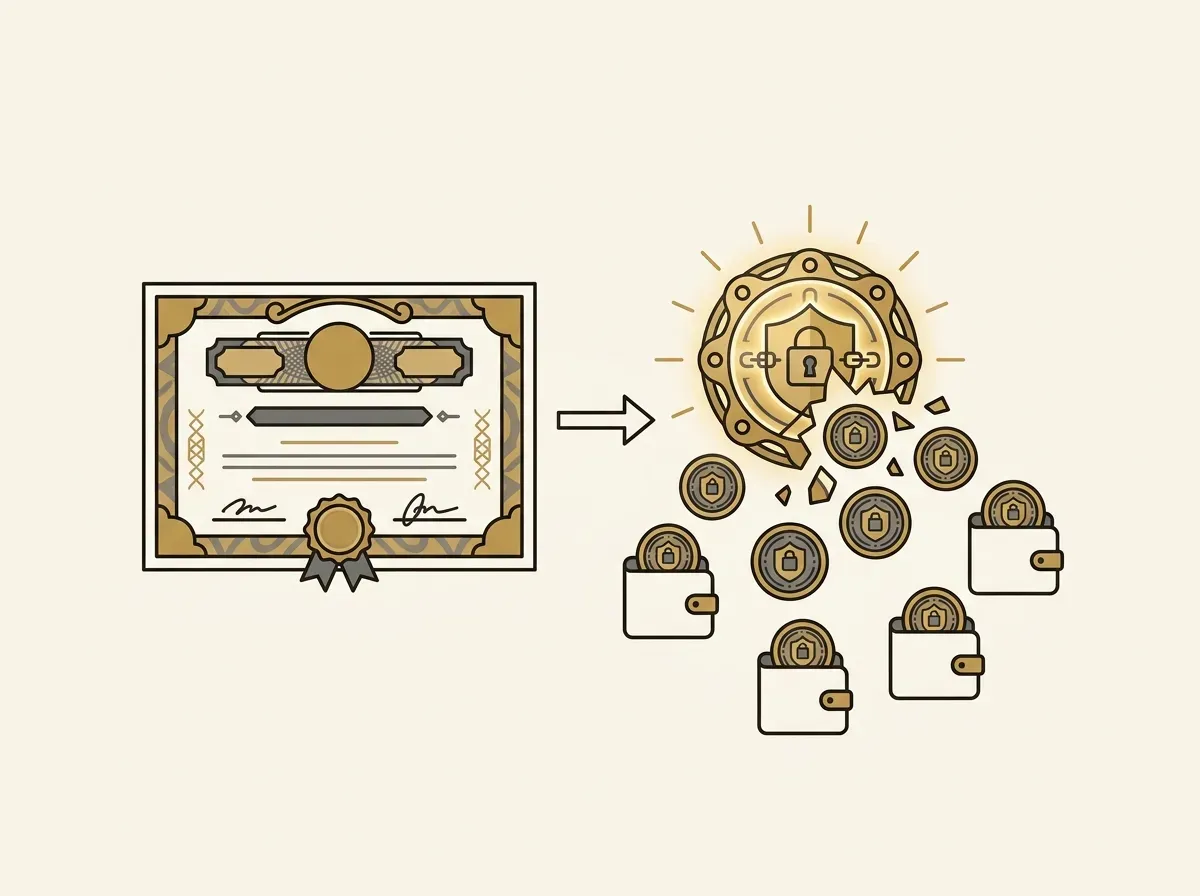
Asset tokenization represents the next evolution in fractional ownership, moving the record of ownership from a private brokerage ledger to a public blockchain. This is the model we use at GM Markets. On our platform, every tokenized stock is a digital token that represents a claim on one real share. That real share is held 1:1 in a segregated account at a regulated custodian, like Interactive Brokers or Alpaca Markets.
Here is how the mechanics work:
- 1:1 Backing: We purchase a whole share of a stock, such as AAPL, and place it in a bankruptcy-remote trust for the benefit of token holders.
- Token Issuance: A smart contract then issues a digital token on a blockchain like Base or Arbitrum. This token is legally and functionally tied to the underlying share held in custody. The supply of tokens can only increase when a new share is added to the reserve.
- Inherent Divisibility: As a standard on-chain asset (an ERC-20 token), the token is inherently divisible up to many decimal places. This allows you to buy, sell, and transfer precise fractions of the underlying share with on-chain settlement.
This approach transforms a bookkeeping entry into a bearer asset that you control directly in your own self-custodial wallet. The market for tokenizing real-world assets (RWAs) is projected to grow significantly, with a Boston Consulting Group report forecasting it could reach $16 trillion by 2030. This growth signals a major shift toward more transparent and efficient financial infrastructure.
Traditional vs. Tokenized Fractional Shares: A Direct Comparison
The differences between the two models are substantial. The on-chain approach enhances the core benefit of accessibility with new capabilities in ownership, transparency, and utility.
| Feature | Traditional Fractional Shares | Tokenized Fractional Shares (GM Markets) |
|---|---|---|
| Ownership Record | Internal bookkeeping entry on a private brokerage ledger. | Public record on a blockchain, controlled by the user. |
| Custody | Held by the brokerage in an omnibus account (“street name”). | Self-custodied by the user in their own wallet. |
| Portability | Non-transferable. Must be sold to move assets. | Fully transferable to any compatible wallet on the same chain. |
| Composability | None. Asset is locked within the brokerage platform. | Programmable asset usable across DeFi for lending, borrowing, and liquidity. |
| Transparency | Depends on brokerage reports and periodic audits. | Real-time, on-chain proof of reserves verifiable by anyone. |
| Settlement | T+1 or T+2 settlement cycle through centralized clearinghouses. | Near-instant, final settlement on the blockchain. |
Key Benefits of Tokenized Fractional Ownership
The on-chain model offers the accessibility of traditional fractional shares while introducing powerful new capabilities. On GM Markets, these benefits are central to our platform.
True Accessibility and Self-Custody
With a $1 minimum, you can start trading and building a portfolio of global stocks. Because ownership is represented by a token in your wallet, you have direct custody and control over your assets. You can move them or use them without asking for permission. Our platform is designed for a global audience, providing access to U.S. equity markets. Please note that GM Markets is not offered to users in the United States or other restricted jurisdictions.
Financial Composability
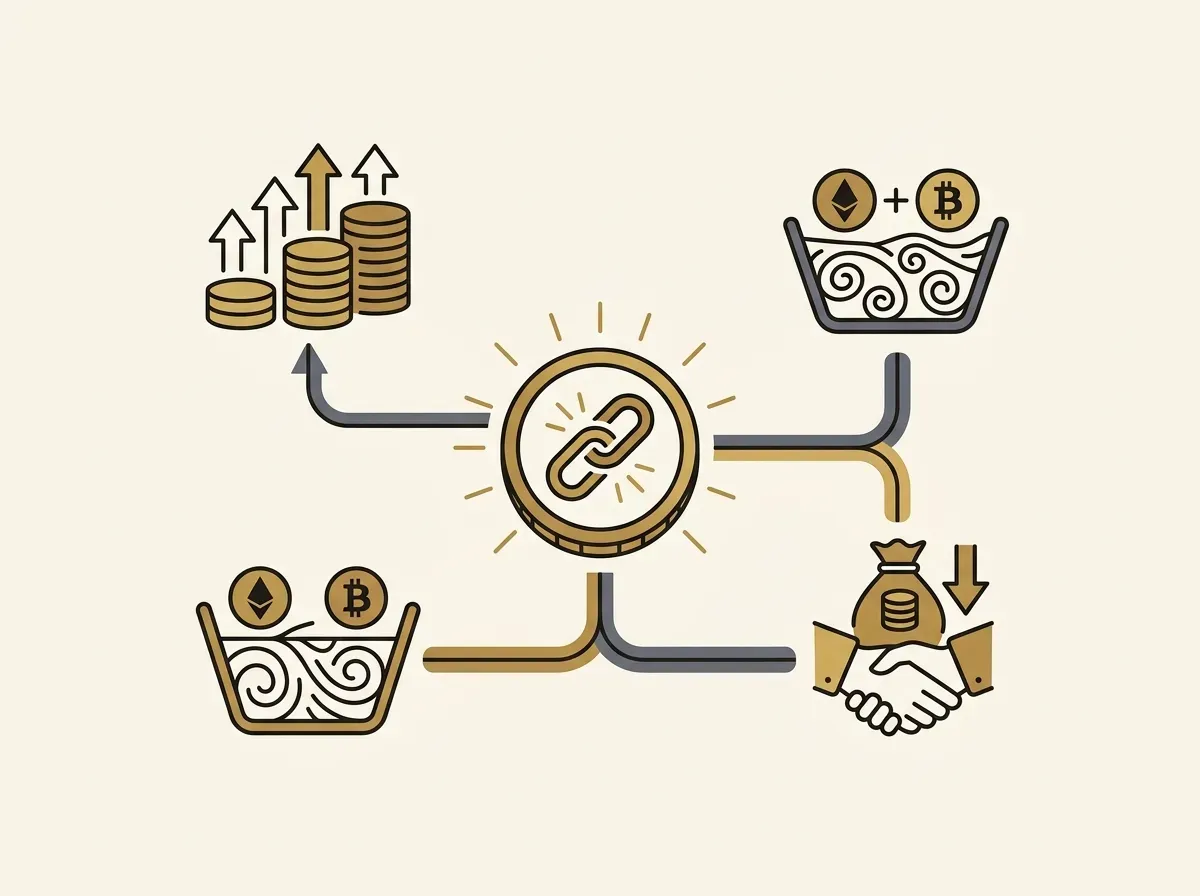
This is a key advantage of tokenization. Unlike a fractional share held at a traditional brokerage, a tokenized stock is a programmable asset that can interact with the broader decentralized finance (DeFi) ecosystem. This turns a static holding into a productive asset.
Practical DeFi Applications
You can put your assets to work in several ways. For example, you could take your tokenized TSLA shares to a lending protocol like Aave, deposit them as collateral, and borrow stablecoins against your position. Alternatively, you could provide your tokenized SPY shares to a liquidity pool on Uniswap alongside a stablecoin, earning trading fees from other users. These actions are not possible with fractional shares held at a traditional broker.
Verifiable Transparency and Simple Pricing
Ownership is recorded on an immutable public blockchain, and the backing of our tokens is verifiable by anyone. Our Proof of Reserves system provides real-time, on-chain attestations from a third-party provider, confirming that every token in circulation is fully backed by a real share in custody. This transparency extends to our costs. We charge a single trading fee from 0.10% to 0.20% that is included in the quoted price, with no deposit, withdrawal, or custody fees.
Efficient Total Return Model
When a company pays a dividend, we use the proceeds to purchase more of the underlying stock. This increases the amount of the real asset backing each token, which is reflected as an increase in the token's net asset value (NAV). Your investment grows without you having to manage small cash payouts or incur a separate taxable event from a cash distribution, which streamlines the investment process compared to many traditional dividend reinvestment plans (DRIPs).
Frequently Asked Questions
Do you receive dividends with tokenized fractional shares?
Yes, you receive the full economic benefit of dividends. Through our total-return model, dividends are automatically reinvested into the underlying asset, increasing the NAV of your token. You see the value of the dividend reflected in the price of your holding rather than as a separate cash payment.
Are tokenized fractional shares real shares?
Each token represents a claim on a real share that is held 1:1 in a segregated custody account. You have full economic exposure to the price movements and dividends of the underlying stock. You do not, however, typically receive shareholder voting rights, which remain with the custodian holding the shares.
Can I transfer my fractional shares?
Yes. Because your ownership is a standard on-chain token, you can transfer it to any compatible wallet on the same blockchain. This is a significant difference from traditional fractional shares, which are non-transferable and must be sold if you want to move your assets to another provider.
What are the risks involved?
All investments carry risk, and you may lose money. When you trade tokenized stocks, you are exposed to market risk, which is the possibility that the stock's price will fall. Additionally, there are risks specific to the on-chain model, including smart contract risk and counterparty risk related to the custodian. We encourage you to read our full risk disclosure and trade responsibly.
Start Building Your Portfolio with $1
Fractional ownership has fundamentally changed investing by removing the high cost of entry. The on-chain tokenization model builds on this accessibility, offering a superior combination of direct ownership, global access, and financial utility. By turning fractional shares into programmable, self-custodial assets, we provide a more transparent and powerful way to invest in the world’s largest companies. You can explore the tokenized stocks available on our platform and start building your portfolio today.