Do Tokenized Stocks Pay Dividends? GM Markets' Total-Return Model Explained
Explore GM Markets' total-return model for tokenized stock dividends, where payouts are reinvested into NAV for enhanced composability and simplified on-chain asset management. Learn about our secure, permissionless platform and its benefits.
Do Tokenized Stocks Pay Dividends? GM Markets' Total-Return Model Explained
Investors frequently inquire about how dividends function with tokenized stocks compared to traditional stock market investments. On GM Markets, tokenized stocks do not distribute dividends as separate cash payouts in the manner of traditional shares. Instead, our platform utilizes a total-return model where dividends are automatically reinvested into the underlying asset. This reinvestment directly increases the token's on-chain Net Asset Value (NAV), reflecting the dividend's economic value within the token's price. We will explain this approach, its benefits for on-chain assets and composability, and how we manage dividend handling for digital asset traders and DeFi users. GM Markets is currently in public beta, with core functionalities fully operational and backed by 1:1 custody. We do not offer services to users in the United States or other restricted jurisdictions.
Understanding Tokenized Stocks on GM Markets
Tokenized stocks are digital representations of traditional securities, such as US-listed stocks and ETFs, issued on a blockchain. Each token on GM Markets is backed 1:1 by a real share held in segregated customer accounts at regulated broker-dealers, Interactive Brokers and Alpaca Markets. This structure connects traditional finance with blockchain benefits, including fractional ownership, 24/7 trading, and composability within decentralized finance protocols. Tokenized stocks offer economic exposure to the underlying asset's price movements and corporate actions, including dividends, while residing in your self-custodial wallet. Our embedded wallets are operated by Privy using multi-party computation (MPC), ensuring robust security where no single party, including GM Markets, holds the complete private key. Trades settle on Base, Arbitrum, Ethereum, and Optimism, utilizing USDF as our unified stablecoin balance. Our smart contracts have been audited by Sherlock, Halborn, Cantina, and Cyfrin, and our tokenization rails are operated by Flo. To understand more about how these assets work, you can visit our Learn about Tokenized Stocks page or review our Security page for details on our custody model and MPC wallets.
Traditional Dividend Mechanisms
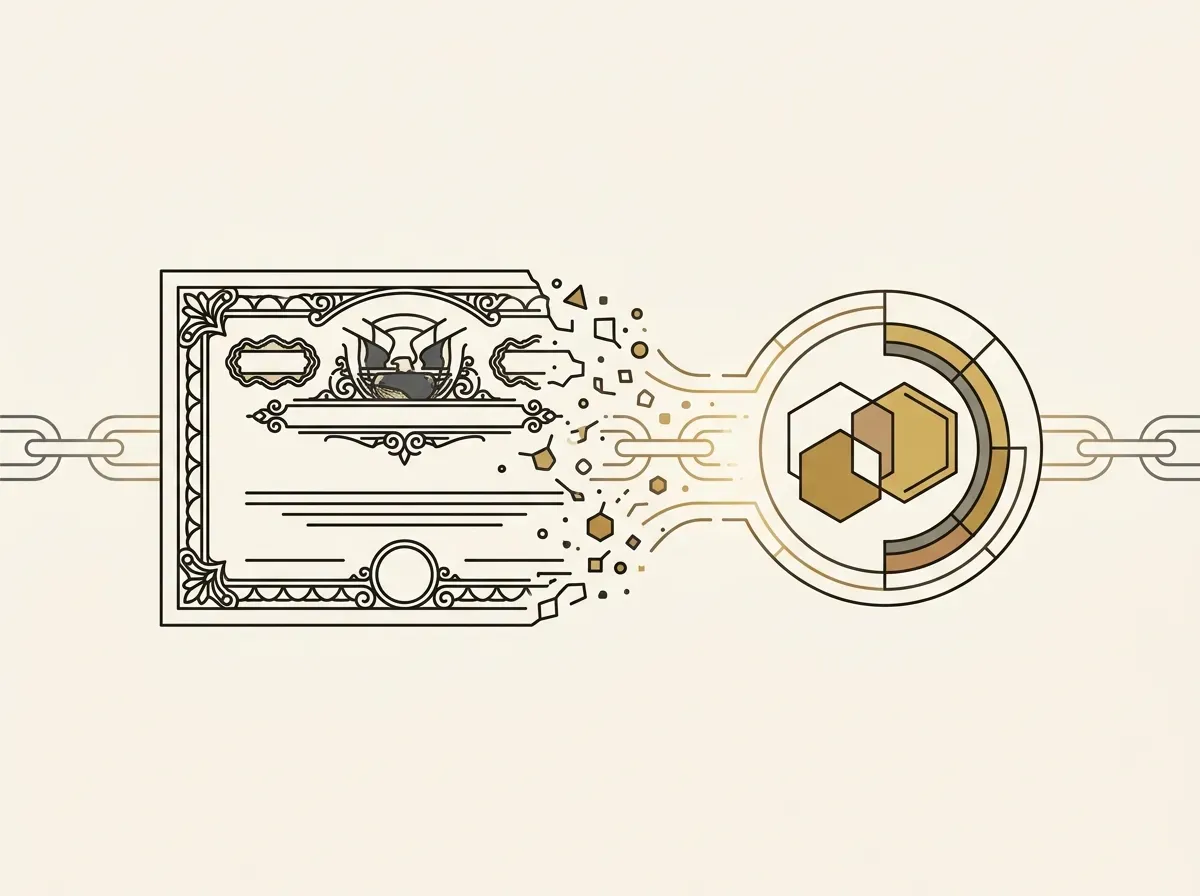
In traditional markets, a dividend is a distribution of a portion of a company's earnings to shareholders. These payouts follow a structured timeline involving specific dates: the declaration date, when the company announces the dividend; the ex-dividend date, the cutoff for eligibility; the record date, when shareholders are identified; and the payment date, when funds are distributed. Traditional brokers typically distribute cash dividends directly to a client's brokerage account, which can then be withdrawn or manually reinvested. This traditional model, while familiar, introduces operational complexities for on-chain assets and the pursuit of composability within the blockchain ecosystem. Managing separate cash balances for dividends can complicate automated DeFi strategies and add layers to accounting procedures.

GM Markets' Total-Return Model: Dividends Reinvested into NAV
GM Markets handles dividends differently by employing a total-return model, which aligns with the on-chain nature of our tokenized assets. When dividends are received from the underlying shares held in custody, they are automatically reinvested into additional shares of the same underlying asset. This reinvestment directly increases the value of the underlying assets held per token. Consequently, the token's on-chain NAV rises, reflecting the full economic value of the dividend within the token itself. Users do not receive a separate cash payout; instead, the dividend value is incorporated into the token's price. For instance, if a tokenized stock reflects a $1 dividend reinvestment, the token's NAV will increase to reflect this added value, potentially raising its market price. This approach simplifies on-chain accounting and offers benefits for managing digital assets, as the full value remains within the token, ready for use in DeFi protocols. Our Proof of Reserves page provides real-time attestation of our 1:1 backing.

Economic Performance in Tokenized Assets: A Conceptual Parallel
Our total-return model integrates all economic performance directly into the asset's value for the holder. This principle is shared with financial concepts like Total Return Swaps (TRS), where parties exchange the total economic performance of an underlying asset without transferring legal ownership. While GM Markets' tokenized stocks are not Total Return Swaps, the shared principle of integrating all economic performance directly into the asset's value for the holder is a useful conceptual parallel. The collapse of investment firm Archegos in 2021, which heavily utilized leveraged total return swaps, highlighted both the potential for significant exposure and the associated counterparty risks, leading to substantial losses for several banks. For a detailed understanding of Total Return Swaps, you can refer to authoritative financial resources such as the Investopedia explanation of Total Return Swaps.
Corporate Actions and Tokenized Stocks
Beyond regular dividends, GM Markets' total-return model also accounts for other corporate actions that impact the value of underlying shares. Events such as stock splits, mergers, spin-offs, and name changes are absorbed into the token's on-chain NAV. This ensures that the economic exposure of the tokenized stock continuously tracks the underlying asset precisely. For instance, if a company performs a stock split, the number of underlying shares represented by each token would adjust, maintaining the same total value for the token holder. Users are not required to take any action, and there are no complex token swaps or adjustments needed on their end. This integration of corporate actions simplifies asset management and ensures the tokenized asset accurately reflects the underlying security's changes without requiring manual intervention from the token holder. This automation of corporate actions is a key benefit of blockchain-based securities, as demonstrated by initiatives like Overstock.com's issuance of security tokens that receive cash distributions via automated dividends, reducing administrative costs.
Key Advantages of GM Markets' Total-Return Approach
Simplicity and Accessibility
Our total-return model eliminates the need to manage separate cash balances or manually reinvest dividends. The value is automatically integrated into your token, leading to automatic compounding for long-term growth. Tokenized stocks facilitate fractional ownership, allowing investors to acquire small dollar amounts of high-value shares like Tesla or Apple, enabling better portfolio diversification. Furthermore, tokenized equities can be traded globally around the clock, enabling investors to react instantly to market events. On-chain settlement can occur almost instantly, eliminating the T+1 settlement cycle common in traditional stock markets since May 2024. This rapid settlement reduces counterparty risk, benefiting market participants. The NYSE is actively pursuing regulatory approval to establish a blockchain-based platform for continuous trading and on-chain settlement of tokenized stocks and ETFs, with a potential launch by the end of 2026. Our transparent pricing model includes a trading fee of 10 to 20 basis points, with no custody, inactivity, dividend, or FX-markup fees. You can find more details on our Pricing page.
Enhanced Composability and DeFi Integration
The full value of your asset, including reinvested dividends, remains within the token. This makes it efficient for use in DeFi protocols, where your tokenized stock can be lent, borrowed against, or used as collateral without needing to convert dividend payouts into new positions. For example, lending protocols such as Kamino, a Solana-based platform, accept tokenized stocks (like xStocks by Backed Finance and Ondo tokens) as collateral for borrowing other cryptocurrencies. This allows investors to borrow against their tokenized Apple or Tesla shares without selling them. Tokenized assets, such as tokenized Apple stock, can also be supplied to liquidity pools on platforms like Raydium to earn trading fees. Additionally, Ondo's integration with MetaMask allows eligible users to directly access over 200 tokenized US stocks and ETFs within the MetaMask mobile wallet.
Streamlined Accounting and Operational Efficiency
By consolidating dividend value into the token's NAV, the model can potentially simplify internal accounting by treating the integrated value as part of capital gains upon sale, rather than separate income events. Blockchain technology provides a shared, immutable ledger that enhances transparency by allowing real-time verification of transaction histories and ownership records. This reduces the risk of fraud and discrepancies, and investors can independently verify backing and issuance data through proof-of-reserves mechanisms. By utilizing smart contracts for direct execution and settlement on the blockchain, tokenized stocks can bypass numerous intermediaries in the traditional financial system. This streamlining reduces transaction and administrative costs, contributing to faster settlements.
Comparing with Other Tokenized Stock Platforms
The approach to dividends varies across various tokenized asset offerings. Platforms such as Ondo Global Markets and Backed Finance also utilize total-return or rebasing models, where dividends are reinvested or reflected through balance adjustments rather than direct cash payouts. This approach contrasts with platforms like Bitget Stocks 2.0 or Dinari, which may offer direct stablecoin payouts for dividends, providing a different experience for users seeking immediate cash distributions.
Important Considerations and Disclosures
No Cash Income
While the total-return model offers significant advantages for on-chain assets, it is important to understand its implications. Users primarily seeking regular cash income from dividends will not find it in GM Markets' total-return model, as all dividend value is reinvested to enhance the token's NAV.
No Shareholder Rights
Tokenized stocks on GM Markets provide economic exposure to price movements and dividends via NAV, but they do not confer shareholder voting rights or direct legal ownership of the underlying company. This is a common characteristic of tokenized assets where the underlying shares are held in custody by a third party.
Tax Implications
While the total-return model simplifies dividend handling operationally, the tax implications can vary significantly by jurisdiction. Tax authorities often apply different rules to capital gains versus income. Users are responsible for their own tax obligations and should consult a qualified tax advisor regarding their specific situation.
Continuity Path for Token Holders
If GM Markets discontinues operations, a clear continuity path is in place to protect token holders. A designated security agent, GenTwo, holds standing authority to act on behalf of token holders. This process involves GenTwo working directly with our custodians, Interactive Brokers and Alpaca Markets, to redeem outstanding tokens against the underlying shares. These underlying shares are held in segregated customer accounts at these regulated broker-dealers, ensuring they remain separate from the brokers' own funds and are protected under their respective jurisdictions. This redemption path is enforced by independently audited on-chain smart contracts and is independent of GM Markets' continued operation. The tokenized securities themselves are issued under Swiss law (FinSA).
Risk Disclosure
Trading tokenized stocks involves risk. Markets can move against you, and you may lose money. Tokenized stocks carry settlement, counterparty, smart-contract, and custody risk. GM Markets does not provide financial, investment, tax, or legal advice. We encourage all users to understand these risks thoroughly. For more information, please review our Legal and Risk Disclosures page.
Frequently Asked Questions
What are the fees for trading on GM Markets?
Our trading fee ranges from 10 to 20 basis points (0.10% to 0.20%), depending on your 14-day trading volume. This fee is included in the quoted price you see before confirming a trade. Deposits and withdrawals are free across all supported rails, including Apple Pay, card, bank, and stablecoin. We do not charge custody, inactivity, dividend, or FX-markup fees.
How are my assets secured with GM Markets?
Your underlying shares are held in segregated customer accounts at regulated broker-dealers, Interactive Brokers and Alpaca Markets. Our platform utilizes Privy MPC embedded wallets, which manage your private keys using multi-party computation, meaning no single party ever holds your complete key. Reserves are independently attested in real time by Accountable on-chain, verifying our 1:1 backing. Our smart contracts are regularly audited by leading firms.
Can I use tokenized stocks in DeFi?
Yes, composability is a core advantage. Our tokenized stocks are standard ERC-20 assets that can be used across various DeFi protocols. This includes lending and borrowing on platforms like Aave and Morpho, supplying liquidity to decentralized exchanges such as Uniswap and Curve, and using them as collateral in other DeFi applications.
Does GM Markets serve users in the United States?
No, GM Markets does not offer services to users in the United States or other restricted jurisdictions. Our platform is designed for a global audience outside these specified regions.
Trading Tokenized Stocks on GM Markets
GM Markets offers a distinct approach to tokenized stock dividends through our total-return model, which integrates all economic value directly into the token's NAV. This method simplifies asset management, enhances composability within DeFi, and streamlines accounting for our users. We provide a permissionless, self-custodial platform for trading tokenized US-listed stocks and ETFs, backed 1:1 by real shares in segregated accounts. To learn more about our platform and begin trading, please visit our Learn section. Remember, trading tokenized stocks involves risk, and we do not provide financial advice. We do not offer services to users in the United States or other restricted jurisdictions.