Are Tokenized Stocks Real Ownership? A Guide to What You Own
Tokenized stocks on GM Markets represent direct economic ownership, backed 1:1 by real shares. Learn how this model provides full financial exposure while enabling on-chain utility.
Are Tokenized Stocks Real Ownership? A Guide to What You Own
When you buy a tokenized stock, do you actually own the underlying share? The direct answer is that tokenized stocks on GM Markets represent direct economic ownership of the asset, backed one-to-one by a real share held in a regulated brokerage account. This gives you full exposure to the financial performance of the stock, including price movements and dividend value.
However, this modern form of ownership is distinct from the bundle of legal rights, such as voting, that comes with traditional shareholding. This distinction is not a limitation but a deliberate feature of tokenization, designed to unlock global access and on-chain utility that traditional shares do not offer. This guide explains the precise mechanics of our 1:1 asset backing, custody structure, and on-chain verification, so you understand exactly what you are buying and how it is protected.
How GM Markets Tokens Represent Ownership
The ownership model for our tokenized stocks is built on a straightforward principle: every token is a digital receipt for one real share. When you purchase a tokenized stock on our platform, a corresponding real share is held in a segregated customer account at a regulated, third-party broker-dealer, such as Interactive Brokers or Alpaca Markets. This creates a direct, one-to-one link between the token in your wallet and the underlying security.
This structure is critical for asset protection. The shares backing your tokens are held separately from GM Markets’ own corporate assets. They are not on our balance sheet. The tokens themselves are issued by a bankruptcy-remote Special Purpose Vehicle (SPV), which legally separates the assets from our operations. This ensures that token holders have a clear and direct claim on the underlying shares, independent of our own operational status. This model is designed to provide the security of traditional finance with the efficiency of blockchain technology.
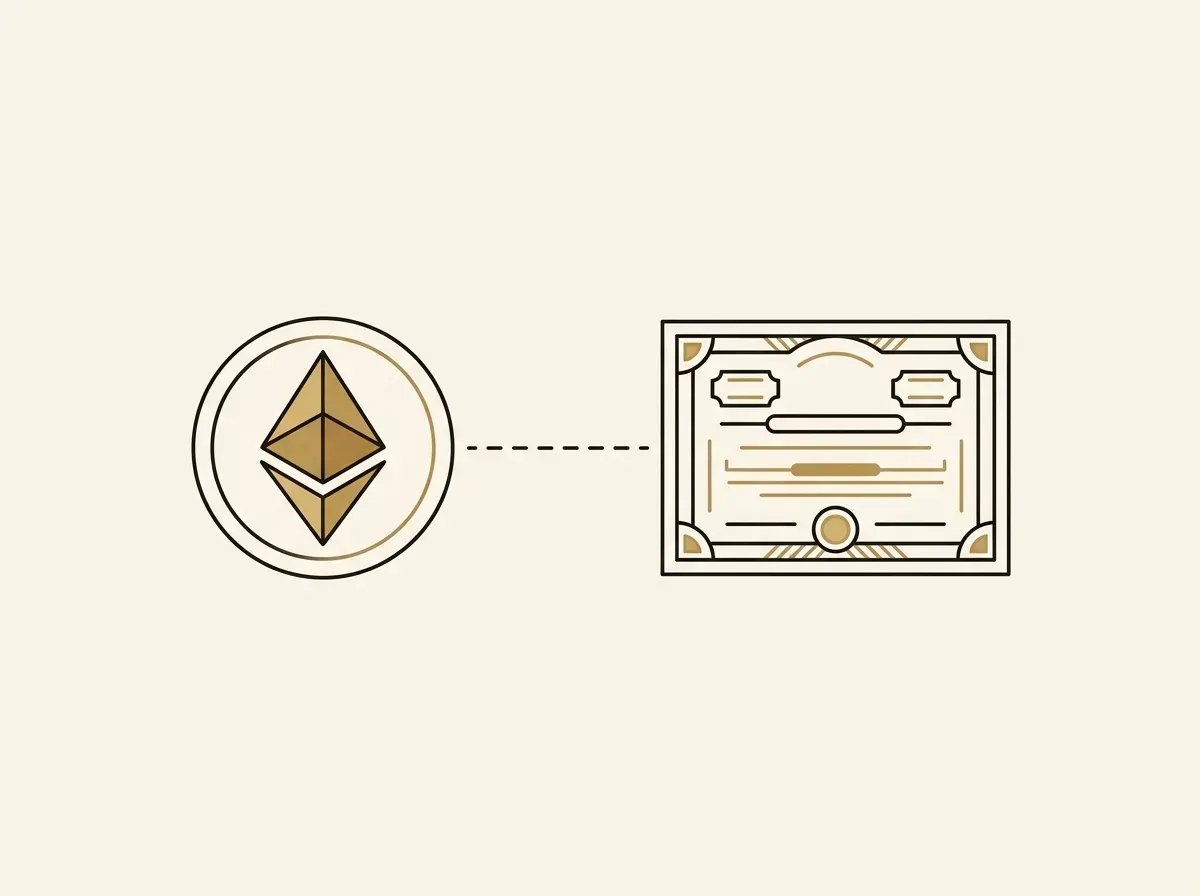
Economic Rights vs. Legal Rights: A Key Distinction
Understanding the difference between economic and legal rights is essential. With our tokenized stocks, you receive the full economic rights associated with the underlying share. This includes:
- Price Exposure: Your token’s value tracks the market price of the real stock. If the stock price increases or decreases, the value of your token does the same.
- Dividend Value: You receive the full economic benefit of any dividends issued. As we explain below, these are automatically reinvested to increase the value of your holding.
What you do not receive are the legal rights of a direct shareholder, such as the ability to vote on corporate matters. This is a structural feature of the third-party, custodial tokenization model we use. Global regulators have examined this distinction in detail. The U.S. Securities and Exchange Commission (SEC) has consistently maintained that the legal status of an instrument as a security is unaffected by its representation on a blockchain. The key is the substance of what is being offered to investors.
Legal experts note a critical difference between tokens sponsored by the original issuer and those sponsored by a third party. The model we use is a custodial one, where we, as a third party, hold the underlying security and issue a token representing a direct interest. This provides full economic exposure. It is distinct from a synthetic model, which could be considered a derivative or a “security-based swap” that only tracks the price of a security. Our tokens represent a direct claim on a custodied asset, not a separate derivative contract. This separation of economic and legal rights is what enables the token to be transferred and used seamlessly across different blockchains and DeFi applications, a point echoed in a World Economic Forum report on how tokenization is reshaping financial markets by making ownership more fractional and programmable.
Verifying Your Ownership: On-Chain Proof of Reserves
Trust in any financial system depends on verification. We provide verifiable proof that the assets backing your tokens exist and are held securely. This is accomplished through our Proof of Reserves system, which uses a third-party attestation service, Accountable, to provide real-time, on-chain verification.
Here is how it works:
- Accountable connects directly to our partner brokers (Interactive Brokers and Alpaca Markets) via secure, read-only APIs.
- It continuously verifies the quantity of each share held in our segregated custody accounts.
- This data is published on-chain, where it can be compared against the total supply of tokens we have issued for that asset.
You can visit our Proof of Reserves page at any time to see the live data for yourself. This system provides a transparent and immutable audit trail, confirming that every token is fully backed 1:1 by its underlying asset.
How Dividends and Corporate Actions Work
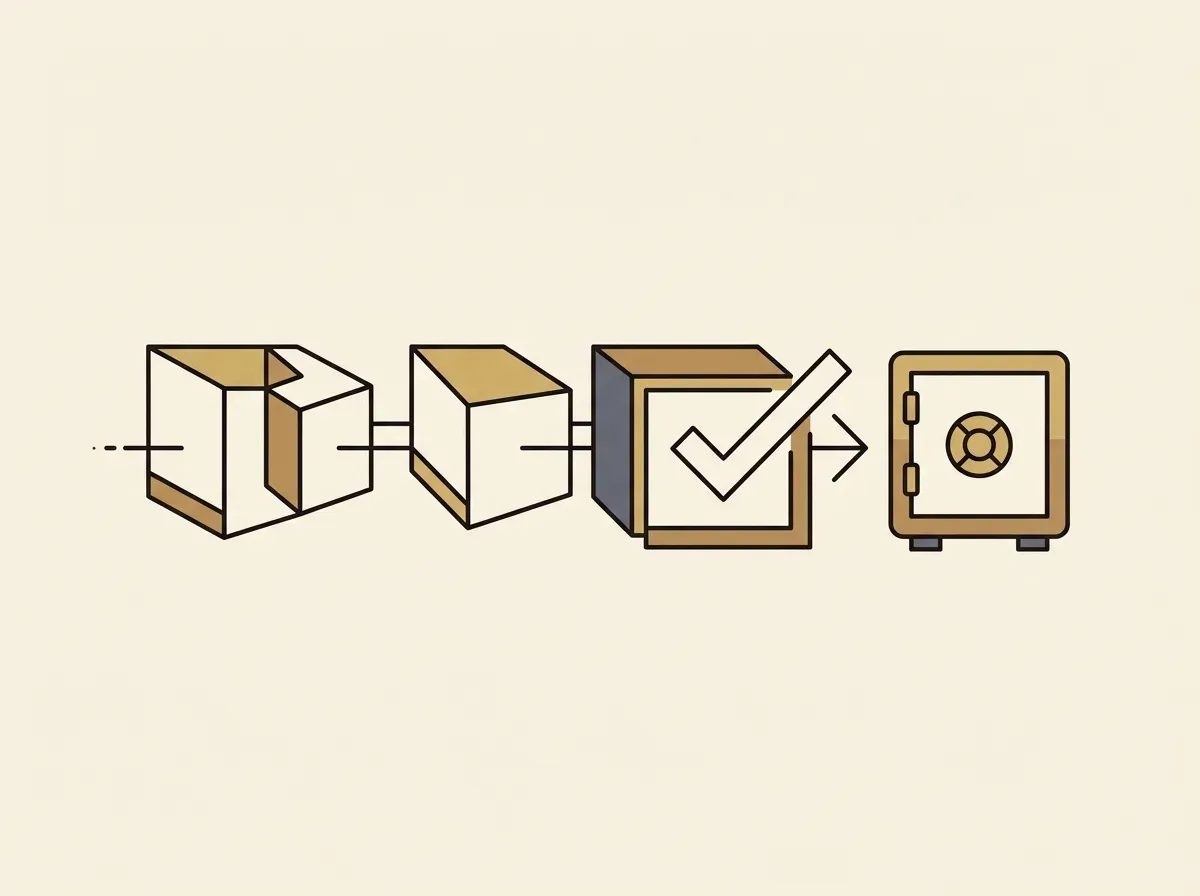
Our platform uses a total-return model to handle dividends and other corporate actions. This means that instead of receiving small cash payments, the value of any dividend is automatically used to purchase more of the underlying stock. This increases the net asset value (NAV) of your token, so your total holding grows in value. This approach is more efficient for on-chain assets and avoids the complexities of cross-border cash distributions.
This automated process ensures your economic exposure to the asset remains perfectly aligned with the real-world stock through splits, mergers, and other events. For example:
- Stock Splits: During NVIDIA's 10-for-1 stock split, the token’s NAV was adjusted automatically to reflect the split, ensuring the total economic value of a holder's position remained unchanged.
- Mergers and Acquisitions: In a stock-for-stock merger, your tokens for the acquired company are automatically replaced with new tokens representing the acquirer's stock, at the official exchange ratio. In a cash-out merger, your position is liquidated for the specified cash-per-share price, and you receive the equivalent value in stablecoins.
- Special Dividends: These are automatically reinvested into the underlying asset, increasing the NAV of each token. The value is added to your position rather than paid out as a separate distribution.
These actions are executed by smart contracts based on data from reliable market sources, ensuring seamless and accurate management of your holdings.
The On-Chain Advantage of Tokenized Ownership
While the ownership model is different, it enables powerful features that are impossible with a traditional brokerage account. Because your tokenized stock is a standard on-chain asset, it unlocks a new level of utility.
Self-Custody and Enhanced Security
You hold your assets in your own self-custodial wallet, secured by Privy's advanced multi-party computation (MPC) technology. This means no single party, including GM Markets, has access to your full private key. It provides you with direct control over your assets, secured by modern cryptography and biometric authentication rather than vulnerable methods like SMS. You can learn more about our comprehensive security model on our website.
True DeFi Composability
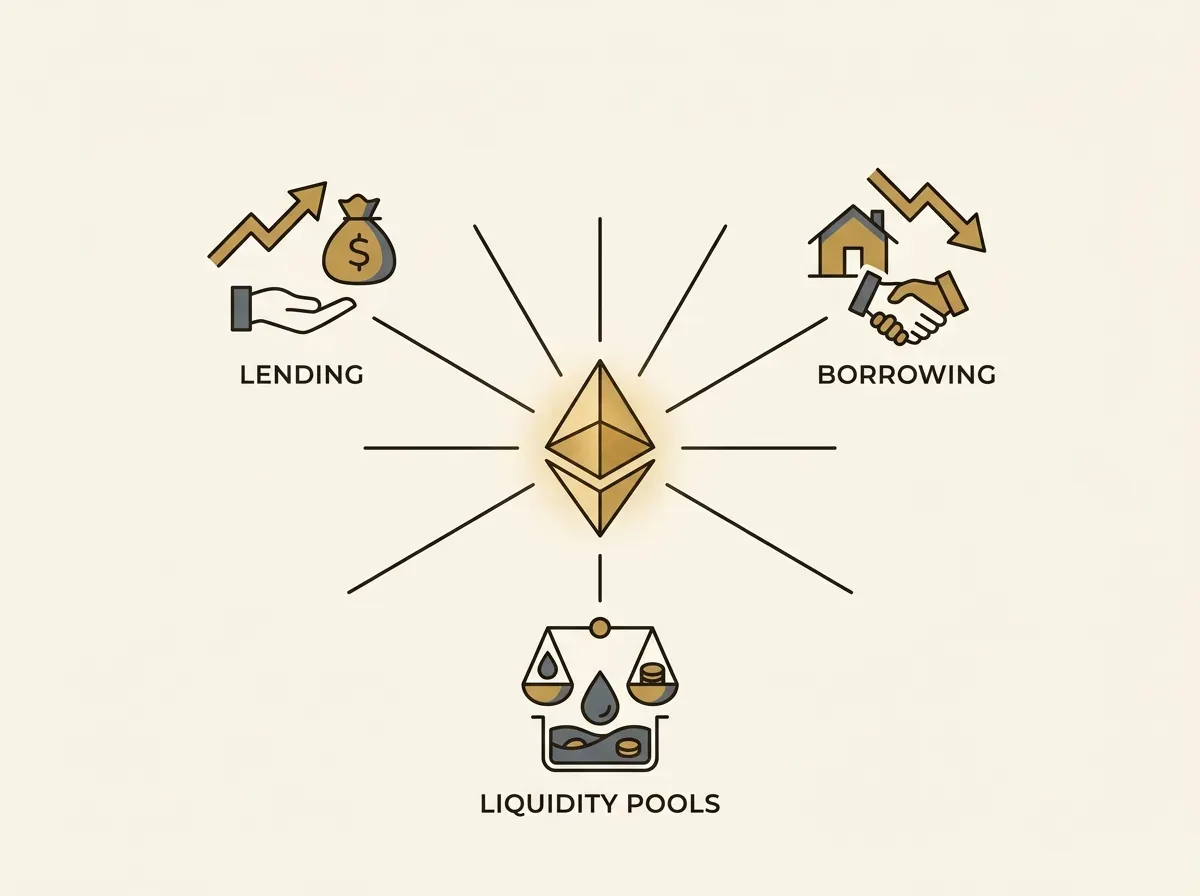
Your equity position becomes a productive asset that can work for you within the broader digital economy. This is known as composability. Instead of being a theoretical benefit, this is happening today across major DeFi protocols. For example, you can:
- Lend your assets: Major lending protocols are beginning to accept tokenized securities as collateral. For instance, Venus Protocol activated markets for tokenized stocks, allowing users to borrow against them.
- Provide liquidity: While still nascent for equities, platforms like Morpho Blue have demonstrated the model with tokenized short-term US Treasury bond ETFs, allowing holders to use them as collateral in isolated lending markets.
- Use as collateral: The goal of rebuilding securities finance on-chain is a core thesis for protocols like Aave. Its governance has discussed proposals for accepting real-world assets, and its institutional Aave Arc market was built for this purpose.
This transforms a static equity holding into a dynamic piece of collateral, fully integrated with the world of decentralized finance.
Global Accessibility and Fractional Trading
Traditional markets often have high barriers to entry, from large minimum investments to jurisdictional restrictions. Tokenization breaks these down. On GM Markets, you can start trading with as little as $1, buying a fraction of a share to six decimal places. This makes premier global assets accessible to a much broader audience.
Continuity and Asset Protection
A crucial question for any investor is what happens if the platform they use ceases to operate. Our structure is designed for resilience. Because the underlying shares are held in segregated accounts at regulated brokers and legally owned by a separate SPV, they are protected from our business operations. In the event GM Markets discontinues its services, a designated security agent has the legal authority to work directly with the custodian to redeem all outstanding tokens for the underlying shares. This redemption process is enforced by on-chain smart contracts, providing a clear and reliable path for asset recovery that does not depend on our continued operation.
Please note that GM Markets is not offered to users in the United States or other restricted jurisdictions. All trading and investment activities involve risk, including the potential loss of principal. The value of tokenized stocks can fluctuate, and you should understand the settlement, counterparty, and smart contract risks involved. For more details, please review our risk and legal disclosures.
Frequently Asked Questions
What happens to my assets if GM Markets shuts down?
The underlying shares are held in segregated accounts at regulated brokers and are not on our balance sheet. A designated security agent has the authority to work with the custodian to redeem outstanding tokens for the underlying shares, a process enforced by our on-chain contracts.
What are the fees for trading tokenized stocks?
We charge a single trading fee that ranges from 0.10% to 0.20% (10 to 20 basis points), which is included in the price you are quoted. There are no fees for deposits or withdrawals, and no custody or inactivity fees. You can see the full breakdown on our pricing page.
Can I transfer my tokenized stocks to an external wallet?
Yes. Our tokens are standard ERC-20 compatible assets. You can transfer them from your embedded GM Markets wallet to any compatible external wallet on the supported chains, giving you full control over your digital assets.
Which blockchains can I trade on?
Our platform supports multiple leading blockchains to provide flexibility and low transaction costs. You can trade and settle on Base, Arbitrum, Ethereum, and Optimism.
Conclusion: What Ownership Means on GM Markets
Tokenized stocks on GM Markets represent a new and powerful form of ownership. You get direct, one-to-one economic ownership of premier global equities, giving you full exposure to their financial performance. This ownership is secured by a robust custody model with regulated brokers and is continuously verified on-chain through our transparent Proof of Reserves system.
While this model is distinct from the legal rights of traditional shareholding, it unlocks the immense potential of on-chain composability, self-custody, and global accessibility. It is an ownership model built for the future of finance. To see the transparency for yourself, we invite you to view our live Proof of Reserves and explore the assets available on our platform.